
Oil prices fall on US-Iran agreement
Oil Prices Fall Amid US-Iran Agreement
Oil prices fall on US Iran – On Sunday, global oil prices saw a notable decline following the announcement by President Donald Trump that a deal with Iran had been finalized. The agreement, which aims to resolve tensions over the U.S. naval blockade, has led to a market reaction that has sent crude oil prices tumbling. Brent crude, a benchmark for international oil markets, fell by 3.9%, settling at approximately $84 per barrel. Meanwhile, U.S. crude experienced a steeper drop of 4.8%, reaching $81 per barrel. These figures mark a significant shift, as they represent the lowest levels since March 4, a date just days after the conflict with Iran began.
Market participants had already anticipated the deal’s framework, which was expected to be announced over the weekend. As a result, oil prices dipped below $90 per barrel on Friday for the first time since the war’s outbreak. This trend underscores the ongoing uncertainty in the market, which has been driven by geopolitical tensions and the threat of supply disruptions. However, analysts caution that the path to a full recovery remains uncertain, with prices still far from the $70 per barrel level seen prior to the attacks on Iran in late February. The current market sentiment, while cautiously optimistic, reflects a deep understanding of the challenges ahead.
Key Developments in the Agreement
President Trump confirmed the completion of the deal on Sunday afternoon, stating that the United States would lift its naval blockade of Iran. Iran’s deputy foreign minister for legal and international affairs echoed this sentiment, affirming that the memorandum of understanding had been finalized. The agreement is set to be formally signed in Switzerland on Friday, signaling a diplomatic breakthrough. Both sides have signaled a commitment to de-escalate the situation, with the U.S. promising to remove blockades from Iran’s ports and Iran pledging to clear mines from the Strait of Hormuz.
“I’m very concerned we could see oil prices skyrocket later this summer with crude oil prices heading well into the mid- to high-$100 range,” said Bob McNally, president of Rapidan Energy, during an interview on ABC’s “This Week.”
The removal of the naval blockade and the de-mining of the critical Strait of Hormuz are seen as pivotal steps toward stabilizing oil markets. However, experts emphasize that these actions alone may not be enough to restore pre-war conditions. The strait, a vital artery for global oil trade, has been a focal point of tension, with ships facing substantial tolls for passage. According to an Iranian parliament member, the average cost for vessels navigating the strait had reached around $2 million, creating a financial burden on international traders.
Despite the agreement, the oil market faces a complex landscape. While prices have retreated from their peak, analysts warn that recovery to pre-war levels will require sustained efforts. Middle Eastern oil production, which had been suspended during the conflict, must be reactivated, and emergency petroleum reserves need to be replenished. Additionally, damaged energy infrastructure across the region needs repair before supply chains can fully normalize. These factors, combined with the potential for renewed geopolitical flare-ups, keep uncertainty alive in the market.
Broader Market Implications
The agreement’s impact on oil prices is expected to be gradual. While the initial drop reflects immediate relief, long-term trends may depend on how quickly production resumes and whether the strait’s reopening is confirmed. Joe McMonigle, president of the Global Center for Energy Analysis and based in Saudi Arabia, expressed skepticism about the deal’s full effect. “It’s great if it happens, but I’ll believe it when I see actual ships making the free and unhindered passage through the strait,” he said.
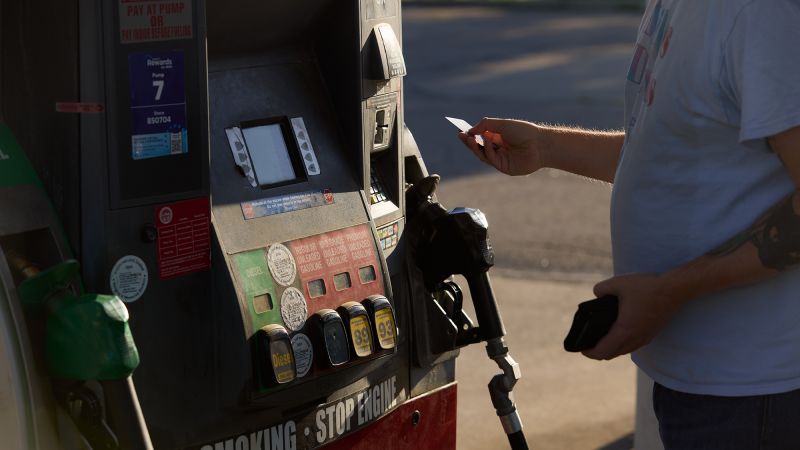
Meanwhile, the U.S. gas market has also seen a decline, with the average price of gasoline settling at $4.07 per gallon on Sunday, according to AAA. This follows three consecutive weeks of downward movement, though prices remain 36.6% higher than pre-war levels. Stock markets, in contrast, have shown resilience, with Dow futures rising 0.6% and S&P 500 and Nasdaq futures each increasing by more than 0.7%. Investors are balancing hopes of a diplomatic resolution with the lingering effects of the conflict on energy supply and demand.
The deal’s success hinges on the ability to maintain stable oil flows. Even after the strait is cleared, it may take weeks for Middle Eastern oil wells to reach full capacity. Experts caution that production levels might not return to their pre-war highs, compounding the challenge of restoring market equilibrium. If the disruption persists and emergency stockpiles are depleted, the risk of a sharp price rebound increases, potentially pushing crude oil back toward the $100 range and gasoline prices to record highs.
As the agreement moves forward, its long-term implications for global energy markets will depend on its implementation. The removal of blockades and the de-mining of strategic waterways could ease immediate pressures, but the broader geopolitical context will shape the trajectory of prices. With the U.S. and Israel’s attacks in late February still fresh in memory, the oil market remains in a state of cautious optimism, waiting to see if the agreement translates into lasting stability.
Analysts like Bob McNally have highlighted the fragility of the current situation. “Prices may surge if the disruption is prolonged and shock absorbers, such as the U.S. Strategic Petroleum Reserve, are depleted,” he warned during Sunday’s interview. This underscores the delicate balance between supply chain recovery and the potential for renewed conflicts. The deal, while a positive step, may only provide temporary relief, with market participants closely monitoring developments in the coming weeks.
As the world watches the implementation of the agreement, the oil market’s next moves will be closely tied to the success of the diplomatic efforts. The weekend’s announcement has already begun to shift sentiment, but the true test will come as ships start to transit the Strait of Hormuz without hindrance. Until then, the path to normalcy remains uncertain, and the prices of oil and gas will continue to reflect this volatility.
