
He was a truck driver for 20 years. With new Trump rules, he’s off the road
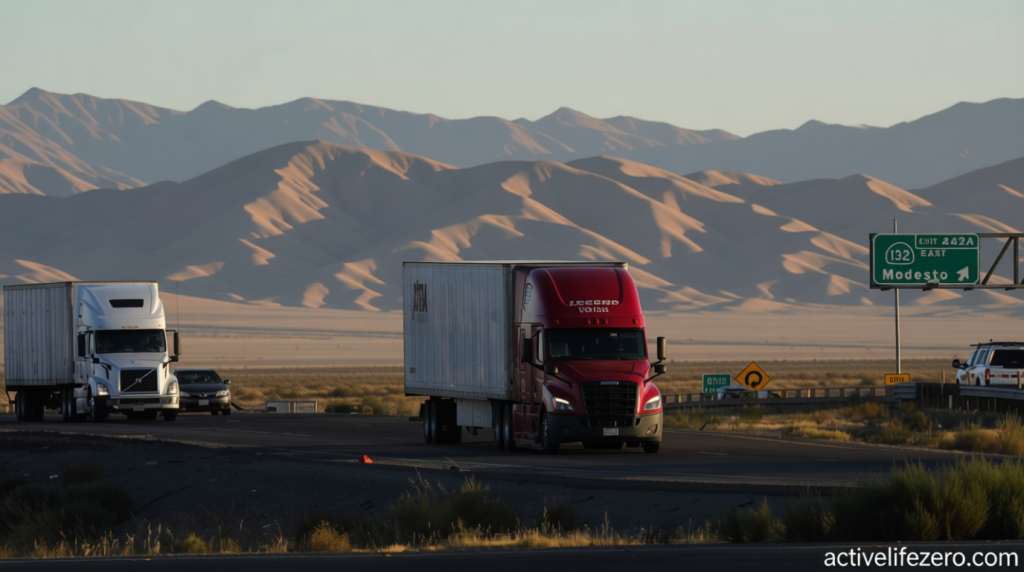
After 20 Years on the Road, Luis Sanchez Finds His Career Unraveled by New Rules
He was a truck driver for 20 – Luis Sanchez, a veteran truck driver with two decades of experience, is now facing an uncertain future due to new regulations under the Trump administration. His journey has taken him across the country, hauling everything from perishable groceries to construction materials. The profession, often isolating, requires extended hours spent on the road, making radio broadcasts a common companion. For years, he built his livelihood on the back of long-haul rigs, relying on the camaraderie of fellow drivers—many of whom are immigrants, like himself. Yet today, his license, once a symbol of stability, is no longer valid, leaving him without work.
The Policy That Changed Everything
Sanchez’s story is emblematic of thousands of noncitizen truckers who have seen their licenses revoked or denied renewal in the past year. The Trump administration’s crackdown on immigration has introduced sweeping changes to the commercial driver’s license (CDL) process, targeting foreign-born drivers with a focus on those without permanent legal residency. This shift follows a series of high-profile accidents involving truckers, which authorities used to justify stricter safety measures.
“We don’t go home every day like normal work,” said Sanchez, whose family resides near Fort Worth, Texas. “Sometimes we had to sacrifice family for the job we had.”
The core of the new policy is a February rule that limits the issuance and renewal of non-domiciled CDLs to holders of a narrow range of visas. This restriction has thrown many drivers into chaos, as their licenses—essential for operating heavy-duty vehicles—now hinge on their visa status. In addition, the administration pressured states to revoke licenses when their expiration dates outlasted the holders’ work permits, a move that critics argue has created unnecessary hurdles.
A Nation’s Freight Relies on These Drivers
The United States depends heavily on its trucking industry, which accounted for nearly 73% of the nation’s freight movement in 2024. With already high turnover rates and persistent labor shortages, the loss of even a fraction of CDL holders has significant consequences. According to the Department of Transportation, the new visa regulations could eliminate up to 200,000 licenses, representing about 5% of active CDLs. This means nearly one in six drivers who operate large trucks are now at risk of being sidelined.
Communities such as Punjabi Sikhs have historically contributed to the backbone of the industry. However, recent events have cast doubt on their role. In August 2025, a Sikh trucker was arrested for allegedly making an illegal U-turn on the Florida Turnpike, resulting in a fatal crash. Florida Troopers stated the driver had entered the country illegally in 2018. Just over two months later, another incident in California involved an asylum seeker who caused a multi-vehicle pile-up, killing three people. These tragedies were used to bolster the administration’s case for tighter oversight.
Industry Response and Legal Battles
Transportation Secretary Sean Duffy framed the new rules as a necessary step to ensure road safety. In a September statement following the Florida crash, he declared, “Licenses to operate a massive, 80,000-pound truck are being issued to dangerous foreign drivers—often times illegally. This is a direct threat to the safety of every family on the road, and I won’t stand for it.” To address perceived risks, the Federal Motor Carrier Safety Administration (FMCSA) launched initiatives to combat “chameleon carriers,” fleets that exploit multiple registration numbers to bypass regulations. The agency also shut down hundreds of fake CDL mills, which had been issuing licenses to drivers without proper documentation.
Despite these efforts, some states have resisted the policy changes. New York, for instance, chose not to revoke licenses it deemed valid, leading to a lawsuit over lost federal funding. Texas, Sanchez’s home state, followed suit by revoking his license in December 2025. Sanchez, who had renewed his CDL just two years prior, was stunned when he discovered his own had been downgraded after seeing a TikTok video from another non-domiciled driver. “It all came crashing down in a matter of days,” he said, describing the sudden loss of his livelihood.
Critics Question the Broad Reach
While the administration emphasizes safety, critics argue the rules are too sweeping and have unfairly penalized drivers caught in bureaucratic missteps. DOT audits in multiple states revealed thousands of licenses whose expiration dates didn’t align with work permit terms. Some of these errors were administrative, not intentional, yet they resulted in revoked licenses. “Many drivers are being punished for things beyond their control,” said one advocacy group, highlighting the human cost of the policy.
Sanchez’s case is not unique. Across the country, noncitizen drivers have faced uncertainty, with some losing their jobs and others struggling to navigate the renewed application process. The new rules have also raised concerns about the broader impact on the trucking workforce. With labor shortages already straining the industry, the sudden reduction of CDL holders could disrupt supply chains and increase costs for consumers. The administration’s approach, while aimed at bolstering safety, has sparked debates about balance between enforcement and economic necessity.
The Road Ahead for Immigrant Drivers
For Sanchez and others like him, the future remains unclear. The new regulations have created a climate of fear, prompting some drivers to consider leaving the industry or seeking alternative work. While the administration maintains that these measures are essential to reduce risks, the personal toll on drivers like Sanchez underscores the challenges of implementing such policies. “We’re not just numbers on a form,” he said. “We’re people who work hard to support their families.”
As the debate continues, the trucking industry faces a critical crossroads. The push for stricter immigration controls has reshaped the landscape for noncitizen drivers, who once formed a vital part of the workforce. With their licenses now under scrutiny, the question remains: how will the nation’s freight network adapt to this new reality? For now, Sanchez is among the many who have been forced to put down the wheel, leaving behind a life of long hours and hard work for an uncertain future.
