
‘Difficult’ to be hopeful: How people survive under one of the worst inflation rates in the country
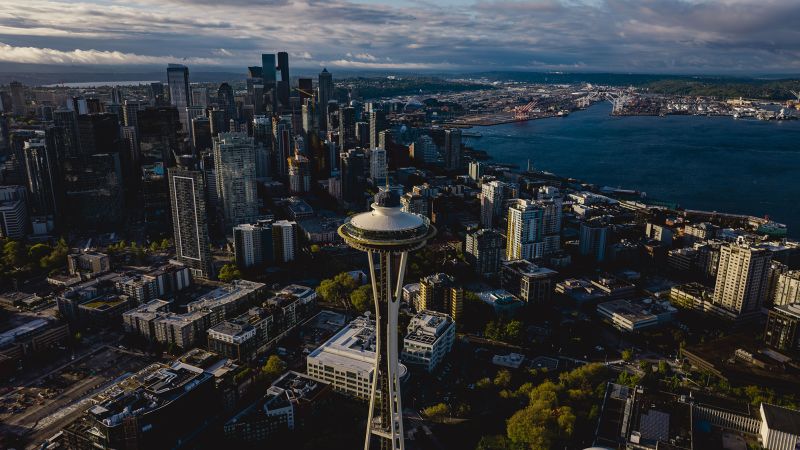
Activelifezero.com – Britney Johnson has started setting her alarm for 3:50am. That’s the only way she’ll make it to the bus on time to commute to Seattle from her home in Tacoma – a 74-mile roundtrip. Johnson used to drive to work as a line cook at Meta’s Seattle offices.
But then gas prices started to creep up in the spring, topping out at $5.89 per gallon. “And I was like, oh my gosh!” she said, “I’m getting up earlier.” Johnson isn’t the only one making sacrifices to make ends meet. Inflation is still hurting many working families nationwide, but in metro areas like Seattle, the pain is even more acute.
The inflation rate in the Emerald City is one of the highest in the country – 4.5% in June, a whole percentage point higher than the national rate and second only to Philadelphia. The cost of living in the US has risen for years, mainly driven by food and energy. But the culprit behind Seattle’s sharp increase is energy – both gasoline and for the home.
“That to me, is the whole enchilada, not to minimize the other stuff, like food,” said Victor Menaldo, University of Washington professor of political science and expert on political economy. “We’re very much into regulating energy in this state, whether for good or ill – I’m not here to comment on that – but… we’re starting from a higher base.” Washington state’s cap-and-invest program, for example, has limited carbon emissions but also been blamed for higher prices. A gallon of regular gas around Seattle currently costs about $5.30 on average, more than a dollar above the national average.
Johnson makes more than $30 an hour, which in many parts of the country, is a decent wage. But money is tight. Her utilities alone are about $200 per month on top of the $1,700 she pays in rent for the one-bedroom apartment she shares with her partner.
Utility costs are climbing nationwide as demand surges to feed energy-hungry data centers, and climate change spurs costly upgrades. The average rate for US residential electricity is up more than 6% over the past year, according to the EIA. In Seattle, electric bills for many residents have increased 48.5% since 2024, well above the national average, the Washington Utilities and Transportation Commission (UTC) told CNN.
Puget Sound Energy, a major provider, has requested additional rate increases for 2027 and 2029. “After decades of relatively low utility rates supported by our inexpensive hydropower system and relatively mild climate, both the climate and rates are changing,” a UTC spokesperson said. So when gas prices spiked after the war in Iran began, Johnson not only changed her commute but considered a second job or seeking out a roommate for her and her partner.
The couple also no longer go out to eat, stopped planning trips and are limiting how much fresh produce they buy. “It makes it difficult to see a horizon where we can continue and be hopeful,” she said. “Because right now, it’s a thing where money is all that we can think about.” Even so, Johnson still takes pride in serving different exotic cuisines to tech workers, who sometimes take pictures and post her food on social media – a high compliment, she says.
But the dichotomy of experiences in one cafeteria is not lost on her. Johnson thinks the people she cooks for largely don’t have to make the same tough choices. Chris Elford, who owns a brewery and a cocktail bar downtown, has a lot of regulars who work at Seattle tech giants like Amazon and Microsoft.
He said even tech workers aren’t impervious to the city’s rising cost of living. “For the first time in the almost 13 years that I’ve lived in Seattle, I am noticing a culture shift in the tech people …that they, for the first time, are also feeling vulnerable,” he said. “And it’s not because they don’t have money, like expendable income.
It’s because their jobs are no longer secure.” In 2024, about 205,000 people in the Seattle area held “computer and mathematical occupations,” according to the US Census Bureau’s American Community Survey, 11,000 fewer than the year before. Only California outpaced Washington for tech layoffs. Elford said he can tell consumers are craving deals just by looking at how the Monday crowd at his brewery, Here Today, has grown 20% compared to last summer.
Word has gotten out about Monday’s $8 smashburger deal (usually priced at $16). Then there’s the Jell-O shots. “I did not see myself at 43 selling the amount of Jell-O shots that I sell,” Elford said.
He believes skyrocketing Jell-O shot sales are because people are looking for something fun and nostalgic, but also affordable. At $4 each, it’s easy to buy a round for friends. It’s not just his customers.
Like all restaurants and bar owners, Elford is also dealing with rising costs. He employs fewer people, and they don’t go out after work as much. He’s also absorbed the more than 11% rise in beef prices over past year but may have to raise menu prices soon.
And costlier citrus fruits mean certain drinks at his cocktail bar, Navy Strength, are now made with a shelf-stable “super juice” concoction instead of fresh-squeezed limes. While many are flocking to take advantage of an $8 burger, Alicia Roten’s family is simply trying not to eat out at all. The cost of daily life in Lake Stevens, Washington – fuel, groceries, medications and children’s formula – has added up.
Roten’s oldest son has autism and Down syndrome. He’s had 16 procedures in 4 years, so he requires specific medicines and trips to Seattle Children’s Hospital for regular treatment. The 70-mile roundtrip to the hospital now costs more due to higher gas prices.
The price of benefit plans for Medicaid and Medicare have also gone up substantially. “You notice that every little bill goes up just 5% or 10%, and all of a sudden it adds up to just being more than you make,” she said. Roten’s husband works as a general contractor.
She, like her sister and her mother, works in the grocery business. But things have changed. Her parents were able to buy a nice home in the Seattle area for $300,000 and still afford different extracurricular activities for her and her siblings.
Meanwhile, Roten and her husband are stretched thin, putting renovations of what was supposed to be a starter home on hold. “How could we have gone from that to this in one single generation? We’re not high class, we’re not low class, but there’s so much of us in the middle that are just wondering where we fit into this equation,” she said.
Related Reading
Frequently Asked Questions
What is Difficult to be hopeful?
Difficult to be hopeful is the main topic of this guide. The article explains the context, practical details, and next steps readers should understand.
Why does Difficult to be hopeful matter?
Difficult to be hopeful matters because readers are looking for a useful answer, not just a short summary. Good content should match search intent and help them decide what to do next.
