
By the numbers: Here’s what you might have missed in SpaceX’s record market debut
SpaceX’s Record-Breaking IPO: A Deep Dive into the Numbers
By the numbers – On June 12, 2026, SpaceX made history with its initial public offering, marking a pivotal moment in the financial markets. The event drew massive attention, with Wall Street buzzing and everyday investors flooding the market with buy orders. This surge in demand even caused temporary outages on Robinhood, a popular trading platform, as the system struggled to handle the volume. Meanwhile, Elon Musk, the founder and CEO of the company, solidified his position as the first trillionaire in the world. The IPO’s success was not just a reflection of investor confidence but also a testament to the growing significance of space exploration and technological innovation in the global economy.
The Meteoric Rise of SpaceX’s Stock
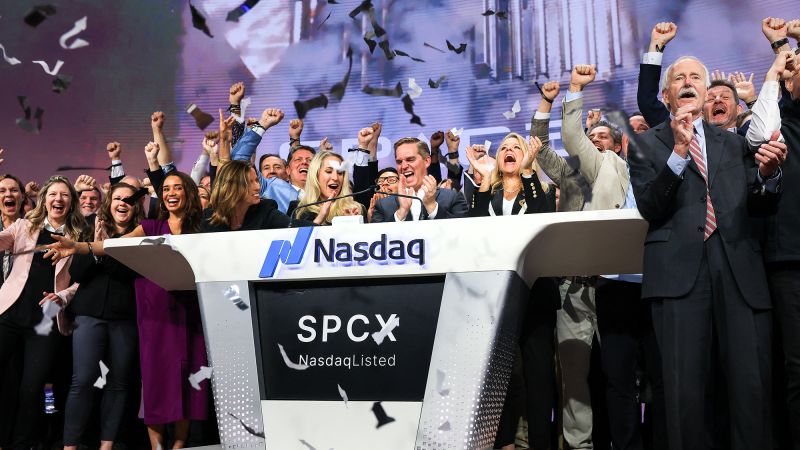
Shares of Elon Musk’s aerospace and artificial intelligence firm, listed under the ticker SPCX, closed at $160.95 on the first day of trading, a 19.22% increase from its IPO price of $135. This dramatic jump underscores the immense optimism surrounding the company’s future. With its market valuation surpassing $600 billion, SpaceX claimed the sixth spot among the largest publicly traded US companies. Such a milestone is rare for a relatively new venture, especially one that has yet to fully capitalize on its ambitious projects.
Musk’s Financial Transformation
Elon Musk, the wealthiest individual on the planet, crossed into the trillionaire bracket following the IPO. His personal fortune skyrocketed as SpaceX’s stock price surged, driven by the public’s belief in his vision for space colonization and sustainable energy. Musk holds nearly half of the company’s shares, a testament to his long-standing role as a founder and leader. This ownership stake not only amplifies his financial influence but also ties his personal success to the company’s performance. The IPO’s success has effectively transformed him from a billionaire to a trillionaire in a matter of hours.
The Frenzy Behind the Buy Orders
Investor enthusiasm for SpaceX’s IPO was unprecedented. Within minutes of the stock’s listing, Fidelity, one of the largest brokerage firms, received an astonishing number of buy orders. The sheer volume of demand outpaced the platform’s capacity, leading to a temporary disruption in trading. This phenomenon highlights the surge in interest from retail investors—individuals trading stocks as opposed to institutional players. The involvement of everyday investors in such a massive way suggests a broader shift in how the public perceives tech-driven ventures, particularly those led by visionary entrepreneurs like Musk.
The Human Capital of SpaceX
SpaceX’s success is not only tied to its technological breakthroughs but also to its team of dedicated employees. The company employs over 7,000 individuals, a figure that has grown significantly since its founding in 2002. Musk’s recent post on X, a social media platform, emphasized the value of these employees, stating, “I love the incredible people of SpaceX beyond words.” His words reflect a deep appreciation for the workforce behind the company’s achievements. Moreover, the IPO’s success has likely positioned many of these employees as millionaires, given the substantial value of their shares.
“I love the incredible people of SpaceX beyond words,” Musk wrote Friday afternoon in a post on X.
Starlink’s Satellite Expansion
As part of its broader ambitions, SpaceX continued its satellite deployment efforts on the day of the IPO. The company launched a record number of Starlink satellites into orbit, further expanding its global broadband network. While this is a routine operation for the firm, the timing of the launch coincided with the IPO’s debut, drawing additional attention. Starlink, a key component of SpaceX’s business strategy, has already deployed over 4,000 satellites, with plans to reach tens of thousands in the coming years. This rapid expansion underscores the company’s commitment to dominating the space industry.
Elon Musk’s Conditional Share Purchase
One of the more intriguing aspects of the IPO was Musk’s personal stock purchase plan. His pay package included the ability to buy additional shares at a relatively low price, contingent on the company achieving a specific milestone: establishing a colony on Mars with 1 million residents. While this condition may seem ambitious, it aligns with Musk’s long-term goals and highlights the unique nature of his leadership. The inclusion of such a clause in his compensation package demonstrates a blend of financial incentives and visionary aspirations, tying his personal wealth to the success of his interplanetary ambitions.
SpaceX’s Standing in IPO History
SpaceX’s IPO not only set records but also redefined the scale of initial public offerings. The company’s market debut surpassed the previous largest IPO in terms of valuation and investor participation. This achievement places it among the most significant entries in the history of public market listings. To put the numbers into perspective, the IPO raised over $20 billion, a figure that dwarfs the typical size of tech IPOs. The event’s success has sparked discussions about the future of space-related ventures and their potential to disrupt traditional industries.
The Future of AI-Driven IPOs
SpaceX’s record-breaking IPO is just the beginning of a trend that is expected to continue throughout 2026. The year is poised to see a wave of mega AI-related offerings, with OpenAI and Anthropic set to follow in the coming months. These companies are poised to capitalize on the growing demand for artificial intelligence technologies, similar to how SpaceX leveraged its position in the space industry. The success of SpaceX’s IPO serves as a benchmark for these upcoming listings, signaling a broader shift toward investing in innovation-driven enterprises.
Behind the Scenes of the IPO Event
The IPO event was not just a financial milestone but also a spectacle in itself. On the day of the debut, the Nasdaq balcony was filled with people dressed in astronaut costumes, a nod to SpaceX’s iconic imagery and the public’s fascination with space exploration. This visual element added to the excitement of the event, drawing media attention and reinforcing the company’s brand identity. The combination of financial success and cultural impact highlights the multifaceted nature of SpaceX’s rise in the public eye.
Market Implications and Long-Term Prospects
SpaceX’s IPO has had far-reaching implications for the market. The company’s valuation and stock performance have sparked debates about the future of private space companies and their ability to sustain growth. Analysts predict that the success of this IPO will pave the way for more investments in space technology and AI, as the public and institutional investors alike recognize the potential of these sectors. With its strong financial backing and ambitious goals, SpaceX is well-positioned to continue its dominance in the global economy.
As the market continues to evolve, the numbers surrounding SpaceX’s IPO will remain a benchmark for future ventures. From the surge in stock price to the record number of buy orders, every statistic tells a story of innovation and ambition. The company’s journey from a private startup to a publicly traded giant is a reminder of the power of visionary leadership and the role of investor confidence in shaping the future of technology and space exploration.
