
Why people can’t stop talking about Jonasi from Netflix’s ‘The Polygamist’
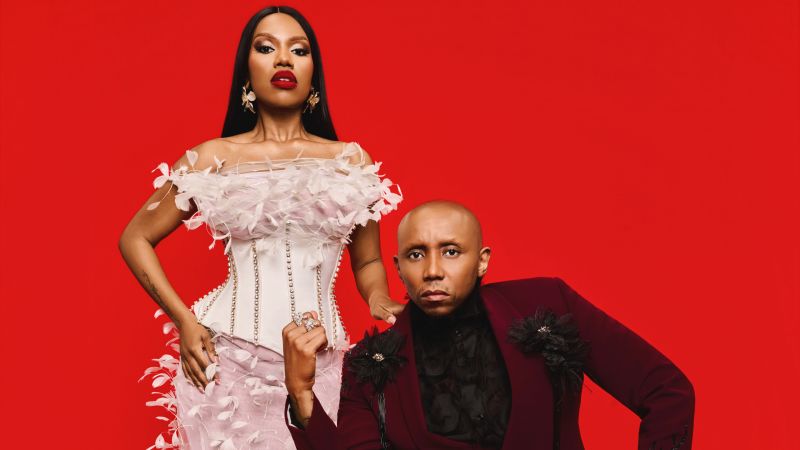
Activelifezero.com – Netflix’s South African drama “The Polygamist” has become one of the streamer’s biggest international word-of-mouth hits, climbing the charts far beyond Africa and turning its lead characters into global talking points about relationships and emotional abuse. But the show’s success isn’t just about its shocking plot twists. Adapted from Zimbabwean author Sue Nyathi’s 2012 novel of the same name, “The Polygamist” follows the dark secrets and emotional fallout hidden behind the glamorous life of a man with multiple wives and mistresses.
The series has surpassed 23 million views, landing on Netflix’s Top 10 non-English TV rankings across more than a dozen countries. Viewers are using the series to start conversations about emotional abuse, manipulation, narcissism, and why so many people remain in unhealthy relationships. Social media has been flooded with reaction videos, relationship debates, and personal stories inspired by the show’s central character, Jonasi.
“It’s sparked this conversation, this dialogue,” actor S’dumo Mtshali told CNN’s Larry Madowo. “People begin to share their own personal stories. That’s the funny thing.
They come up to me as Jonasi.” Mtshali plays the charismatic yet manipulative husband at the center of the story. His performance has been so convincing that fans struggle to separate the actor from the character. Netflix’s ‘The Polygamist’: Gugu Gumede and S’dumo Mtshali on the South African global hit “I’ll own being the most hated man on Netflix … until Netflix gives me another show,” he laughed.
For co-star Gugu Gumede, the show’s success unfolded almost overnight. “It started in South Africa,” she said. “That weekend was insane.
Then every new day you’d wake up, and it was like a new country had been discovered. We were calling each other, saying, ‘What is going on?’ It took a while for it to sink in.” Gumede said the show’s international reach has introduced South African storytelling to audiences who may never have watched a Zulu-language drama before. “I’ve had over 250,000 new followers on Instagram alone,” she said.
“It’s gotten us and our work seen by people that would have never thought to watch South African stories.” Despite its title, both actors insist the series isn’t really about polygamy itself. “I knew this isn’t polygamy,” Mtshali said. “This is dirt.
This guy is an absolute beast.” Instead, he approached Jonasi as a man who weaponizes power differently with each woman in his life. “I knew I was going to be different through each of these perspectives — different to this woman, different to that woman,” he said. “The story needed to be told.” How Nomzamo Mbatha is using global fame to help others Gumede believes that’s why audiences connected so deeply.
“The biggest conversation it sparked was infidelity versus polygamy,” she said. “Jonasi was not a polygamist in the true sense. This was a narcissist — a serial cheater who sanitized his cheating.” Rather than debating the practice of polygamy, she says viewers began reflecting on the emotional abuse and power dynamics playing out on screen.
“It was such a mirror that was held up to society,” Gumede says. “People began asking themselves, ‘Who am I really? What has made me stay in situations that are no longer serving me?’” That reaction doesn’t surprise Kiaundra Jackson, a licensed family and marriage therapist in Los Angeles, who has built a large online following reviewing movies, television shows, and celebrity gossip through a therapist’s lens.
Jackson said viewers across cultures recognize something familiar in Jonasi — not because of polygamy, but because of the emotional manipulation underneath it. “I honestly feel like it resonated because people see themselves in it,” Jackson told CNN. “Maybe they experienced something firsthand.
Maybe they witnessed it growing up. Maybe they know somebody who’s experiencing something like this.” Jackson is careful not to casually diagnose fictional characters, noting that mental health labels are often overused online. But she said Jonasi consistently displays behaviors associated with narcissistic personality disorder, including manipulation, a lack of empathy, an inability to accept criticism, and a need to maintain control over everyone around him.
“What makes it tricky,” she said, “is that people like this are often very charismatic. Behind the scenes, they can become a nightmare.” She believes that’s why the series resonated beyond South Africa. “Mental health concerns and unhealthy relationship dynamics transcend cultures,” Jackson says.
“Anybody can experience these things.” As “The Polygamist” has gained momentum, both Mtshali and Gumede say they’ve watched audiences use the series as a springboard for conversations about relationships, trauma, emotional abuse, and why people stay in unhealthy relationships. Strangers regularly stop Mtshali to tell him about people in their own lives. “They begin to share their own personal stories,” he said.
“Which is great because it sparked this dialogue.” Singer MOLIY’s new mixtape is a soundtrack for ‘baddies’ this summer Jackson sees that as one of storytelling’s greatest strengths. “When people see someone on screen acting exactly like their partner, they realize, ‘This isn’t just happening to me,’” she said. “It gives people language for experiences they may never have been able to name.” “I’m glad characters like this continue to exist,” she added.
“They help people realize they’re not alone.” For Gumede, the show’s success represents something larger than a one-hit series. “It’s put a spotlight on South African storytelling,” she said. “People are asking, ‘What other South African shows should I watch?’” Mtshali hopes that global success ultimately leads to better working conditions for South African actors, many of whom still don’t receive residual payments when successful shows are licensed internationally.
“We’ve seen how big our storytelling can be,” he said. “Now things need to change.” If the worldwide response to “The Polygamist” is any indication, audiences are ready for more stories that spark honest conversations about relationships and abuse. Those conversations may become one of the show’s most enduring legacies.
Related Reading
Frequently Asked Questions
What is Why people can t stop talking?
Why people can t stop talking is the main topic of this guide. The article explains the context, practical details, and next steps readers should understand.
Why does Why people can t stop talking matter?
Why people can t stop talking matters because readers are looking for a useful answer, not just a short summary. Good content should match search intent and help them decide what to do next.
