
France becomes the first EU country to ban social media for children
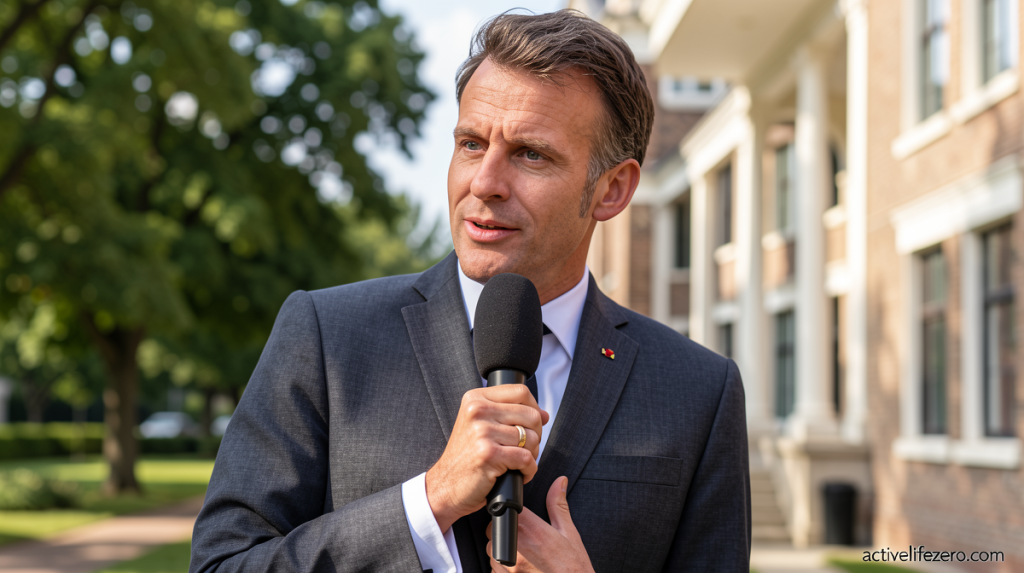
France Leads European Union in Social Media Age Restriction for Youth
Activelifezero.com – French legislators have approved groundbreaking legislation that prohibits social media access for minors below fifteen years of age, establishing the nation as the inaugural European Union member to implement such a comprehensive age threshold. This historic decision positions France at the forefront of a growing international movement to protect young people from digital platforms.
The legislative vote occurred on Tuesday with overwhelming support from lawmakers across political parties. The bill received strong endorsement from President Emmanuel Macron, who will formally sign the measure into law. Following the parliamentary decision, Macron shared his thoughts on the social media platform X, writing that social media will be prohibited for children under fifteen beginning with the current academic year.
France joins a select group of nations already pursuing similar restrictions. Australia achieved global recognition late last year when it became the first country worldwide to implement a social media ban targeting those under sixteen. Meanwhile, British authorities recently announced comparable limitations, which are anticipated to take effect during the following year. Several additional European nations, including Spain, Greece, and Denmark, are currently developing their own minimum age requirements for social media participation.
Presidential Vision and Legislative Timeline
President Macron has been a vocal advocate for protecting young minds from digital manipulation. In a video address delivered in January, he emphasized that “The brains of our children and our teenagers are not for sale.” He further elaborated that “The emotions of our children and our teenagers are not for sale or to be manipulated, neither by American platforms nor by Chinese algorithms.”
Macron directed the French government to accelerate the legislative process, with the objective of having the law fully operational by September, coinciding with the start of the new academic year. The enforcement of this new regulation falls under the jurisdiction of Arcom, France’s audiovisual and digital communications authority. The regulator expects the law to encompass all major social media platforms operating within the country.
Age Verification and Implementation Challenges
One of the primary questions surrounding the legislation concerns how social media companies will verify user ages. Australia has mandated that companies “take reasonable steps” to prevent underage children from creating or maintaining accounts. Similarly, the French government has committed to establishing robust age verification mechanisms to support the new law.
Arcom reports that French children between twelve and seventeen years old spend an average of one hour and twenty-one minutes daily on TikTok. The regulator has expressed concern that TikTok’s recommendation algorithm frequently promotes the most “extreme” content, potentially exposing teenagers to a continuous flow of anxiety-inducing or otherwise detrimental videos.
Earlier iterations of the proposed legislation contained additional provisions, including a prohibition on advertising that promotes social media to children, particularly through influencer marketing. These versions also called for social media advertisements to display the warning: “Dangerous products for children under 15.” Unfortunately, neither of these proposals survived into the final version of the bill.
Parental and Youth Perspectives
The proposed ban has received considerable support from French families. Geraldine Delacroix, a mother of six, expressed her approval to CNN in March, stating, “I think it’s great.” She acknowledged uncertainty about practical implementation but concluded that “in any case, it’s better than nothing.” Delacroix highlighted that children frequently circumvent existing parental controls, noting, “Even if we block, they find ways to get around it.”
As a pediatrician, Delacroix has observed increasing parental concern regarding smartphones and social media over the past ten years. “People are tense (about smartphones),” she explained. “There’s been a real change of atmosphere.”
Young people themselves have offered varied responses to the legislation. Delacroix’s daughter Ariane, who falls within the thirteen to fourteen age range, perceived minimal drawbacks to the ban but wished it had been introduced earlier. “It was a bit too late for the young people of my generation who are 13 to 14,” Ariane told CNN. She described the addictive nature of social media, explaining that “We have a tendency to say, ‘OK, I’m just going to look at my phone for five or 10 minutes’ and then, as it’s super-addictive, we spend an hour, two hours on the phone.”
Ariane, who maintains accounts on all major social networks, appreciated the convenience of these platforms but saw limited benefits for her age group. “They provided fast, easy entertainment, without effort,” she said, “but I saw almost no upside for children of my own age.”
Her older sister Gabrielle, who gained access to Instagram and TikTok before turning ten—well before the typical thirteen-year threshold for most platforms—attributed excessive smartphone habits to pandemic-era lockdowns. “Once you’re, like, used to it, you just keep on using it,” Gabrielle observed. She predicted that children would inevitably discover methods to bypass the restrictions and recommended that platforms focus more on filtering harmful content.
Looking Beyond Simple Bans
For nations considering age restrictions, effective age verification remains a significant hurdle. French Education Minister Édouard Geffray cautioned lawmakers in January that “Bans alone won’t be enough.” He emphasized that “We can’t just restrict, we have to educate and propose different ways of socializing.”
Katia Roux of Amnesty International France echoed this sentiment on Tuesday, suggesting that “The debate over banning social media” should extend beyond mere prohibition to encompass broader educational strategies and alternative socialization opportunities for young people.
As France moves forward with implementation, the world will watch closely to see how this pioneering legislation unfolds and whether it inspires further action across the European Union and beyond.
