
Trump’s Iran envoys face scrutiny as diplomacy stalls
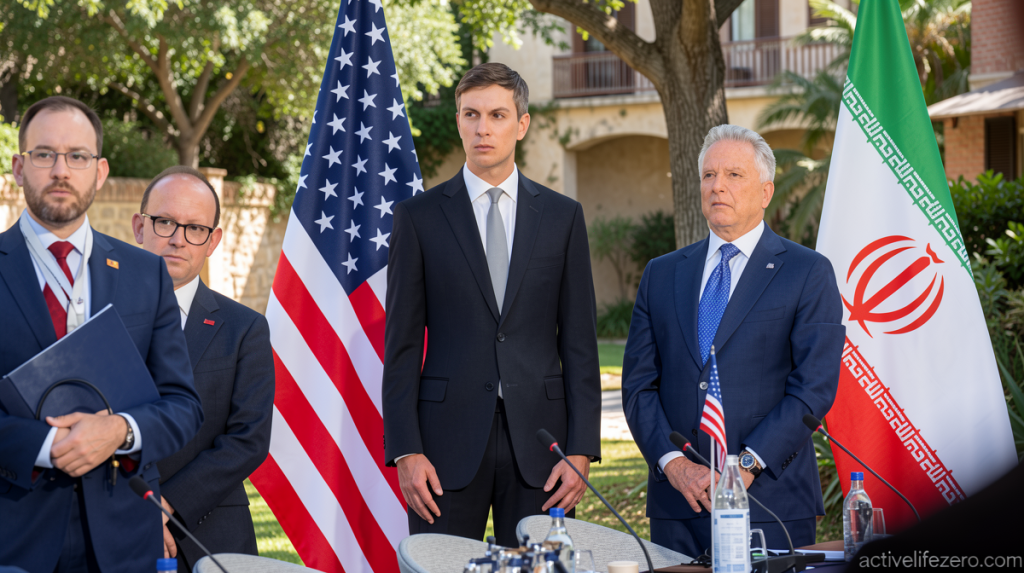
Iran Diplomacy Under Pressure as Kushner and Witkoff’s Efforts Face Reckoning
A Fragile Agreement Tested by Escalating Tensions
Trump s Iran envoys face scrutiny – Following President Donald Trump’s signature on a memorandum of understanding with Iran, Jared Kushner and Steve Witkoff immediately began reaching out to Republican lawmakers who remained unconvinced about the path forward. The two-day-old agreement established a sixty-day period for negotiations concerning Tehran’s nuclear ambitions, yet its fourteen provisions left considerable room for interpretation. Across the capital, questions mounted regarding precisely what commitments the president had endorsed and which concessions might have been extended to the Iranian government.
Kushner, serving as Trump’s son-in-law and diplomatic representative, alongside Witkoff in his capacity as special envoy, had dedicated months to conducting behind-the-scenes discussions with Iranian counterparts. Their telephone briefing aimed to convince skeptical Republicans that the agreement represented genuine progress and that subsequent negotiations would proceed effectively. One individual acquainted with the conversation noted that Witkoff highlighted a recent confidential journey to the Oak Ridge nuclear facility, where both envoys consulted with technical specialists. According to Witkoff, several of these experts stood prepared to contribute to the diplomatic effort.
From Optimism to Uncertainty
Witkoff expressed confidence that discussions addressing what he termed “the toughest issue” — Iran’s nuclear capabilities — would commence without delay. Yet three weeks elapsed, and technical conversations had barely commenced. More troublingly, the entire framework appeared to be unraveling. While minor disputes had emerged since the memorandum’s execution, the most recent confrontation presented the gravest challenge to an arrangement Trump himself now characterized as finished.
Iranian forces attacked vessels navigating the Strait of Hormuz on Tuesday, prompting American military retaliation. Tehran announced its intention to respond in kind. By Wednesday, American forces conducted additional strikes, fulfilling a promise Trump had made earlier that day while criticizing Iranian leadership. During a press conference held at the NATO summit in Ankara, the president voiced hesitation:
“I’m not sure I want to make a deal with them.”
Despite his doubts, Trump maintained that renewed conflict with Iran remained unlikely. Nevertheless, the possibility of intensified hostilities in the region continued to grow, widening the distance between the administration’s objectives — particularly the removal of enriched nuclear material — and the realistic prospects for achieving them within the sixty-day timeframe.
Expert Criticism Mounts
These developments prompted substantial questioning about the actual accomplishments of the memorandum. Observers wondered whether Kushner, Witkoff, and Vice President JD Vance had exaggerated the diplomatic progress achieved while oil prices climbed and domestic pressure intensified to conclude the conflict.
Nate Swanson, a veteran State Department official who served as senior adviser on Iran policy across multiple administrations and participated in negotiations during spring 2015, offered a blunt assessment:
“The MOU didn’t actually resolve anything.”
Swanson characterized the agreement as
“almost entirely aspirational.”
Richard Nephew, who directed Iran affairs at the National Security Council between 2011 and 2013, predicted such complications would arise. He attributed them to both misinterpretations of the agreement’s provisions and the fact that fundamental issues remained unresolved.
“You could even argue the MOU made things worse,”
Nephew observed, specifically referencing the Strait of Hormuz situation.
Structural Weaknesses Exposed
While the administration emphasized that Iran must not control this vital maritime corridor, the memorandum failed to establish a definitive mechanism for accomplishing that objective. Swanson noted that officials remained fixated on a comprehensive Phase 2 agreement despite the pressing need to clarify the strait’s status first.
“There still seems to be this persistent focus on this big Phase 2 deal, where the reality of the situation is they really just need to codify and clarify the strait before moving on to other things. They have not done that,”
he explained.
Swanson expressed uncertainty regarding responsibility for this oversight, suggesting it could fall on Vance, Witkoff, Kushner, or Trump.
“I don’t know whose fault that is, if that’s Vance, Witkoff, Kushner, Trump, I don’t know, but it’s a clear mistake somewhere in the chain of command.”
Nephew placed direct blame on the negotiating team’s lack of experience. Throughout their discussions with Iran, both Kushner and Witkoff maintained a narrow circle of advisors, depending primarily on political appointees. This approach reflected a broader skepticism within the Trump administration toward career civil servants. Several former American officials indicated that many experienced government employees — including nuclear specialists — received only occasional consultation during the months preceding the memorandum’s signing. These experts were not substantially integrated into the initial decision-making framework or the broader diplomatic initiative directed by Kushner and Witkoff.
Furthermore, numerous career officials had departed from government service. Compared to previous administrations that relied heavily on institutional knowledge, this administration’s approach left critical gaps in expertise and continuity, potentially contributing to the current diplomatic challenges.
