
How the Supreme Court has changed on transgender rights since 2020
Supreme Court’s Evolving Stance on Transgender Rights: From Expansion to Retrenchment
How the Supreme Court has changed – Over the past six years, the U.S. Supreme Court has undergone a significant transformation in its approach to transgender rights, shifting from broad protections to a more restrictive interpretation. This evolution is marked by pivotal rulings that have reshaped the legal landscape for LGBTQ+ individuals, particularly in areas such as employment, education, and military service. The court’s 6-3 majority in recent decisions reflects a growing alignment among justices to limit the scope of rights previously extended to transgender people, despite earlier landmark rulings that had seemed to signal progress.
The 2020 Turning Point: Bostock and Its Aftermath
When the Supreme Court ruled in Bostock v. Clayton County in 2020, it was hailed as a major victory for transgender rights. The decision, authored by Justice Neil Gorsuch, interpreted Title VII of the 1964 Civil Rights Act to include protections for transgender workers, stating that discrimination based on gender identity is a form of sex discrimination. This landmark case extended the law’s protections to not only gay and lesbian employees but also transgender individuals, broadening the scope of federal anti-discrimination statutes.
Gorsuch, known for his textualist philosophy, argued that the phrase “because of … sex” in Title VII inherently encompassed transgender employees. His opinion surprised many, especially given that he was the first justice appointed by President Donald Trump to author a majority decision. The ruling was supported by conservative Justice John Roberts and the four liberal justices on the bench at the time. However, the decision did not immediately translate into sweeping reforms for transgender rights, as right-wing groups fiercely opposed its implications.
Even before the official announcement, the majority’s position was leaked to the media, prompting conservative writers to pressure Gorsuch to reconsider. Despite this, the court’s 2020 decision laid the groundwork for broader legal interpretations of gender identity. Yet, as the years have passed, the court’s composition has changed, and its approach has shifted. The departure of Justice Ruth Bader Ginsburg, replaced by Amy Coney Barrett in October 2020, has contributed to the current conservative majority, which has since rolled back some of the progress made in the earlier years.
Recent Rulings: Reinforcing Restrictions on Transgender Rights
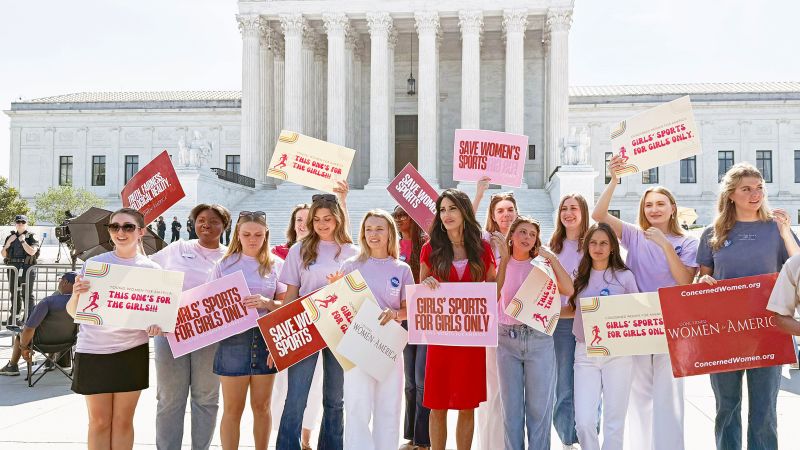
Earlier this week, the Supreme Court delivered another 6-3 ruling that upheld state laws prohibiting transgender women from competing in women’s sports. This decision, like the 2020 case, has been framed as a necessary step to protect female athletes from perceived unfair advantages. Justice Brett Kavanaugh, writing for the majority, emphasized the physical disparities between biological sexes, asserting that allowing transgender individuals on female teams could undermine the competitive integrity of sports.
The ruling echoes similar decisions made in recent years, including allowing the Trump administration to exclude transgender servicemembers from the military and permitting the sex designation on passports to align with an individual’s biological sex. These cases have collectively reinforced a pattern of legal narrowing, with the court increasingly prioritizing traditional gender norms over inclusive interpretations of rights. As Kavanaugh stated, “Separate sports teams for biological males and females are reasonable, given the inherent physical differences between the sexes.”
Meanwhile, the court’s actions have exacerbated tensions within its ranks. While the majority focused on upholding restrictions, dissenting justices like Sonia Sotomayor highlighted the exclusion of trans girls from competitive opportunities. The 2024 ruling also underscores a broader trend in state legislation, where 27 states have enacted laws barring transgender women from participating in women’s sports teams. These laws have been supported by conservative lawmakers and advocacy groups, who argue they safeguard female athletes from physical and psychological challenges.
Political and Social Context: A Growing Divide
Transgender individuals, who constitute roughly 1% of the U.S. population, have become a focal point in national political debates. Their rights have been increasingly tested through state-level laws and federal policies, with Republicans and conservative organizations leveraging the issue to rally support. In the 2024 presidential campaign, Trump specifically targeted LGBTQ+ communities, emphasizing his commitment to traditional gender roles. His campaign ads depicted him as a defender of cisgender interests, contrasting with Kamala Harris, who was portrayed as embracing a more inclusive vision of gender identity.
Public opinion has also shifted in tandem with these legal developments. While the 2020 decision was celebrated by many as a step forward, the subsequent rulings have led to a polarized climate. A recent Pew Research study highlighted this divide, noting that attitudes toward transgender rights have become increasingly divided, particularly in the wake of court decisions that have allowed states to impose restrictions on trans youth access to healthcare. These trends suggest a growing consensus among conservative lawmakers and judges to curtail the scope of transgender protections.
Justice Gorsuch’s 2020 opinion was initially seen as a potential catalyst for expanding rights beyond employment, but the court’s recent actions indicate a more cautious approach. The majority now seems focused on consolidating legal victories, ensuring that transgender individuals remain subject to traditional categories of gender. As legal scholar Suzanne Goldberg observed, “Law is being used to scapegoat transgender people. We can see it in restrictions that cordon off transgender people from almost every area of civic life, in schools, in getting a passport, from serving in the military, in getting healthcare.” Her words underscore the broader impact of these rulings on daily life and societal inclusion.
From Breakthrough to Backlash: A Timeline of Legal Shifts
The court’s trajectory on transgender rights has been marked by a series of contrasting decisions. In 2020, the Bostock ruling was a breakthrough, but its influence has since been tempered by subsequent cases. For instance, the same 6-3 majority that upheld the sports bans also allowed states to restrict certain medical care for trans youth, including hormone therapy and gender-affirming surgeries. These decisions reflect a strategy of selective protection, where the court supports some aspects of transgender rights while maintaining strict boundaries in others.
Public attitudes have also played a role in shaping these legal outcomes. While the 2020 decision was met with widespread approval, the court’s 2024 rulings have sparked renewed debate and resistance. Advocacy groups have criticized the justices for using legal reasoning to justify policies that exclude transgender people from key aspects of society. The interplay between judicial philosophy and political ideology has become evident, with the current conservative majority advancing a narrative that prioritizes gender as a biological category over identity-based protections.
As the Supreme Court continues to redefine transgender rights, the implications for future legal battles are clear. The 2020 expansion of Title VII was a significant moment, but it has been followed by a series of decisions that reassert traditional norms. This shift not only affects the legal standing of transgender individuals but also reflects broader societal changes, where the fight for equality has become more contentious. The court’s evolving stance will likely shape the trajectory of transgender rights for years to come, with the balance of power and public sentiment remaining central to the discourse.
“Law is being used to scapegoat transgender people. We can see it in restrictions that cordon off transgender people from almost every area of civic life, in schools, in getting a passport, from serving in the military, in getting healthcare.” – Suzanne Goldberg, Columbia University law professor
The ongoing legal battles highlight the fragility of progress in the transgender rights movement. While the court has occasionally expanded protections, its recent decisions have underscored a determination to limit those rights. As the political landscape continues to evolve, the Supreme Court’s role in shaping the future of transgender rights remains a critical and contentious issue.
