
Putin and Trump held ‘businesslike’ 90-minute July 4 call, Moscow says
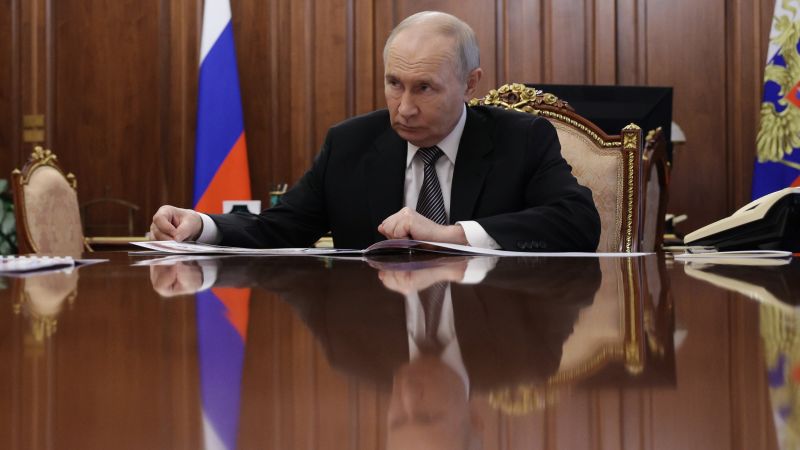
Putin and Trump Held 90-Minute July 4 Call, Moscow Says
Putin and Trump held businesslike 90 minute – On July 4, Russian President Vladimir Putin engaged in a 90-minute phone conversation with Donald Trump, during which the U.S. leader reiterated his commitment to resolving the Ukraine conflict, according to the Russian foreign ministry. This call occurred just days before a pivotal NATO summit in Turkey, set to commence on Tuesday, which Trump planned to attend. Simultaneously, Russian forces intensified their operations in Ukraine’s eastern Donetsk region, aiming to secure a major territorial gain that remains a central goal for Moscow.
The discussion, marking their fourth interaction this year, was characterized by a “businesslike and highly constructive” tone, as stated by the Russian foreign ministry. Trump emphasized his willingness to assist in bringing about an end to the war, while Putin highlighted the strategic progress made by Russian troops on the battlefield. The call took place against a backdrop of escalating tensions, with both leaders addressing the broader implications of their diplomatic engagement.
Strategic Context and Mutual Goals
The NATO summit in Turkey is expected to focus heavily on Ukraine, given the ongoing war and the recent U.S. decision to “rightsize its contributions to the NATO force model,” announced last month. This move signals a potential shift in the alliance’s military strategy, prompting concerns that Kyiv may face increased pressure in the coming months. Despite this, the Russian foreign ministry maintained that the conflict would only conclude when Russia fully controls the Donbas region, a critical area in eastern Ukraine.
Putin’s call to Trump was framed as a milestone in the war, with the Russian side celebrating the town of Kostyantynivka as a key victory. The foreign ministry called the capture of the town an “important milestone,” but Ukrainian forces disputed the claim, stating that small groups of Russian soldiers had infiltrated the area. A unit stationed in Kostyantynivka released video footage of its defenders, arguing that the Russian assertion was “disinformation designed to create the illusion of success.”
Zelensky, the Ukrainian president, also praised the conversation with Trump, calling it “very good.” He noted that the U.S. leader had reaffirmed America’s determination to bring an end to the war. “There is a real prospect to put an end to this war, and America’s resolve is decisive,” Zelensky said. However, he cautioned that Russia’s claims of progress must be scrutinized, as they often serve to bolster the Kremlin’s narrative of a strategic advantage.
Energy Targets and Military Tactics
In recent weeks, Ukraine has escalated its attacks on Russian energy infrastructure, targeting oil refineries, ports, and military factories. This strategy has disrupted Russia’s war economy, with the Ukrainian military reporting that eight oil refineries have been struck in the past month. Over 60 storage tanks have been either destroyed or severely damaged, according to their assessment. These strikes are part of a broader effort to weaken Russia’s logistical capacity and undermine its ability to sustain the war effort.
On Saturday, Ukrainian drones launched an attack on an oil terminal in St. Petersburg, which Zelensky described as a facility “generating revenue for Russia’s war.” The strike highlighted Ukraine’s growing capabilities in precision warfare, as the nation continues to develop its drone arsenal. Meanwhile, Russian forces have faced challenges, with their advances in Donetsk slowed by heavy losses and tactical setbacks. The ISW, a Washington-based think tank, noted that Putin’s exaggerated battlefield reports are part of a narrative aimed at making Russian victory seem inevitable.
Satellite imagery released by the ISW revealed a significant decline in nighttime electric lighting across Crimea, compared to a year earlier. This suggests reduced activity in the region, possibly due to the impact of Ukrainian strikes on infrastructure and the ongoing Russian military buildup. The annexation of Crimea in 2014 has long been a point of contention, and its strategic importance remains central to the conflict’s dynamics.
Diplomatic Efforts and Battlefield Realities
During the July 4 call, Trump reiterated his support for a political resolution, a stance he has consistently maintained throughout the war. The Russian side, however, accused Kyiv and its European allies of prolonging the conflict, claiming that the Ukrainian leadership is focused on “escalating the war” rather than seeking a ceasefire. This accusation aligns with the Kremlin’s broader narrative that the conflict will only end with full control over Donbas.
Ukrainian military officials have expressed skepticism about Russian claims of territorial gains, pointing to counter-sabotage operations in Kostyantynivka as evidence of persistent resistance. “Ukrainian defenders continue to hold their positions along designated lines,” the military stated, indicating that the town remains contested. Analysts suggest that such claims may be part of a psychological campaign to pressure Western allies and justify continued military support for Russia.
The conversation between Putin and Trump also touched on the role of international diplomacy in resolving the conflict. The Russian foreign ministry emphasized the need for a political settlement, while the U.S. position, as outlined by Trump, focused on fostering dialogue and reducing hostilities. This exchange reflects the complex interplay between military action and diplomatic maneuvering in the ongoing war.
CNN has sought comments from the White House regarding the call, but no official statement has been released yet. The dialogue between the two leaders underscores the shifting priorities of the U.S. and Russia, with Trump’s focus on stabilizing the conflict and Putin’s on achieving strategic objectives. As the NATO summit approaches, the outcome of this diplomatic engagement could shape the future of the war in Ukraine.
Backdrop to the Summit and Future Implications
The July 4 call is set against the backdrop of a NATO summit that will likely address the alliance’s role in supporting Ukraine. The U.S. announcement to “rightsize” its contributions has raised questions about the level of commitment to the conflict, but Trump’s insistence on ending the war suggests that the administration remains engaged. The summit will serve as a platform for coordinating European allies’ responses to Russia’s ongoing military operations and addressing the broader implications of the war for global security.
As the conflict enters its third year, the balance of power on the battlefield remains uncertain. While Russian forces have made progress in Donetsk, their gains have been tempered by Ukrainian counterattacks in the south. This regional shift highlights the complexity of the war, with both sides adapting their strategies to maintain momentum. The next phase of the conflict will depend on the effectiveness of these tactics and the outcomes of ongoing diplomatic discussions.
Ultimately, the July 4 call between Putin and Trump exemplifies the intertwined nature of diplomacy and warfare in the Ukraine conflict. While the two leaders exchanged optimistic statements, the reality on the ground continues to challenge their claims. The NATO summit in Turkey will be a critical moment to assess how the alliance navigates this complex landscape, with the potential for both escalation and de-escalation shaping the war’s trajectory in the months ahead.
