
How the new World Cup ball helped knock Croatia out with use of technology
How the new World Cup ball helped knock Croatia out with use of technology
The VAR Call That Changed Everything
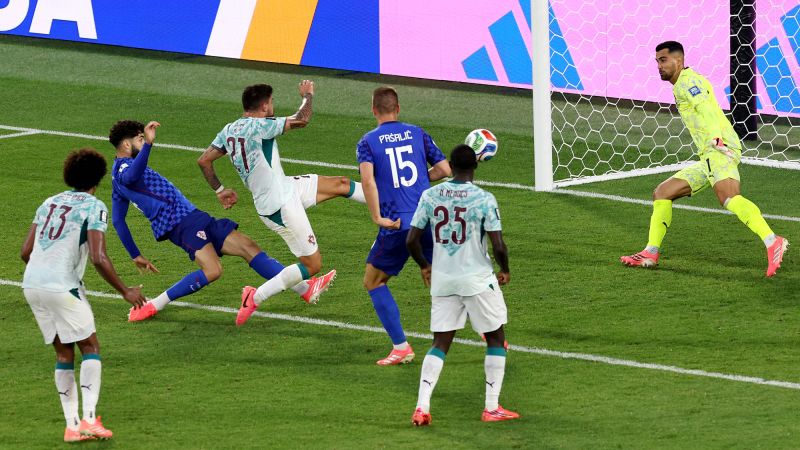
How the new World Cup ball – The VAR decision in the Croatia-Portugal match has been dubbed one of the most pivotal moments in World Cup history. As the game neared its conclusion, a seemingly decisive moment sparked intense reactions from both teams. Croatia’s players and supporters celebrated what they believed to be a game-changing equalizer, while Portugal’s squad stood in stunned disbelief. This dramatic turn of events, however, was ultimately overturned by technology embedded within the tournament’s latest ball, the Trionda, raising questions about its role in reshaping the outcome.
In the Round of 32 clash, Portugal edged closer to a historic advancement with a last-minute header by Gonçalo Ramos, securing a 2-1 victory in stoppage time. The goal, which felt like a triumph for the Seleção, was not without controversy. Just moments later, Croatia’s Joško Gvardiol appeared to score an equalizer, a moment that briefly shifted the momentum in the Vatreni’s favor. But as the referee signaled for a review, the game’s trajectory was altered forever.
The Technology Behind the Decision
The key to this decision lay in the innovative design of the Trionda ball, which FIFA unveiled for the 2026 World Cup. Unlike previous models, this ball houses sensors capable of detecting even the most minuscule contact during play. These sensors transmit real-time data to VAR officials, enabling them to analyze incidents with unprecedented precision. While similar technology is already in use in sports like cricket, its adoption in soccer marks a significant evolution in officiating.
The offside call that saved Portugal hinged on a subtle interaction between Mario Pašalić and Igor Matanović. Pašalić received a cross in the final moments of the match, positioning himself onside to strike the ball. However, as the ball traveled toward him, it briefly touched Matanović’s head—a fleeting contact that went unnoticed by the naked eye. The sensor in the Trionda ball captured this moment, flagging it as an offside violation before the goal was officially disallowed.
FIFA’s Response and the Debate Over Technology
FIFA swiftly issued a statement affirming the decision, citing “proven” contact by Matanović as the basis for the offside ruling. The governing body emphasized that the Trionda ball’s sensors provided the necessary evidence to ensure accuracy. This move is seen as a major victory for the new ball, which has faced criticism for its erratic movement. The heartbeat graphic, a visual representation of the sensor’s data, was displayed during the broadcast, offering fans a glimpse into the technology’s impact.
The decision sparked a debate about the role of technology in football. While some hailed it as a triumph for fairness, others questioned whether it diluted the human element of the game. Croatia manager Zlatko Dalić expressed frustration, arguing that VAR had eroded the emotional essence of football. “It kills the emotions. It kills everything within you,” he said, per TNT Sports. “It kills what you are experiencing and then brings you back to the beginning. It’s not easy to deal with all of this. Football should be fair, and the decisions should be such, but we’ve gone on too far about VAR.”
Meanwhile, Portugal’s Roberto Martínez took a more pragmatic stance. “The message is very clear,” he remarked after the game. “The balls now have a chip, and it’s very clear that’s why the VAR intervened. It’s not a subjective opinion.” Martínez’s perspective highlights how the Trionda ball’s technology has become an integral part of modern refereeing, providing objective data to resolve contentious moments.
Broader Implications for Soccer’s Future
The incident underscores the growing reliance on technology in high-stakes matches. The Trionda ball’s sensors not only detect contact but also track the ball’s trajectory, offering officials a comprehensive view of the game. This level of detail allows for quicker and more informed decisions, potentially reducing errors in critical moments. However, critics argue that such advancements risk overcomplicating the sport, particularly for teams accustomed to relying on human judgment.
Croatia fans, already disheartened by the offside call, took their frustration to the pitch. Some threw bottles onto the field, delaying the game’s restart and adding to the tension. The emotional fallout from the decision reflects the broader divide in football: those who embrace technological precision and those who mourn the loss of spontaneity. For Croatia, the Trionda ball’s capabilities were a double-edged sword, delivering both a decisive moment and a painful reversal.
FIFA’s use of the Trionda ball also aligns with its broader goals of modernizing the sport. The organization has long sought to balance tradition with innovation, and this decision exemplifies that effort. The ball’s technology has been tested in various scenarios, with the Croatia-Portugal clash serving as a high-profile example. Its success may influence future tournaments, encouraging further integration of such tools into soccer’s officiating framework.
Interestingly, the NBA has also taken notice of this advancement. The league announced plans to trial a ball with embedded sensors during its upcoming summer leagues, signaling a potential cross-sport adoption of the technology. While this is a separate initiative, it highlights the increasing importance of data-driven decisions in athletics. The Trionda ball’s role in the World Cup may inspire similar innovations in other sports, further blurring the line between human and machine in officiating.
For now, the Trionda ball’s performance in this match has proven its value. Despite the controversy, the technology’s ability to capture a near-invisible touch demonstrated its potential to reshape the game’s outcome. As football continues to evolve, the debate over its reliance on technology will likely persist. Yet, the fact remains: the Trionda ball has already played a crucial part in the 2026 World Cup, ensuring that even the smallest details are not overlooked in the pursuit of fairness.
