
After 40 years in Congress, Nancy Pelosi to help create institute to train leaders of the future
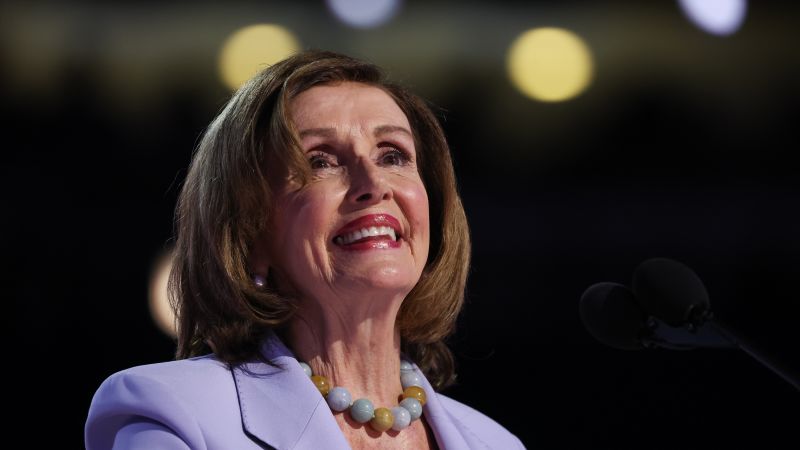
After 40 Years in Congress, Nancy Pelosi to Help Create Institute to Train Leaders of the Future
After 40 years in Congress Nancy – California Democratic Representative Nancy Pelosi, who has served in Congress for four decades, is stepping down from her political role and redirecting her focus toward academia. The former House speaker, 86, will not return to the U.S. Capitol in January 2027, marking the end of her storied career. Instead, she will lend her expertise to the University of California, Berkeley, as it launches the Nancy Pelosi Institute, a new initiative aimed at fostering research, education, and civic engagement. The institute is set to open in early 2027, signaling a significant shift in her public service journey.
A New Chapter in Public Service
Announcing her transition, Pelosi emphasized her desire to use her political experience to cultivate future leaders. “I think all of us in public service who have an opportunity to do so, want to use our experience to train leaders for the future,” she said in a recent phone interview. This move, she explained, represents a departure from the partisan nature of Congress, allowing her to engage with broader societal issues. “It’s about what our founders had in mind with our Constitution, and it’s a beautiful story to tell,” Pelosi added, reflecting on the institute’s mission.
The Vision Behind the Institute
Months before her retirement, a group of UC Berkeley administrators and approximately eight faculty members approached Pelosi with the concept for the institute. The idea, centered on bipartisan collaboration and academic leadership, resonated with her. “I loved it because they talked about human rights in the US and in the world, addressing challenges to our democracy, and tackling climate change and economic inequality,” she explained, highlighting the institute’s focus on critical issues she has long championed.
Though initially surprised by the proposal, Pelosi expressed admiration for its scope. “They dazzled me,” she said, describing the process of evaluating the plan. Her commitment to the project was swift, as she pledged to raise $25 million for the initiative before its official announcement. This goal, she noted, was achieved “quite easily,” underscoring her reputation as a formidable fundraiser.
Building a Legacy Beyond Politics
The Nancy Pelosi Institute will not be a traditional physical structure, according to Pelosi. “It’s not going to be a brick-and-mortar thing,” she clarified, emphasizing that the focus will be on programmatic initiatives rather than campus buildings. While the institute’s name may not appear on a building, its impact will be felt through classrooms, auditoriums, and theaters. “They have classrooms, they have auditoriums, they have theaters,” she said with a chuckle, acknowledging the institute’s infrastructure.
Additionally, the institute will feature a dedicated exhibit showcasing Pelosi’s achievements. The display, which includes awards, legislation she helped pass, and possibly personal artifacts, is scheduled to open in the spring of 2027. “It’s about technology,” she remarked, explaining how digital tools will complement physical exhibits. “People want to know how these things happened more than what they were exactly,” she said, suggesting that the narrative behind her work will be as important as the artifacts themselves.
Collaboration and Cross-Partisan Focus
Pelosi envisions the institute as a hub for dialogue across political lines. She plans to invite prominent figures from both major parties to lecture and engage with students, ensuring a diverse perspective on contemporary issues. “If you’re trying to engage another generation to prepare them for the future, you must listen to them,” she said, highlighting the institute’s commitment to inclusivity and innovation.
One of the institute’s key features will be a co-taught course with Eric Schickler, a renowned scholar of Congress. This partnership, Pelosi explained, aims to bridge academic theory with practical political insight. “It’s a unique opportunity to blend expertise with fresh ideas,” she said, underscoring the collaborative spirit of the initiative.
Reflections on the Past and the Future
As she looks back on her career, Pelosi expressed pride in her contributions to American politics. She noted that her papers from her tenure as House speaker are now housed at the Library of Congress, symbolizing the institutional legacy of her work. However, she is equally excited about the institute’s potential to shape the next generation of leaders. “I’m so proud of what I leave behind, and how they go on to what’s next,” she said, reflecting on her legacy.
Despite her retirement, Pelosi remains deeply engaged in the political landscape. She mentioned the upcoming November elections with confidence, stating, “we’re going to win the House.” This remark highlights her continued influence, even as she transitions into a new role. The institute, she hopes, will serve as a platform for ongoing civic discourse, ensuring that the lessons of her political career inform future leaders.
Legacy and Innovation in Education
For Pelosi, the Nancy Pelosi Institute represents a fusion of her political ideals and academic aspirations. She described Berkeley as “the epitome of public education,” a fitting location for an institution that embodies the values of democracy and human rights. “It’s a space where we can explore the complexities of our time, from climate change to economic equity,” she said, emphasizing the institute’s relevance to modern challenges.
The institute’s programmatic approach, rather than its physical presence, allows for greater flexibility. “We can adapt to the needs of the future,” Pelosi explained, envisioning dynamic courses and research projects that reflect evolving societal priorities. This adaptability, she argued, is essential in a rapidly changing world. “Technology will be the key to how we communicate these ideas,” she said, suggesting that digital platforms will play a vital role in the institute’s outreach and impact.
A Continuing Commitment to Leadership
Pelosi’s efforts to create the institute are part of a broader commitment to leadership development. She believes that training the next generation is critical to sustaining progress in democracy. “Leadership isn’t just about power—it’s about responsibility and vision,” she said, reflecting on the qualities she hopes to instill in future leaders. This philosophy aligns with her own career, where she balanced legislative work with a dedication to public service.
The institute’s founding also marks a milestone in her personal journey. After decades of political activity, she is transitioning to a role that allows her to focus on education and long-term impact. “It’s a liberation from the daily grind of politics, but not from the mission,” she said, underscoring her enduring passion for civic engagement. The project, she added, is a way to “connect the past with the future,” ensuring that her work continues to inspire and educate.
With the Nancy Pelosi Institute set to launch in 2027, the university aims to create a lasting legacy that reflects both her personal achievements and the broader goals of public education. The $50 million campaign, which Pelosi has already significantly contributed to, underscores the importance of this initiative in shaping the next chapter of American leadership. As she prepares for this new role, Pelosi remains a symbol of dedication, proving that her influence will extend far beyond the halls of Congress.
