
AI glasses are aiding cheating in exams. Test-obsessed Asia is ground zero
AI Glasses in Exams: A Growing Concern in Asia
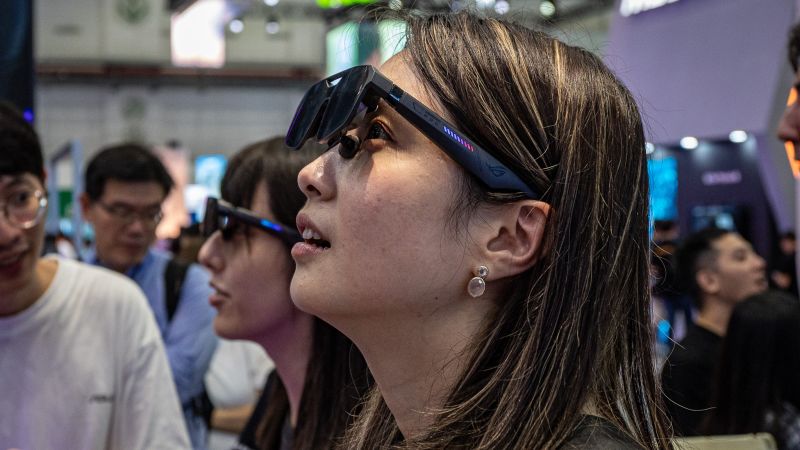
AI glasses are aiding cheating in exams – For decades, students have relied on time-honored methods to secure better results in academic assessments—ranging from covert glances at neighbors to discreetly written notes on palms or cheat sheets. However, the advent of advanced technology has introduced a new dimension to this age-old practice. AI-powered smart glasses, now ubiquitous in East Asia’s fiercely competitive educational landscape, have emerged as a sophisticated tool for circumventing exam rules. In societies where a single test can determine career paths, social standing, and even life opportunities, educators are racing to adapt to this evolving challenge.
Incidents in South Korea and Taiwan
Recent cases in South Korea have spotlighted the growing prevalence of AI glasses in academic dishonesty. During two separate exams assessing English proficiency—often a critical criterion for hiring decisions—candidates were found using smart glasses to transmit questions to connected AI systems. The devices then generated answers, which appeared on the lenses, allowing students to review material in real time. These incidents mark the first reported use of AI glasses in the country’s standardized testing, prompting urgent discussions among exam administrators and policymakers.
In Taiwan, a student’s suspicious behavior during a medical school entrance exam led to the discovery of a hidden AI device. Proctors noticed the candidate staring intently at the test paper, which triggered an inspection revealing the glasses were emitting heat. This subtle but effective method of cheating underscores the ease with which AI technology can be integrated into exam settings. While these cases are isolated, they signal a shift in how students approach assessments, leveraging tools that blur the line between preparation and deception.
The Rise of AI-Powered Wearables
As AI-enabled wearable devices become more affordable and sophisticated, their role in education is expanding. These gadgets, once futuristic novelties, are now part of everyday life, with companies like Meta launching AI-integrated glasses in partnership with Ray-Ban in late 2023. Over 7 million pairs of such devices were sold last year alone, making them a staple in both classrooms and beyond. Their slim design and ability to operate independently—without relying on external connectivity—have made them ideal for covert use during exams.
Experts warn that the proliferation of these devices is not just a technological trend but a cultural shift. In the United Kingdom, the head of England’s exam watchdog recently highlighted concerns about AI glasses and other smart accessories exacerbating cheating. “The technology is outpacing our ability to monitor it,” the official stated, emphasizing the need for updated protocols. Similarly, in South Korea, where AI glasses are already banned from exam rooms, authorities are exploring stricter measures to counter this threat.
Expert Perspectives on the Impact
Thomas Corbin, a lecturer at Deakin University in Australia, has studied the integration of AI-powered glasses in academic assessments. He notes that while these devices are still in their early stages, their potential to undermine traditional evaluation methods is significant. “If we’re seeing a few cases being reported, we’re seeing a lot more cases not being reported,” Corbin said, pointing to the quiet adoption of such tools. His research underscores a broader debate: how to balance the efficiency of AI-assisted learning with the integrity of exams.
The issue is not limited to Asia. In China, where the annual college entrance exam—known as the Gaokao—draws over 10 million participants, authorities have already implemented rigorous screening of all wearable devices. This proactive approach highlights the global nature of the problem. However, in countries like the UK, the challenge remains, with officials warning that AI glasses could become a standard feature in cheating strategies. The technology’s ability to operate discreetly, combined with its growing sophistication, makes it a formidable opponent for examiners.
Testing the Limits of Academic Integrity
Professor Meng Zili at the Hong Kong University of Science and Technology (HKUST) observed this phenomenon firsthand during an exam last year. A student’s stylish glasses caught his attention, sparking curiosity about their functionality. Though the pair turned out to be ordinary, the incident inspired Meng to test commercial AI glasses in an undergraduate electrical engineering course. The results were striking: students using the devices achieved scores that placed them in the top five of a class of over 100, far surpassing the average of 72.
“The experiment demonstrated how effectively these tools can assist in exam performance,” Meng explained. “It raises questions about whether students need to memorize as much as they once did—or if we should reconsider the role of AI in assessments.” His findings suggest that the very nature of academic evaluation is being redefined. With AI capable of generating accurate answers in seconds, the traditional emphasis on memorization and independent problem-solving is being challenged.
Zhang Jun, an electrical engineering professor at HKUST, echoed Meng’s concerns. “The technology is evolving faster than our educational systems can respond,” he said. The integration of AI into wearable devices has transformed them from novelty items into practical tools for learning and cheating alike. As these glasses become more embedded in daily life, their presence in exam settings is inevitable. The challenge lies in developing strategies to detect and deter their use without stifling innovation in education.
Broader Implications and Future Challenges
Experts warn that the use of AI glasses in exams is part of a larger trend affecting privacy and fairness. These devices can capture and analyze data in real time, raising concerns about surveillance and data security. Students may not only use them to access answers but also to monitor their own behavior or share information with peers. This dual-purpose functionality adds another layer of complexity to the issue.
Corbin’s assessment highlights the urgency of addressing these challenges. “Wearable AI is as much of a disruption to exams as ChatGPT was to essays in 2022,” he stated. The same way that AI revolutionized writing tasks, it is now reshaping how students prepare for and take exams. With this transformation, educators face a critical question: how can they ensure fairness while embracing the benefits of AI in learning?
As the technology advances, the pressure on educational institutions to update their policies intensifies. From the UK to South Korea and beyond, the response has been a mix of awareness campaigns, stricter inspections, and rule revisions. Yet, the rapid integration of AI glasses into mainstream use suggests that these efforts may only be the beginning of a longer struggle. The future of exams will likely depend on striking a delicate balance between innovation and integrity, ensuring that AI enhances rather than undermines the educational process.
Ultimately, the rise of AI glasses reflects a broader societal shift toward technology-driven solutions in education. While they offer unprecedented convenience and efficiency, their potential for misuse demands careful consideration. As students in East Asia and beyond continue to leverage these tools, the debate over their role in academic assessment will only grow more pressing. The challenge for educators is not just to detect cheating but to redefine what it means to learn in an age where AI is always within reach.
