
Rubio’s spin on the Iran MOU sounds different from Trump and Vance
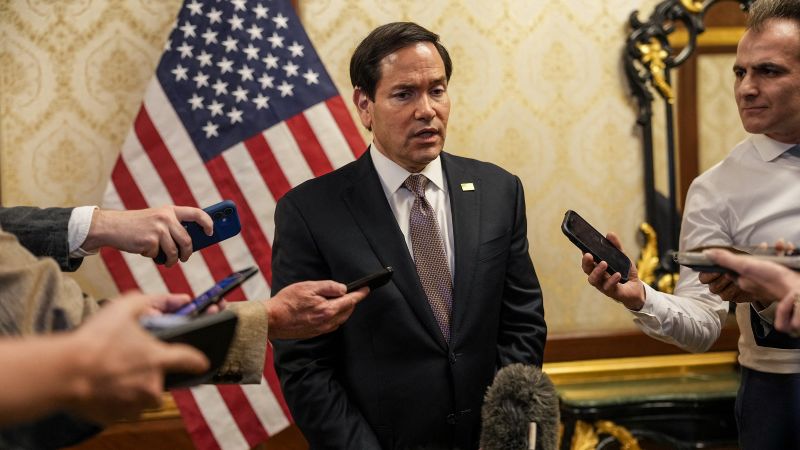
Rubio’s Shift in Tone on Iran MOU Contrasts with Trump and Vance
Rubio s spin on the Iran – For over a week, the U.S. Secretary of State, Marco Rubio, remained largely silent on a developing agreement with Iran, a topic that typically aligns with his expertise in foreign policy. This quietness prompted speculation that he, along with other conservative officials, might have reservations about the deal. However, recent remarks from Rubio have revealed a more nuanced stance, diverging from the positions of President Donald Trump and Vice President JD Vance. During engagements with Middle Eastern allies, Rubio has not only softened his previous criticisms but also emphasized the strategic importance of the memorandum of understanding (MOU) while acknowledging its complexities.
Trump’s Optimistic Vision for Iran
President Trump’s approach to the Iran MOU has been characterized by a more optimistic tone. At the G7 summit in France, he described Iran’s leaders as “very rational people” who are “smart” and “strong.” Trump’s remarks suggested a willingness to view Tehran as a potential partner, downplaying the radical nature of its regime. He stated that the current Iranian government is “not radicalized” and is “looking to help their country,” a perspective that contrasts sharply with Rubio’s earlier characterization of Iran’s leadership as “religious … lunatics.”
“
We’re dealing with people that I think are very rational people. They were nice to deal with. They were strong people, smart people. … But they’re not radicalized, and they’re, you know, looking to help their country.”
Vice President JD Vance, who has been a vocal advocate for the agreement, echoed Trump’s sentiments. In discussions with Iranian representatives, Vance highlighted the possibility of a renewed diplomatic relationship, suggesting that the regime might reconsider its decades-long opposition to U.S. interests. He noted, “This is a very interesting thing about these negotiations – is you see people, both the hard-liners, but also the more political people, saying our relationship with the United States over the past 47 years has been a mistake. Let’s turn over a new leaf.”
Rubio’s Caution and Alignment with Allies
Rubio, however, has taken a more cautious approach. During a visit to Bahrain, he reiterated his belief that Iran’s leadership is dominated by “radical clerics” who have consistently shaped the country’s policies. “The Iranian system is led by clerics – radical clerics,” he said, reinforcing his view that the regime’s ideological stance remains unchanged. Yet, this rhetoric appears to have evolved in recent days, as Rubio has sought to balance criticism with diplomatic pragmatism.
“
The Iranian system is led by clerics – radical clerics. That’s what it’s always been led by. And that’s what it continues to be led by.”
While Trump and Vance have positioned Iran as a potential reformer, Rubio’s comments during meetings with Middle Eastern allies reflect a focus on security concerns. In Kuwait, he asserted that the administration is committed to protecting its regional partners from Iranian threats, stating, “We’re not going to do anything that undermines the security of our allies – our longstanding allies in the region.” This emphasis on defense aligns with the interests of Gulf states, which have long expressed anxiety about Iran’s missile capabilities and its support for militant groups.
Discrepancies in the MOU’s Objectives
One of the most intriguing aspects of the Iran MOU is the absence of explicit commitments to key U.S. goals. Originally, the Trump administration had aimed to curb Iran’s missile program and limit its support for proxy groups like Hezbollah and Hamas. However, the MOU does not mention these targets directly, leaving room for interpretation. This omission has sparked debate about the deal’s scope and its alignment with broader strategic objectives.
Rubio recently suggested that the agreement might address these issues more comprehensively than initially perceived. “A careful reading of the MOU demonstrates that it covers Iran’s support for proxies,” he stated, highlighting the agreement’s clause about avoiding “hostile action” and “threat or use of force.” While this may not fully satisfy critics, it offers a framework for future negotiations. Meanwhile, Trump has appeared to distance himself from the idea of an arms limit, declaring, “They have to have some, because other people have some.” He further downplayed the significance of Iran’s missile program, calling it “not the problem” since “missiles don’t blow up the planet.”
“
They have to have some, because other people have some. Missiles aren’t the problem because they don’t blow up the planet.
”
State Department spokesperson Tommy Pigott has defended the administration’s consistent messaging, dismissing claims of internal contradictions. “Secretary Rubio and the entire administration is 100% in lockstep behind President Trump,” Pigott said. “The president has taken unprecedented action to prevent the Iranian regime from obtaining a nuclear weapon, and because of his leadership, the governments of Lebanon and Israel are holding the highest level talks in decades. The US and the entire world is safer because of these efforts.”
The Road Ahead: Balancing Ambition and Realism
Despite their differences, both Rubio and Vance have acknowledged the uncertainty of Iran’s intentions. “Things could change, and time will tell what their true goals are,” Rubio admitted during a meeting with Kuwaiti officials. Similarly, Vance has emphasized that the MOU is a starting point rather than a final resolution, noting that the Iranian leadership’s willingness to engage represents a critical opportunity for diplomacy.
Yet, the divergent narratives highlight a growing divide within the administration. As the 2028 election cycle looms, Trump’s evolving view of Iran may signal a shift in the party’s approach to the Middle East. While Rubio’s insistence on Iran’s radicalism underscores a traditional conservative stance, the MOU’s more flexible language could reflect a broader strategy to stabilize the region. Analysts suggest that the agreement’s success will depend on how effectively these competing perspectives are reconciled, particularly in addressing Iran’s military capabilities and regional influence.
The Iran MOU remains a pivotal moment in U.S. foreign policy, with Rubio’s recent statements signaling a potential realignment of priorities. Whether this marks a departure from Trump’s approach or a refinement of it remains to be seen. As the administration moves forward, the challenge will be to balance the need for diplomatic engagement with the imperative to contain Iran’s aggressive behavior, ensuring that the agreement strengthens rather than weakens American alliances in the region.
