
Ten years on, Britain counts the cost of Brexit
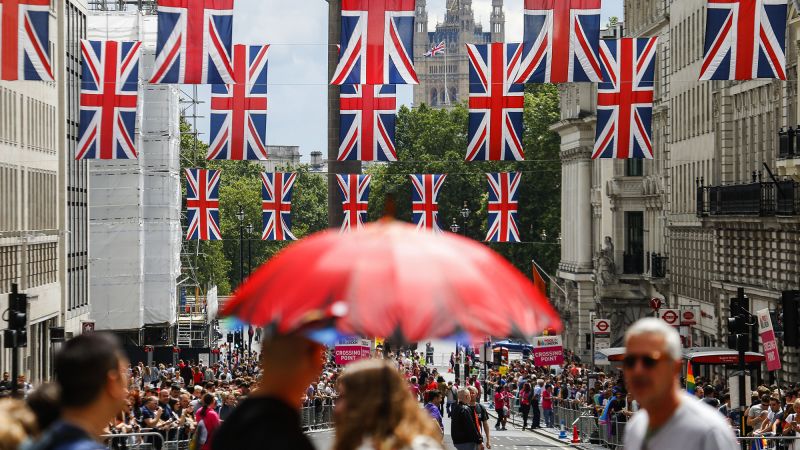
Ten years on, Britain counts the cost of Brexit
Ten years on Britain counts the cost – As the UK marks a decade since its decision to exit the European Union, the economic toll of Brexit continues to shape national discourse. The 2016 referendum, which saw 51.9% of voters choose to leave the EU, initiated a prolonged process of separation that has left lasting scars on the economy. Political instability and economic uncertainty have since become defining features of British governance, with current leadership struggles within the Labour Party echoing the broader chaos that followed the vote.
The referendum’s outcome was a pivotal moment, triggering years of negotiation and upheaval. While the UK formally left the EU in January 2020, the path to departure was fraught with delays and compromises. The Brexit process not only disrupted trade but also created a climate of unpredictability that businesses and workers have had to navigate. This has had tangible consequences, as seen in the challenges faced by industries reliant on seamless cross-border operations.
According to Oxford Economics, Brexit has acted as a persistent drag on the UK’s economic growth. Even though some dire forecasts—like an immediate recession—did not materialize, the long-term impact remains significant. Estimates suggest the UK has lost between 2% and 8% of potential output due to the separation. These figures underscore the complexity of isolating Brexit’s effects from other global shocks, such as the pandemic and the energy crisis tied to the Ukraine war. However, economists agree that the departure has had a measurable adverse effect on productivity, business investment, and living standards.
“Brexit is a constant drag on the economy,” said Michael Saunders, a senior adviser at Oxford Economics and former Bank of England official. He added, “It continues to reduce the level of gross domestic product compared to what it would otherwise be,” which has led to decreased government revenue and necessitated tax hikes and spending cuts.
While the economic costs are clear, the promised benefits of Brexit remain elusive. Proponents had envisioned a freer trade environment, reduced regulations, and improved public services. Yet, new trade agreements with nations like Australia, New Zealand, India, and Japan—though significant—pale in comparison to the £856 billion ($1.1 trillion) in annual trade with the EU. The lack of clarity on these gains has fueled public skepticism, particularly among those who initially supported the move.
One of the key promises of Brexit was a reduction in net migration. However, the post-Brexit system has not delivered on that front. The Migration Observatory at the University of Oxford reports that net migration to the UK averaged 550,000 annually since 2021, compared to 250,000 during the 2010s. This trend continued into 2023, with net migration hitting nearly 950,000—surpassing previous records. The influx of non-EU citizens, driven by opportunities in the UK, has offset the intended decline in migration, highlighting the limitations of the policy.
Geraint, a British software developer from the West Midlands, exemplifies the shifting attitudes toward Brexit. He initially supported the referendum due to concerns about immigration pressures on healthcare and public services. Yet, after witnessing the economic and social challenges, he now believes the UK would have been better off remaining in the EU. “We were promised as a country we’d be better off outside the EU,” he said, “but I just don’t feel as if that’s been true. Opportunities beyond Britain are quite appealing to me, and now I feel trapped.” His wife, who voted Remain in 2016, has remained a vocal critic of the decision.
The Brexit referendum was decisive, but it marked only the beginning of a drawn-out transition. Negotiations over trade deals and regulatory frameworks stretched for years, culminating in the UK’s formal withdrawal in 2020. Since then, the introduction of customs checks, border controls, and extensive paperwork has complicated trade for businesses. For instance, a farmer in southeast England now faces hurdles in exporting produce to Paris, a task that was once straightforward under EU membership.
Public sentiment has also reflected this uncertainty. A recent YouGov poll revealed that six in 10 Britons view Brexit as a failure, with many citing economic stagnation and reduced job prospects as primary concerns. Julian Jessop, an independent economist who supported the Leave campaign, acknowledges the “initial impact” of the UK’s departure has been “clearly negative.” Still, he argues that these costs are “smaller than feared” and may diminish over time as the economy adapts to the new reality.
Despite the challenges, some sectors have adapted to the changes. The UK’s trade relationships with non-EU countries have expanded, though they have not fully compensated for the loss of access to the EU’s single market. This has required businesses to invest in new infrastructure and compliance systems, adding to operational costs. Meanwhile, the UK’s regulatory autonomy has allowed for tailored policies, but these have yet to produce the anticipated economic gains.
As the decade passes, the debate over Brexit’s legacy is far from settled. While the UK has gained some control over its laws and borders, the trade-offs have left many questioning whether the benefits outweigh the costs. The ongoing political and economic uncertainty suggests that the full consequences of the decision may take years to fully assess. Yet, for now, the weight of Brexit’s impact remains a central theme in British discussions about the future of the nation.
The Cost of Uncertainty
The Brexit process has been a prolonged experiment in economic resilience, with its consequences unfolding in unpredictable ways. The early years were marked by uncertainty, as lawmakers and businesses grappled with the implications of leaving the EU. This has created a ripple effect, influencing everything from investment decisions to labor market dynamics. For example, the UK’s ability to attract foreign talent has been affected, with some companies hesitant to expand operations due to the complexity of new visa requirements.
Moreover, the UK’s access to the EU’s single market has been a major factor in its economic performance. Before Brexit, the UK was part of the customs union and single market, enabling the free flow of goods, services, and labor. This arrangement facilitated a highly integrated economy, where businesses could operate across borders without significant barriers. The loss of these privileges has required adjustments, with many firms now facing tariffs, bureaucratic delays, and increased costs.
While some argue that the UK’s economic independence will eventually lead to greater prosperity, the current evidence suggests otherwise. The combination of regulatory divergence, trade disruptions, and labor market changes has contributed to a slowdown in growth. This has been particularly evident in sectors like manufacturing and agriculture, where supply chains have been strained by the new requirements. Even in finance, the UK’s global standing has been affected, with some firms relocating operations to the EU to maintain access to the single market.
Yet, the narrative of Brexit as a purely negative force is not without nuance. Some economists believe the UK has made progress in redefining its economic strategy, leveraging its newfound independence to pursue alternative partnerships and reforms. However, these gains remain uncertain, and the long-term effects of Brexit are still being studied. As the UK continues to navigate its post-EU future, the challenge is to balance the benefits of sovereignty with the costs of integration.
