
Illegal excavation reveals grand Roman villa with elaborate mosaics
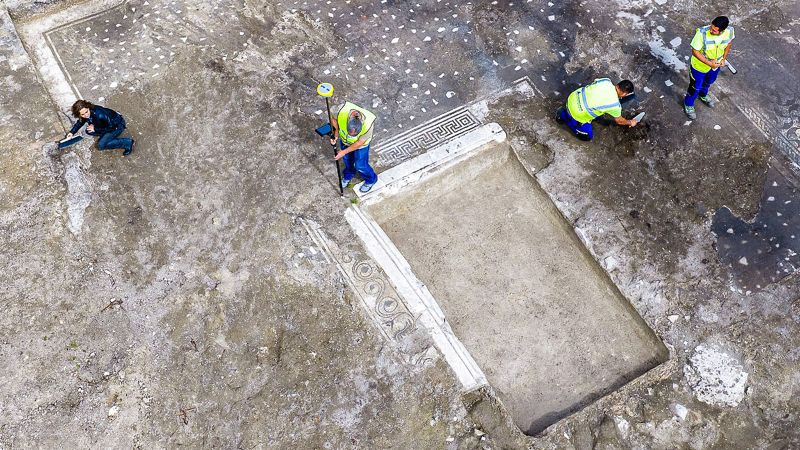
Illegal Dig Unearths Impressive Roman Villa with Stunning Mosaics
Illegal excavation reveals grand Roman villa – In a recent incident that sparked excitement among historians, a hidden Roman villa was uncovered near the outskirts of Rome. The find resulted from a tip-off to authorities about an unauthorized excavation taking place on government-owned land. Located in the modern village of Castel di Guido, approximately 12 miles from the Italian capital, the site has revealed the remnants of a lavish Imperial-era residence. This discovery underscores the ongoing challenges of preserving ancient heritage against illegal activities.
The Site’s Historical Significance
Historians believe the property, once known as Lorium during the Roman Empire’s height, was a thriving community of elite residences. Dating back to 27 BC to the fifth century AD, Lorium was a hub for Roman aristocrats, with frequent visits from emperors such as Hadrian, Antoninus Pius, and Marcus Aurelius. The Ministry of Culture emphasized the villa’s connection to the Imperial court, highlighting its role in the cultural and political landscape of the time.
How the Excavation Was Detected
The illicit excavation came to light in February when local residents noticed suspicious activity. Their report led to an investigation by the Carabinieri military police, who identified signs of unauthorized digging. These included small piles of dirt, nighttime operations, and the absence of permission signs typically seen at legal excavation sites. The Carabinieri Art Police, a specialized unit focused on protecting Italy’s historical treasures, confirmed the presence of tomb raiders targeting the site for valuable artifacts.
Authorities discovered that the perpetrators had used a backhoe to dig into a hidden portion of the property. The site was partially enclosed by fences, which they cut through to access the underground space. This clandestine operation revealed a large cavern beneath the surface, containing the villa’s remains. While the dig was halted quickly, the artifacts recovered offer a rare glimpse into the past.
The Villa’s Architectural and Artistic Features
Initial excavations have uncovered a grand entrance hall, featuring an atrium and a sunken basin, or impluvium, surrounded by an intricate mosaic floor. The mosaic design combines black and white botanical motifs with geometric patterns, showcasing the craftsmanship of the era. Forensic archaeologists noted that the preservation of these elements is exceptional, with minimal damage from the illicit excavation.
Among the finds is a statue believed to represent Silvanus, the Roman deity of the countryside. The figure is depicted holding a small animal in one hand and a basket decorated with birds in the other, symbolizing the connection between the villa and the natural world. Alessia Contino, an archaeologist from the Special Superintendency of Rome, described the decorations as evidence of the villa’s association with high-ranking members of the aristocracy and the Imperial court.
“The exceptional quality of the decorations testifies that the villa belonged to prominent members of the Roman aristocracy, closely linked to the Imperial court,” Contino stated during the site’s unveiling this week.
Efforts to Combat Illegal Excavations
The incident highlights the persistent threat of illegal digs to archaeological sites. Tomb raiders often target unguarded locations, looting treasures that are then sold on the black market. Over the years, these activities have led to the loss of thousands of artifacts, many of which have ended up in global museums. However, some have been repatriated, including items from American collections.
Italy’s Ministry of Culture has been working to recover stolen artifacts and prevent further loss. In a recent statement, Italian Minister of Culture Alessandro Giuli praised the collaboration between officials and the Carabinieri, noting the swift action that halted the excavation. “They secured an archaeological area and brought to light the remains of a splendid Imperial-era villa in the Roman countryside where the Imperial residences of the Antonine dynasty were located,” Giuli said.
“In just a few days, officials from the Ministry of Culture, in collaboration with the Carabinieri, stopped a clandestine operation,” Giuli explained on Monday.
The villa’s location and the presence of Imperial-era connections suggest it was part of a network of elite residences. While some damage occurred due to the unauthorized digging, the site’s condition remains remarkable. Further studies are ongoing, with archaeologists working to uncover more details about the villa’s layout and its historical context.
Broader Implications for Roman Archaeology
Experts argue that this find adds to the growing body of evidence about Roman life in the countryside. The mosaics, marble work, and statues indicate a level of sophistication and wealth uncommon in many rural areas of the time. Such discoveries are crucial for understanding the social hierarchy and artistic achievements of the Roman Empire.
The villa’s mosaics, in particular, have captivated researchers. These detailed designs not only reflect the tastes of the villa’s owners but also provide insights into the cultural exchanges that occurred during the Imperial period. The presence of geometric and botanical patterns suggests influences from both local and distant traditions, highlighting the interconnectedness of Roman society.
As the excavation continues, the Ministry of Culture has announced plans to allow public access to the site. The first visitors will be invited by appointment on Saturday, with additional dates to be announced in the coming months. This initiative aims to engage the public in the preservation of historical treasures while ensuring the site is protected from further disturbance.
The incident also serves as a reminder of the importance of protecting archaeological sites from illegal activities. The Carabinieri’s swift response prevented the loss of key artifacts, though the exact number of items taken remains unclear. The case underscores the need for stricter enforcement and public awareness to safeguard Rome’s rich heritage.
Collaboration Between Authorities and Archaeologists
The discovery exemplifies the partnership between law enforcement and archaeologists in preserving historical sites. The Carabinieri Art Police, alongside experts from the Special Superintendency of Rome, has played a vital role in uncovering the villa. Their combined efforts have not only stopped the illicit excavation but also ensured the site is studied systematically.
Contino emphasized that the villa’s features point to its significance. “The findings range from lavish mosaics to intricate marble work, revealing the grandeur of a site that once hosted emperors and aristocrats,” she said. This collaboration has set a precedent for addressing illegal digs in the future, combining forensic techniques with historical expertise to recover and document ancient artifacts.
As the excavation progresses, the villa’s secrets are expected to unfold. Researchers hope that further analysis will shed light on its original purpose, the individuals who lived there, and its role in the broader Roman landscape. The site’s rediscovery offers a unique opportunity to explore the Empire’s legacy in a new light, bridging the gap between past and present through careful study and preservation.
Italy’s Ministry of Culture has praised the team’s work, calling it a major achievement in uncovering the country’s ancient history. The villa’s artifacts, including its mosaic floor and the Silvanus statue, are now under careful examination, with plans to display them to the public in the near future. This effort to share the discovery with wider audiences aims to foster appreciation for Rome’s cultural heritage while deterring future illegal excavations.
