
Gavin Newsom Fast Facts
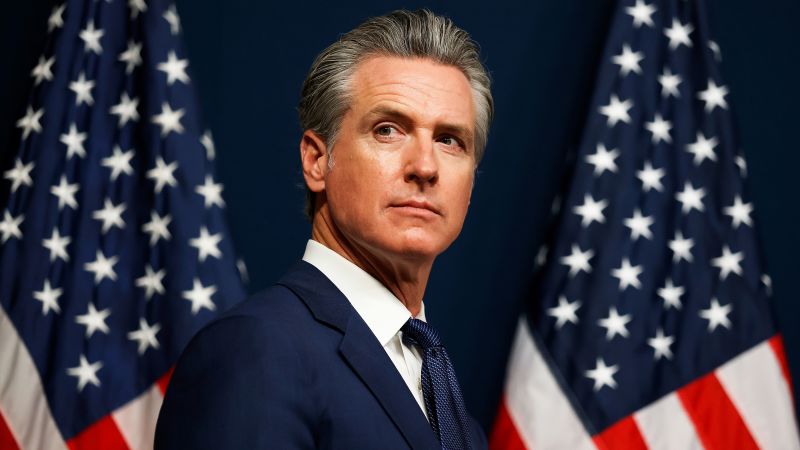
Gavin Newsom Fast Facts
Early Life and Background
Gavin Newsom Fast Facts – Gavin Christopher Newsom was born on October 10, 1967, in San Francisco, California. His father, William Alfred Newsom III, was a lawyer and served on the California state appeals court. His mother, Tessa Thomas Menzies, worked as a waitress, secretary, paralegal, and entrepreneur, often taking on multiple roles to support her family. Newsom’s early years were marked by a personal challenge: he has openly discussed his lifelong struggle with dyslexia, a learning disability that shaped his approach to education and communication.
Personal Life
Newsom’s personal journey includes two marriages. He first married Kimberly Guilfoyle from 2001 to 2006, after which they divorced. In 2008, he wed Jennifer Siebel Newsom, and the couple has four children: Montana, Hunter, Brooklynn, and Dutch. His family life has often intersected with his political career, providing a personal dimension to his public service.
Business Ventures and Political Beginnings
Before entering politics, Newsom pursued a career in the hospitality industry. In 1992, he co-founded a wine shop in San Francisco with the support of family friend Gordon Getty. This venture eventually expanded into the Plumpjack Group, a network of restaurants and wineries that became a significant part of his professional identity. His early political involvement began in 1995 when he volunteered for Willie Brown’s mayoral campaign, leading to his appointment to the San Francisco Parking and Traffic Commission in 1996.
Mayor of San Francisco
Newsom’s political career took a major turn in 1997 when he was appointed to the San Francisco Board of Supervisors. Elected in 1998 and reelected twice, he quickly gained prominence. His tenure as mayor, from 2004 to 2011, was defined by several landmark decisions. On February 7, 2004, he became the first mayor to issue same-sex marriage licenses in the city, despite California’s state law prohibiting such unions. This action sparked legal battles, culminating in a California Supreme Court ruling on August 12 that invalidated over 4,000 same-sex marriages.
“I take full responsibility for my personal mistakes, and my problems with alcohol are not an excuse for my personal lapses in judgment.”
Newsom’s personal life also faced scrutiny in 2007. He publicly apologized for an affair with his campaign manager’s wife, which he acknowledged as a “personal mistake.” Around the same time, he announced his intention to seek professional help for his alcohol use, a step that underscored his commitment to accountability.
Path to Governor
Newsom’s political ambitions led him to run for governor in 2009, though he withdrew his candidacy in October 2009. His return to public office came in 2010 when he was elected lieutenant governor of California, securing over 50% of the vote. In 2011, he assumed the role of 49th Lieutenant Governor, a position he held for eight years, including a reelection in 2014. During this time, he also launched “The Gavin Newsom Show,” a weekly talk show on Current TV, which provided a platform for his political views and public engagement.
California Governor and Key Policies
Newsom’s gubernatorial campaign in 2018 was a decisive moment. He won a landslide victory over Republican John Cox, becoming California’s 40th governor. His leadership has been characterized by a focus on progressive policies, including the implementation of the first statewide stay-at-home order on March 19, 2020, to combat the COVID-19 pandemic. This measure, which imposed mandatory restrictions on gatherings, was a pivotal response to the public health crisis.
Despite his efforts to promote public health, Newsom faced criticism in 2020 for attending an unmasked birthday dinner at a high-end Napa Valley restaurant while advising Californians to avoid social gatherings. He later acknowledged this as a “bad mistake,” emphasizing his dedication to transparency and responsibility.
Recent Political Initiatives
Newsom’s influence extends beyond governance. In 2021, he survived a recall attempt led by Republicans, with approximately 38% of voters supporting his removal. This event highlighted his resilience and continued support among the electorate. His political strategies have also included efforts to reshape California’s congressional districts. On November 4, 2025, voters approved Proposition 50, a measure championed by Newsom to redraw the state’s congressional maps. The initiative aimed to replace the independent commission’s lines with ones favorable to Democrats, securing five U.S. House seats for his party.
Newsom has also expanded his public presence through media. In March 2023, he launched the Campaign for Democracy political action committee, which seeks to counter rising authoritarianism and challenge “extremist Republicans.” A year later, in March 2025, he debuted a podcast titled “This Is Gavin Newsom.” The series notably featured a conversation with the late conservative activist Charlie Kirk, reflecting Newsom’s goal to foster dialogue across political divides. While his guests often hold opposing views, he emphasized the importance of engaging in meaningful conversations to bridge ideological gaps.
Legacy and Impact
Throughout his career, Gavin Newsom has navigated personal and political challenges, emerging as a key figure in California’s progressive movement. His ability to adapt and lead during crises, from the pandemic to the recall effort, has solidified his reputation as a dynamic leader. As he continues to shape policies and public discourse, Newsom remains a central figure in the state’s political landscape, balancing ambition with a commitment to addressing both state and national issues.
