
Thwarted attack on UFC fight is another reason to build White House ballroom, Trump DOJ argues
Thwarted Attack on UFC Fight Reinforces Trump’s Case for White House Ballroom
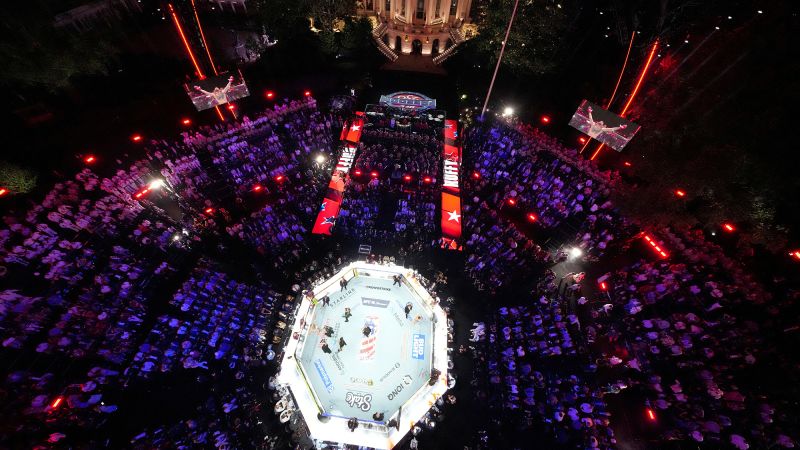
Thwarted attack on UFC fight is another – The Justice Department’s push to justify the construction of a massive new ballroom at the White House has gained fresh momentum following a recent attempt to disrupt an outdoor UFC event held on the presidential grounds. This latest incident, according to officials, underscores the administration’s argument that the facility is essential for safeguarding the nation’s leader and key guests from potential threats. Despite federal courts questioning President Donald Trump’s claim that he can unilaterally proceed with the project, the DOJ has increasingly cited security concerns as a central reason to approve the expansion.
Security as a Central Argument
On Tuesday, a top Justice Department official, Brett Shumate, head of the civil division, submitted a letter to a federal appeals court emphasizing the “compelling need” for the ballroom. The document highlighted how the thwarted attack on the UFC event last weekend demonstrated the vulnerabilities of current event setups. Shumate argued that the proposed structure’s size and height would provide critical protection against future threats, including bullets and kamikaze drones.
“When completed, this highly integrated and unified project will serve as a ‘SAFE HAVEN’ from attackers, shielding the White House grounds and offering the Secret Service the visibility required to detect and neutralize threats,” Shumate wrote.
The DOJ’s reasoning hinges on the idea that temporary structures, such as the plastic tents used for events on the South Lawn, are insufficient for high-profile gatherings. Shumate contended that these tents could not even reliably protect attendees from harsh weather, let alone provide defense against gunfire or drone strikes. The attack that occurred last weekend, he suggested, was a clear example of the risks posed by such makeshift arrangements.
History of Security Incidents
The administration has previously leveraged similar security incidents to bolster its case. Earlier this year, a shooting at the White House Correspondents’ Dinner and another incident near the White House were cited as justification for the project. These events, which took place in April and May, were used to argue that the ballroom’s construction was necessary to ensure safety during major functions.
During a recent appeals court hearing, the DOJ emphasized that the president’s safety is paramount, even as critics questioned the timing of the arguments. The case has drawn attention to the lack of congressional approval for the project, which Trump’s team has repeatedly dismissed. A three-judge panel at the DC Circuit Court of Appeals is set to rule on whether the construction violates existing laws, following a lower court’s earlier decision in favor of halting the work.
Trump’s legal team has argued that the ballroom is a vital national security measure, integrating seamlessly with the White House’s infrastructure. However, opponents have raised concerns about the project’s scale and its implications for the presidential residence. The National Trust for Historic Preservation, which is challenging the plan, pointed out that the administration’s safety rationale is being used to justify a major alteration to the White House’s historic layout.
Democratic Criticisms and Historical Context
Democratic lawmakers have criticized the DOJ’s arguments as opportunistic. Rep. Alexandria Ocasio-Cortez, for instance, noted that the decision to demolish the East Wing for the ballroom was made long before the recent security incidents. “The idea that they are now trying to change the rationale for this in retrospect doesn’t quite add up,” Ocasio-Cortez told CNN’s Manu Raju in April. “The White House has always had facilities for hosting events, including the East Wing.”
Historically, the South Lawn has hosted large gatherings, such as the annual press gala, which is typically a private affair. Critics argue that the ballroom’s construction does not address the need for a permanent venue, as the press gala is not held at the White House. This has led to questions about whether the project is primarily a security initiative or a political move to expand presidential space.
Despite these concerns, the DOJ has maintained that the ballroom’s design will significantly enhance security. The department’s May 24 filing described the facility as a “singular and vital national security asset,” capable of withstanding attacks that have become more sophisticated in recent years. The argument has been bolstered by the administration’s assertion that temporary structures, like the ones used for outdoor events, lack the robustness required for modern threats.
Public and Legal Reactions
The National Trust for Historic Preservation has remained steadfast in its opposition, emphasizing that the legal challenge is not about whether the ballroom should exist, but whether Trump can proceed without congressional consent. The group’s lawyers have pointed out that the president’s safety is a valid concern, but the timing of the security arguments suggests a strategic effort to shift public perception.
“The administration’s focus on security is understandable, but the way they are framing the issue makes it seem like the ballroom is a response to recent events, when in reality, the planning began well before the threats materialized,” a National Trust lawyer stated during the DC Circuit hearing. This line of reasoning has drawn skepticism from legal analysts, who argue that the DOJ is using historical events to justify a current project.
Meanwhile, the federal courts have remained cautious. US District Judge Richard Leon, who initially ruled against the construction, has yet to formally respond to the DOJ’s renewed arguments. The judges on the appeals panel are weighing whether Trump’s unilateral authority to build the ballroom is consistent with the law, focusing on precedents and the president’s power to act without legislative input.
As the case moves forward, the DOJ’s reliance on security as a justification continues to shape the narrative. The threat of violence in Washington, DC, has become a recurring theme in the administration’s efforts to push the project. Whether the courts accept this reasoning will depend on how effectively the department can tie the ballroom’s features to the specific risks outlined in the recent incidents. For now, the debate over the White House’s future remains as contentious as the security measures it aims to implement.
The project’s supporters view the ballroom as a necessary evolution of the White House’s capabilities, one that would allow for more secure and dignified events in an era of heightened threats. However, opponents warn that the decision could set a precedent for executive overreach, undermining the checks and balances that Congress is meant to enforce. As the legal battle unfolds, the ballroom’s fate will likely hinge on the courts’ assessment of its security benefits versus its constitutional implications.
