
This city had a flooding problem. So it turned to an animal that had been extinct there for 400 years
This City Had a Flooding Problem. So It Turned to an Animal That Had Been Extinct There for 400 Years
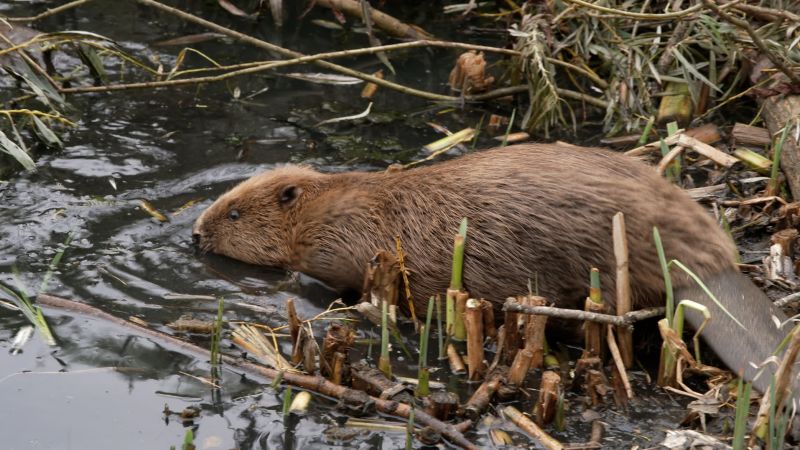
This city had a flooding problem – Nestled between bustling roads and industrial zones, a revitalized urban wetland is taking shape in Ealing, a district of West London. At the heart of this transformation are beavers—unusual, furry inhabitants who have been absent from the area for centuries. Once a site prone to frequent flooding during storms, the neighborhood now benefits from an innovative approach: rewilding with beavers. This strategy, spearheaded by local conservationists, has demonstrated remarkable results in managing water flow and protecting the environment.
Traditional methods of flood control, such as constructing artificial reservoirs with heavy machinery and concrete, had long been considered for Ealing. Yet, a group of environmental advocates proposed a different solution. “Why don’t we try a nature-based approach?” asked Sean McCormack, a veterinarian and project leader at the Ealing Beaver Project. His vision was to reintroduce beavers, whose natural engineering skills could address the city’s water issues. In 2023, the initiative began by relocating a family of five wild beavers to a 24-acre area known as Paradise Fields. “It was a forgotten and neglected space,” McCormack noted, describing the site’s transformation into a thriving ecosystem.
As climate change intensifies extreme weather patterns, rewilding projects like this are gaining traction. Beaver reintroductions are being hailed as a powerful tool to create more resilient landscapes. These semi-aquatic rodents, once extinct in the UK for over 400 years, are now returning due to their ecological value. Their ability to construct dams and canals has redefined the way cities approach environmental challenges. “It’s like a spiderweb of water,” explained Emily Fairfax, a geography professor at the University of Minnesota. “The beavers’ structures spread floodwaters across larger areas, reducing damage downstream.”
The Ecological Impact of Beaver Engineering
Beavers are not just builders of ponds; they are architects of biodiversity. Their dams, reinforced with iron-rich teeth that give them a striking orange hue, create reservoirs that serve dual purposes. For the beavers, these pools act as safe havens from predators. For humans, they function as natural barriers against flooding. During heavy rainfall, the wetlands absorb excess water, acting like sponges that prevent runoff from overwhelming local streets. “The landscape becomes more flexible, holding water when needed and releasing it gradually,” said Fairfax.
Beyond flood control, beaver habitats offer protection against other climate-related threats. In drought conditions, the moisture retained in their wetlands supports surrounding flora and fauna. Even wildfires are less likely to spread in areas where beavers have established their homes, as the damp conditions make the land inhospitable to flames. “There’s a joke in the beaver science community that if you’ve got a problem, there’s a beaver for that,” Fairfax added. While she acknowledged the joke was an oversimplification, the rodents’ role in maintaining ecological balance is undeniable.
The Ealing project has already seen significant progress. By the beavers’ second winter at Paradise Fields, the area remained flood-free for the first time in a decade, according to McCormack. The site has also evolved into a mosaic of habitats, attracting a diverse range of wildlife. Birds, butterflies, bats, and even freshwater shrimp and fish have made the space their home. Currently, eight beavers reside in the area, with a new litter of kits born in the spring. McCormack expects the young to emerge from their lodge later this month, marking the project’s next milestone.
Challenges of Reintroducing Beavers
Despite the success of the Ealing initiative, beaver rewilding is not without challenges. The animals’ engineering efforts can sometimes conflict with human infrastructure. For instance, their tunnels in riverbanks have been known to trap cattle and machinery, raising concerns for farmers and landowners. “When beavers are introduced without proper planning, it can lead to issues,” warned George Holmes, a conservation professor at the University of Leeds. He described such tactics as “beaver bombing,” where animals are released in areas unprepared for their impact.
To ensure successful reintroductions, experts emphasize the need for careful preparation. Sites must have adequate food, water, and space for beavers to build their wetland homes. Communities should also be educated about the benefits and potential adjustments required. “Humans near the site need to be receptive to the animals,” Holmes said. “A contingency plan is essential in case the beavers’ work affects nearby structures.”
Beaver rewilding is not limited to London. Similar projects are expanding across the United States, particularly in the West. However, the principles remain the same: adaptability and foresight. The success in Ealing serves as a blueprint for other cities facing similar challenges. As the beavers continue their work, the project’s impact on local ecosystems and flood management grows more evident. “It’s a living example of how nature can solve human problems,” McCormack said. “We’re not just restoring a habitat—we’re rebuilding a relationship with the environment.”
A New Era of Urban Ecology
With the beavers’ arrival, Ealing has become a test case for urban rewilding. The transformation of Paradise Fields highlights the potential of integrating wildlife into city planning. By leveraging the natural behaviors of beavers, the project has turned a neglected space into a functional, biodiverse habitat. This shift reflects a broader movement toward sustainable solutions that prioritize ecological balance over purely engineered fixes.
As the beaver population in Ealing expands, the long-term benefits of the project may become even more pronounced. The wetlands they create could mitigate future flood risks, support local wildlife, and enhance the area’s resilience to climate change. For McCormack, the initiative represents a hopeful step toward reimagining urban landscapes. “We’re proving that even in the heart of a city, nature can thrive,” he said. “Beavers aren’t just solving a problem—they’re restoring a piece of the natural world.”
