
Dondurma: The stretchy, chewy ice-cream that never drips
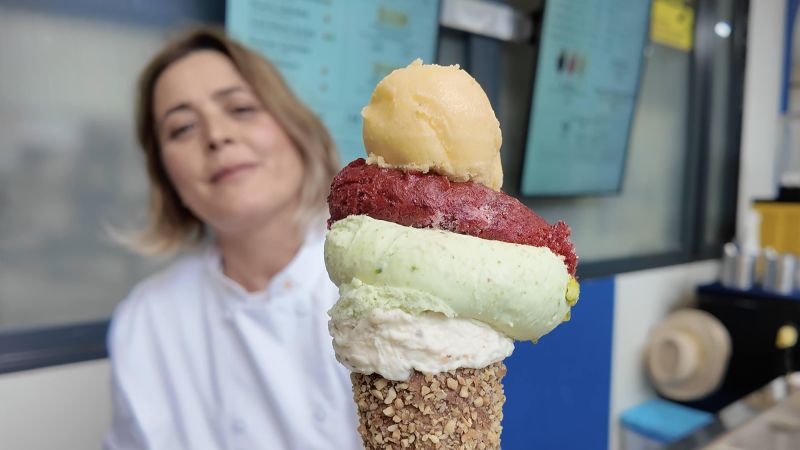
Dondurma: The stretchy, chewy ice-cream that never drips
Dondurma – In the world of frozen desserts, Turkey’s dondurma stands apart. Unlike the creamy, melt-away textures of Western ice creams, this traditional treat is known for its remarkable elasticity and durability. While American ice creams prioritize richness and lightness, Italian gelato leans on slower churning for a denser consistency, and Indian kulfi is celebrated for its thick, unwhipped form, dondurma defies convention. Its signature stretchy quality, akin to taffy, and its ability to resist melting make it a unique culinary marvel, rooted in centuries of Turkish craftsmanship.
A Secret Ingredient: Salep’s Role
The secret to dondurma’s resilience lies in an ingredient unique to Turkey: salep, a powdered orchid-based flour derived from the bulbs of the Dactylorhiza romana orchid. This rare component, cultivated in the southern regions of the country, adds a natural thickness and chewiness that transforms the dessert into something more than mere ice cream. Salep has been a staple in Turkish cuisine for millennia, used in both drinks and sweets, but its application in dondurma elevates it to an art form. Beyond its texture, salep contributes to the dessert’s stability, ensuring it retains its shape even in warmer temperatures.
For many travelers, the first encounter with dondurma’s distinctive qualities often comes through the lively performances of street vendors. These artisans, clad in embroidered waistcoats and red fezes—traditional attire from Kahramanmaraş, the heartland of dondurma—combine the roles of magician and ice cream seller. Their craft is a spectacle: using long metal rods, they manipulate the frozen treat as if kneading dough, spinning it with the energy of a Naples pizzaiolo. Customers are drawn into an engaging game of cat-and-mouse, where the vendor’s quick movements snatch the dondurma away, flip it upside down, and guide the customer through a dance of anticipation and delight.
The Gourmet’s Journey: Serdar Kemahlı’s Story
Serdar Kemahlı, founder of Serez Gurme Dondurma—a gourmet ice cream chain with nine locations across Istanbul—discovered the magic of dondurma during a visit to a small Aegean coastal town. At his Caddebostan shop, nestled in the city’s Asian neighborhood, Kemahlı recalls a moment of revelation. “The people were patient and happy; the adults wore the expressions of children on their faces. But the ice creams in their hands were bright blue, bright yellow, bright green colors that no real fruit and no real nut could ever produce,” he says. This encounter sparked a quest to revive the lost flavors of his childhood, when dondurma was simpler—just two basic options, plain and chocolate, with the same vendor offering ice cream in summer and pickles in winter.
After a period of unemployment, Kemahlı turned his focus to creating a modern version of dondurma. Drawing on his previous experience in the sandwich industry, he experimented for a year, refining his recipe to balance the natural ingredients’ properties. The result is a dessert that marries tradition with innovation, offering flavors like pistachio, Madagascar vanilla, chocolate, walnut, Bodrum mandarin, and sour cherry. The pistachio, in particular, has become a favorite, given Turkey’s status as a major global producer of the light-green nut. The parlor’s display of enticing tubs, stacked into gravity-defying towers, is a testament to the artistry and care that define artisanal dondurma.
What sets dondurma apart is its composition. Unlike commercial ice creams, which often rely on artificial stabilizers, this treat uses entirely natural components. The higher melting point allows it to be served at a warmer temperature, intensifying its flavors without sacrificing texture. Kemahlı calls it “the best ice cream I’ve ever tasted”—a statement that feels more like a fervent declaration than a mere opinion. It’s robust yet creamy, smooth and silky but without a hint of iciness, offering a sensory experience that is both indulgent and satisfying.
The Science Behind the Stretch
At the core of dondurma’s remarkable properties is a molecule called glucomannan, found in salep. “What makes salep so valuable is a molecule it contains called glucomannan,” Kemahlı explains. “One gram of glucomannan can bind two hundred times its own weight in water. It is one of the most extraordinary water-binding molecules in nature.” As an emulsifier and thickener, glucomannan not only enhances the dessert’s chewiness but also prevents it from melting too quickly. This scientific element gives dondurma its legendary reputation, making it a favorite among those who seek a dessert that lasts longer and delivers a more intense flavor.
While the street vendors’ showmanship captures the imagination, the finest dondurma experiences are found in places like Kemahlı’s artisanal parlor. Here, the focus is on quality, with no shortcuts in ingredient selection or preparation. The process begins with traditional milk, beet sugar, and salep, and may include plant resin mastic to further enhance elasticity. A cup of salep, for instance, is often sprinkled with cinnamon, creating a sweet and comforting treat that tastes like vanilla ice cream, not cocoa. This fusion of old-world techniques and contemporary presentation has helped dondurma gain global recognition, while preserving its Turkish heritage.
Visitors to Istanbul are often amazed by the contrast between the street vendors’ energetic antics and the refined atmosphere of artisanal shops. Yet, both share a common goal: to showcase dondurma’s ability to delight the senses. Whether it’s the sticky, squishy texture or the vibrant colors, this dessert is more than a treat—it’s a cultural experience. As Kemahlı’s story illustrates, the journey to perfecting dondurma is as much about passion as it is about science, proving that even in a world of fleeting pleasures, some frozen delights are designed to endure.
