
US officials downplay text of the Iran agreement, saying it doesn’t account for back-channel commitments
US Officials Emphasize Political Nature of Iran Deal, Highlighting Back-Channel Agreements
US officials downplay text of the Iran – As the United States moves closer to finalizing a new agreement with Iran, senior government officials have expressed cautious optimism about the deal’s potential to stabilize the situation. However, they have also emphasized that the formal text of the agreement, while important, is not the full story. According to sources, the document’s language is deliberately broad, designed to serve as a framework rather than a binding contract. This approach, they argue, allows for greater flexibility in subsequent negotiations, which will involve more detailed technical discussions.
Shaping the Narrative: A Strategic Document
Several US officials told CNN that the memorandum of understanding (MOU) currently under discussion is more of a political tool than a comprehensive treaty. They described its content as intentionally vague, with the primary purpose of creating a conducive atmosphere for future in-person talks. “The document itself isn’t meant to lock in every detail,” one official explained. “It’s a starting point, not the endgame.” This strategy, they added, is crucial for securing Iran’s domestic support for the agreement, as the text is crafted to align with the country’s political priorities.
Vice President JD Vance, who has been actively involved in the negotiations, shared insights with CNN earlier this week. He mentioned that the MOU is approximately one-and-a-half pages long, a length he believes reflects the current state of the deal rather than its final form. “It’s a framework that allows for movement,” Vance said, underscoring that the real commitments are made through informal channels. The officials stress that these back-channel agreements, which were negotiated outside the formal document, are critical to the deal’s success and have not been fully disclosed to the public.
“People shouldn’t read too much into the language of the MOU,” said a US official. “What’s more important than the actual document is the understandings we have with each other, and that’s why it’s important to get it done, that we can create the environment to go and talk about all these things, because it basically says we will release sanctions, we will do a deal with nuclear, we will unfreeze funds.”
The agreement outlines key areas of mutual interest, such as the lifting of sanctions and the facilitation of nuclear talks. However, officials caution that these elements are not guaranteed. For instance, the text mentions that sanctions will be released “based on progress,” and the unfreezing of Iranian assets is contingent on future negotiations. “There’s no timeline specified in the document,” another official noted, highlighting the ambiguity in certain provisions.
Unspecified Commitments: A Point of Contention
One of the most debated aspects of the MOU is its treatment of Iran’s nuclear commitments. While the text states that Iran “reiterates its pledge not to develop nuclear weapons,” it does not elaborate on specific measures to reduce its stockpile of highly enriched uranium. This has raised concerns among some analysts, who argue that the document lacks the precision needed to ensure compliance. “The agreement doesn’t spell out exactly how Iran will manage its uranium reserves,” a person familiar with the text said, adding that the US has previously insisted on overseeing the destruction of these materials.
Despite these gaps, US officials insist that Iran has made significant concessions through back-channel negotiations. These include commitments to cooperate with the International Atomic Energy Agency (IAEA) in dismantling its enriched uranium stockpiles. However, the details of these agreements remain confidential, with some sources suggesting that the Trump administration has secured key terms without fully revealing them. “The real deals are in the discussions behind closed doors,” said one official, noting that the public version of the agreement is a simplified representation of complex negotiations.
Financial relief for Iran is more explicitly outlined in the document. The MOU specifies that the country will be eligible for access to a $300 billion development fund, though the exact mechanisms for its distribution are not yet clear. This provision is seen as a major incentive for Iran to accept the deal, even if it means relinquishing certain political gains. “The financial benefits are a central part of the agreement,” said a European official who has reviewed the text. “But the details are still being ironed out.”
Domestic Reactions: A Test of Support
While the agreement is framed as a win for the Trump administration, it has already sparked debate among domestic political figures. Conservative critics, in particular, have questioned whether the deal gives away too much in exchange for ending the war in the region. “We’ve seen the framework, and it looks like Iran got more than they gave,” said a senior Republican strategist. This skepticism has led to calls for greater transparency, with some lawmakers demanding a public review of the text before final approval.
President Donald Trump has defended the approach, arguing that the agreement balances strategic interests with economic benefits. “This deal is about bringing Iran to the table and securing their cooperation without making unnecessary concessions,” Trump stated in a recent press briefing. However, the lack of specificity in the document has left some uncertainty about its long-term effectiveness. “It’s a starting point, not a finished product,” one official reiterated, acknowledging that further work is needed to solidify the deal’s terms.
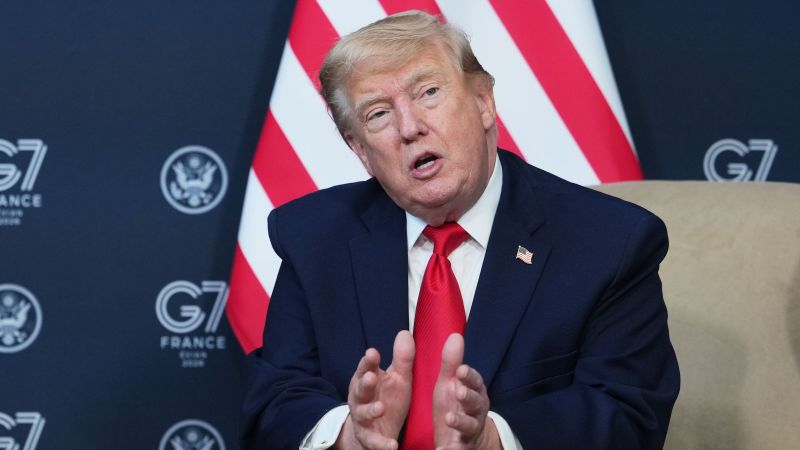
Meanwhile, the secrecy surrounding the MOU has drawn criticism from even some of Trump’s allies. During this week’s Group of 7 (G7) summit in France, European leaders pressed the US for clarity on certain provisions, particularly regarding the timeline for unfreezing assets and the oversight of Iran’s nuclear program. “We need to understand the exact conditions for these benefits,” said a French delegate, reflecting the broader concerns of G7 nations. The circulating copies of the agreement, though not yet public, have become a focal point of discussion among international partners.
Another key provision of the MOU is the immediate allowance for Iran to sell its oil and petrochemical products. This move is intended to provide the country with a financial boost, which officials believe will make it easier to negotiate further terms. The US will issue sanction waivers to enable these sales, a measure that has been both praised and criticized. “It’s a performance-based agreement,” said a US official. “Iran will only access the benefits if they meet all their obligations.” This includes maintaining a commitment to non-nuclear development and ensuring free navigation through the Strait of Hormuz.
As the negotiations progress, the focus remains on balancing immediate political gains with long-term strategic goals. The document’s vagueness is seen as a deliberate tactic to manage expectations and secure agreement, even if the details are not fully transparent. “The real strength of this deal lies in the confidence it builds between the two sides,” said one analyst. “The language is a placeholder, but the substance of the agreement is what matters.” With the G7 summit providing a platform for international scrutiny, the US and Iran continue to refine their terms, aiming to finalize a deal that addresses both sides’ concerns.
