
Trump says the Strait of Hormuz is reopened. But most ships are staying put
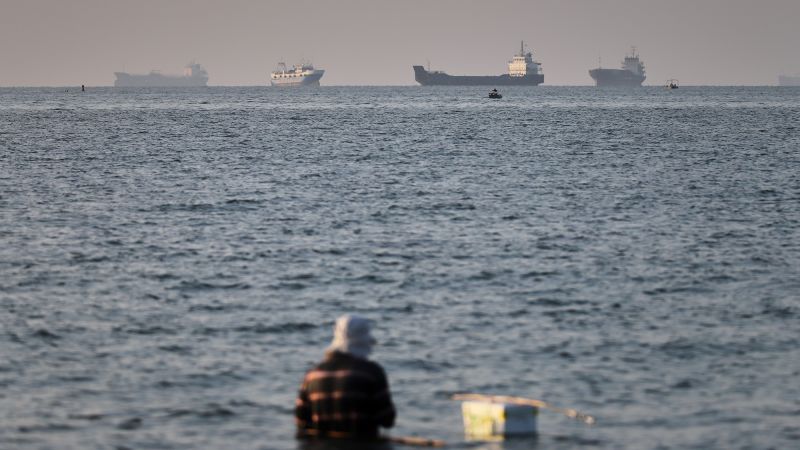
Trump Announces Strait of Hormuz Reopened, Yet Industry Skepticism Lingers
Trump says the Strait of Hormuz – President Donald Trump recently claimed that the crucial Strait of Hormuz has been reopened under terms of a new agreement with Iran. However, the shipping industry remains cautiously optimistic, with some experts doubting the immediate impact of the deal. The strait, a vital artery for global oil trade, has long been a focal point of geopolitical tensions, and its reopening has sparked mixed reactions among stakeholders.
Industry Uncertainty Persists Despite Reassurance
Trump shared his optimism on social media on Monday, stating, “Ships are starting to move, many loaded up with oil, out of the Strait of Hormuz.” This message, however, has not fully alleviated concerns within the maritime sector. Analysts argue that the agreement’s specifics, combined with ongoing risks, may not be enough to restore full traffic through the strategic waterway.
“The statements by the US and Iran are currently unclear and do not offer sufficient information regarding key aspects such as timings and safe routes,” said Jakob Larsen, chief safety and security officer at the Baltic and International Maritime Council (BIMCO). “Due to lack of details and a history of overly optimistic reassurances, we believe the security situation for the shipping industry remains volatile, and we still consider it very risky for ships to commence transits at this point.”
Larsen emphasized that without concrete assurances, ship operators will continue to hesitate. “Ships trapped in the Persian Gulf will be interested in leaving as soon as it is safe to do so,” he added. “The next step is for shipowners to be reassured that transiting the Strait of Hormuz is not only permitted but also safe.”
Historical Context and Current Traffic
Despite the recent agreement, the strait has seen limited movement. Natasha Kaneva, JPMorgan’s head of global commodities strategy, noted in a recent client note that “surprising volumes of crude and petroleum products still appear to be transiting the strait” even during periods of heightened conflict. This observation underscores the resilience of the shipping industry, which has continued to operate in challenging conditions.
Historically, the strait has been a lifeline for global oil supplies, with approximately 20% of the world’s seaborne crude oil passing through it daily. During previous tentative agreements, ships often rushed to exit the region, anticipating a return to stability. However, the current situation differs, with experts suggesting that the reopening may not immediately restore normal operations.
“Between 0% to 10% of normal flows of oil were making it out of the strait most days,” said Bob McNally, founder and president of Rapidan Energy Group. “This has helped keep oil prices from rising further, but it’s not enough to fully normalize trade.”
McNally highlighted the precarious balance of supply and demand, noting that the reduced traffic has kept prices in check. However, he also warned that the situation remains fragile, with the potential for further disruptions if the agreement does not hold.
Market Reactions and Data Insights
The announcement of the strait’s reopening initially caused a market reaction, with hopes of increased oil flow driving futures prices to a three-month low. Yet, data from Kpler, a leading ship movement tracking firm, paints a different picture. The company reported that no significant movement had been observed among the 220 tankers and nearly 500 ships currently confined to the Persian Gulf.
“This isn’t a surprise, as the deal isn’t scheduled to be signed until Friday,” explained Matt Smith, lead oil analyst at Kpler. “It will likely take three to four months before traffic can be considered normal,” he added, stressing that the process of rebuilding confidence among operators and insurers is gradual.
Smith pointed out that most ship operators are waiting for others to take the first step before committing to transit. “Without a clear signal from the market, the hesitation will persist,” he said. Maritime insurers, who play a critical role in funding voyages through high-risk zones, have also remained cautious, with no indication of increased coverage for ships navigating the strait.
“Major maritime insurers did not have any indication on their websites that they were again insuring vessels in case of attacks,” Smith said. “One insurer, Skuld, confirmed that it had not changed its coverage limitations. ‘Any market-wide review of rates, especially the war rates that apply in the Strait of Hormuz, would almost certainly depend on the certainty of safe voyages,’ the company stated.”
The absence of insurance coverage further complicates the situation, creating a standoff between operators and insurers. As long as the risks remain unquantified, shipowners will likely continue to prioritize safety over speed, keeping the strait’s traffic at a minimal level.
Looking Ahead: The Path to Normalcy
While Trump claimed that “work is now underway” to ensure the strait is fully open by Friday, the road to normalcy is fraught with challenges. The president’s statement during a meeting with French President Emmanuel Macron at the G7 summit noted that “they’re doing a little hunting for a couple of mines that they’ve already found, but … ships are starting to go out now.” However, this reassurance has not yet translated into widespread movement.
“The agreement’s success hinges on the establishment of mine-free routes and the assurance of naval protection,” Larsen reiterated. “Until these measures are confirmed, the industry will remain on edge.” He also mentioned the importance of maintaining safe distances between vessels, a factor that could influence the pace of recovery.
As the situation unfolds, the maritime sector will closely monitor the agreement’s implementation. The reopening of the strait is a critical milestone, but its long-term success depends on sustained cooperation between the US and Iran, as well as the ability to address lingering uncertainties. For now, the strait remains a symbol of both hope and caution in the global energy market.
In summary, while Trump’s announcement signals progress, the industry’s cautious approach reflects the complex interplay of political agreements, economic factors, and security concerns. The path to normalcy is not immediate, and the shipping community will need time to adapt to the new conditions. The Strait of Hormuz, a linchpin of global oil supply, is now at a crossroads, with its future dependent on the clarity and stability of the deal moving forward.
