
8 crew members dead after B-52 bomber crashes at California’s Edwards Air Force Base
Tragedy at Edwards Air Force Base: B-52 Crash Claims Eight Lives
8 crew members dead after B 52 – On Monday morning, a B-52 bomber crashed shortly after takeoff from Edwards Air Force Base, a remote military installation northeast of Los Angeles, killing all eight crew members aboard. This incident marks the deadliest B-52 crash since 1982, when a similar aircraft fell during test training at Mather Air Force Base near Sacramento, resulting in nine fatalities. The latest crash occurred at 11:20 a.m. local time, as the plane embarked on a routine test mission, according to officials.
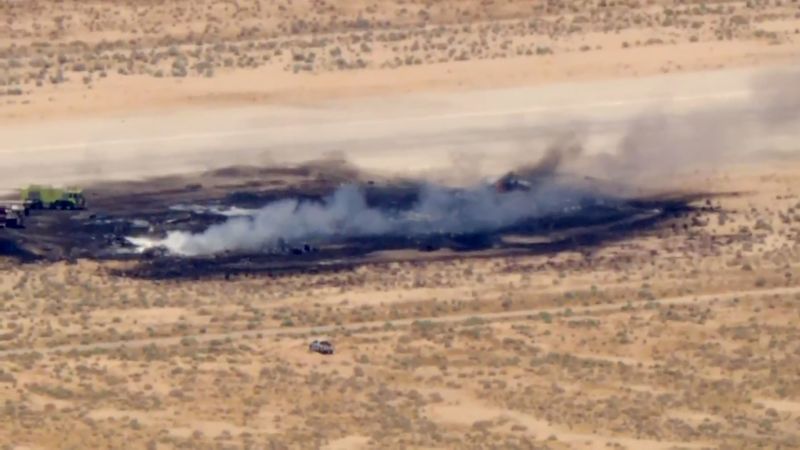
The crash site, located on the base’s sandy runway, left behind a massive blackened scar and lingering smoke, though the wreckage’s distinct components remain largely obscured, as captured in video footage by CNN affiliate KCAL. Emergency crews swiftly responded to the crash, which generated a towering black plume, but the outcome was described as “tragic and unsurvivable” by Colonel James Hayes, who addressed the situation at a news conference. “It was tragic and unsurvivable,” Hayes said, emphasizing the severity of the incident.
While the immediate focus is on recovery efforts, the base has since reopened, though operations are temporarily suspended through Tuesday. Military investigators will now examine the crash to determine its cause, with findings expected to be released in approximately six months. The process includes securing the site, collecting evidence, and reviewing maintenance records, as outlined by Hayes.
Crash Crew and Boeing’s Involvement
The eight crew members who perished were a mix of military personnel, government civilians, and contractors, according to Chief Master Sgt. Joshua T. Skarloken. Among them were two Boeing employees, the company that manufactured the aircraft. “We are in contact with their families and are offering support,” Boeing stated in a formal release. The statement underscores the company’s commitment to assisting affected families as the investigation unfolds.
Alongside the crash, officials extended their condolences to the families and communities impacted. Secretary of the Air Force Troy E. Meink and House Speaker Mike Johnson shared their grief on social media, while California Governor Gavin Newsom praised the efforts of first responders and expressed solidarity with the Edwards Air Force Base community.
Edwards Air Force Base: A Hub for Aerospace Testing
Edwards Air Force Base has long served as a critical testing ground for aeronautical innovations, from military aircraft to space shuttles. As Richard Kolko, a retired US Navy commander and P-3 pilot, noted, “If it flies, it’s tested at Edwards Air Force Base.” The base is home to some of the most experienced test pilots and engineers, who often conduct trials for cutting-edge technologies. This reputation was evident in the recent crash, which involved a B-52 supporting the Air Force’s radar modernization program.
Test missions typically involve seasoned crews, with pilots and engineers selected for their expertise. The current incident, however, highlights the risks inherent in such operations. “This crash was a result of the high standards and precision required during testing,” Kolko added, reflecting on the balance between innovation and safety. The base’s emergency response team, known for its rapid deployment, was instrumental in managing the aftermath, though the tragedy could not be averted.
The Legacy of the B-52 Stratofortress
The B-52 bomber at the center of Monday’s crash is one of the Air Force’s oldest aircraft, having first entered service in 1955. Despite its age, the B-52H variant remains a cornerstone of the US military’s strategic capabilities, capable of carrying up to 70,000 pounds of bombs and munitions. Its versatility extends to nuclear payloads, including armed cruise missiles, making it a vital asset in both conventional and strategic operations.
Recent years have seen the B-52H play a key role in conflicts involving the US and Iran, where its long-range bombing capacity has been deployed. However, the aircraft’s age has prompted ongoing upgrades. The Air Force recently launched a $48.6 billion initiative to modernize its engines, a project that aims to extend the plane’s operational life. This effort is part of broader life-extension programs that have kept the B-52 in service since its production ceased in 1962.
When replacements are needed, the Air Force relies on dismantled airframes stored at the “Boneyard” in Arizona. This practice was recently employed after a non-fatal crash in Guam in 2016 destroyed a B-52H. The crash at Edwards Air Force Base, while not fatal to the crew, underscores the challenges of maintaining such a historic aircraft. “The B-52’s endurance is a testament to engineering, but its age means every flight carries unique risks,” Kolko observed.
Historical Context and Future Implications
The 2026 crash follows the 2008 incident, where a B-52 crashed into the Pacific Ocean off Guam during a flyover, killing six Air Force personnel. These tragedies highlight the aircraft’s continued role in high-stakes missions. While the B-52 has evolved significantly since its debut, its design principles remain foundational to modern strategic aviation. “This plane has been in service for over six decades, yet it still meets the demands of today’s warfare,” Kolko noted, acknowledging its adaptability.
Edwards Air Force Base’s designation as a testing hub has also made it a site for experimental flights. From NASA’s space shuttle programs to advanced drone technology, the base has been central to pushing aerospace boundaries. The B-52’s crash adds to the list of incidents that have tested the resilience of both the aircraft and the teams that operate it. “Every test flight is a leap into the unknown,” Kolko said, reflecting on the balance between progress and peril.
As the Air Force moves forward, the focus will remain on understanding the causes of the crash and implementing measures to prevent future tragedies. The base’s operations, while temporarily paused, will continue to serve as a symbol of the nation’s commitment to innovation and defense. For the families of the victims, the process of grieving begins as officials work to provide clarity and support in the days ahead.
Edwards Air Force Base, with its storied history and cutting-edge facilities, has weathered numerous challenges over the years. Yet, the 2026 crash stands as a stark reminder of the risks associated with pushing the limits of aviation. The incident also raises questions about the sustainability of aging aircraft in modern military operations, even as they continue to play critical roles in global conflicts and technological advancements.
With the investigation ongoing and the search for answers set to take months, the tragedy at Edwards Air Force Base will likely shape discussions about the future of the B-52 and similar platforms. The collaboration between the Air Force and Boeing, as well as the broader aerospace community, will be essential in navigating these challenges. As the base prepares to resume its vital work, the memory of the eight crew members who lost their lives will remain a poignant part of its legacy.
This story has been updated with additional information. Davis Winkie’s work at CNN is supported by a partnership between Outrider Foundation and Journalism Funding Partners (JFP).
