
‘An awkward family gathering’: Trump and G7 leaders convene in France amid geopolitical divergences
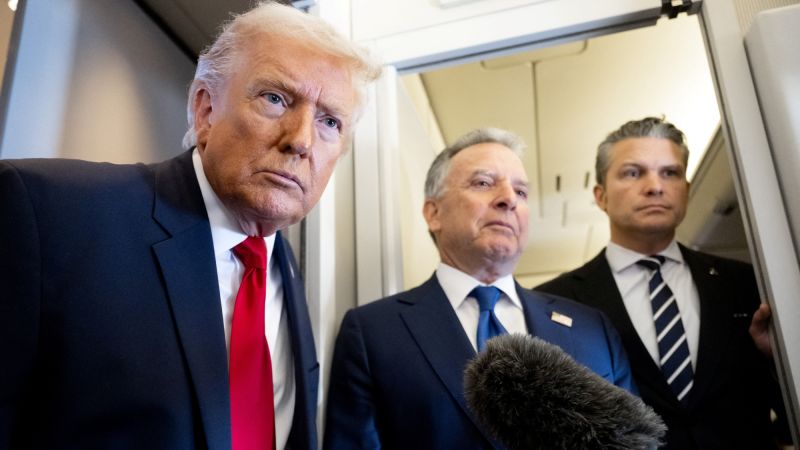
‘An awkward family gathering’: Trump and G7 leaders convene in France amid geopolitical divergences
An awkward family gathering – As the Group of Seven (G7) summit approaches in Évian-les-Bains, France, President Donald Trump and his team face mounting pressure to navigate a complex web of international tensions. For months, the Middle East conflict with Iran has cast a shadow over global diplomacy, leaving the U.S. leader in a precarious position. The summit, which brings together the world’s most influential nations, promises to be a high-stakes event where Trump will attempt to showcase his recent diplomatic breakthroughs, even as skepticism lingers among his counterparts.
The Iran Accord and Strategic Shifts
Trump’s latest move—announcing a truce with Iran—has sparked both optimism and doubt. While the agreement appears to halt hostilities and ease the closure of the Strait of Hormuz, the details remain contentious. European allies, accustomed to Trump’s unpredictability, are scrutinizing the deal’s durability and the commitment of all parties to uphold its terms. “We need to see more than just a pause in fighting,” said a senior European official, “we want a framework that ensures stability for years to come.”
“It’s all really just a big photo op,” a senior White House official said. “It’s not like big things get done there. It’s more about the meetings that come after.”
Despite the initial success of the accord, the G7 leaders are aware of its fragility. The closure of the Strait of Hormuz has disrupted global energy flows, pushing up prices and forcing nations to confront the economic fallout. Trump, who has been vocal about his frustration with the G7’s hesitance to take a stronger stance on Iran, now aims to leverage the agreement as a platform to rally support for increased activity in the region.
Coalition Building and Regional Partnerships
In an effort to strengthen his position, Trump has secured backing from France and Britain to form a coalition focused on reopening the Strait of Hormuz. The plan includes deploying naval assets to clear mines laid by Iran, a task that has been complicated by the war’s duration. “This coalition is about action,” said a British diplomat. “We can’t just talk about the deal—we need to ensure it translates into tangible progress.”
Meanwhile, French President Emmanuel Macron has invited leaders from Egypt, Qatar, and the United Arab Emirates to join the summit, hoping to address regional concerns. These nations, which have been affected by the conflict’s ripple effects, are expected to bring perspectives on trade, security, and the role of external powers in their affairs. Trump’s strategy appears to be twofold: to secure immediate cooperation on the Strait and to lay the groundwork for broader Middle East engagement.
Global Agendas and Diplomatic Challenges
While the Iran issue dominates headlines, the G7 summit is also expected to tackle a range of other topics. Economic resilience, supply chain security, and AI regulation are on the table, alongside discussions on China’s growing influence and the Ebola crisis in Africa. “The focus is shifting from confrontation to collaboration,” noted a Canadian delegate. “But we’re still waiting to see if Trump’s priorities align with ours.”
Trump’s aides have emphasized that the summit is an opportunity to reframe global priorities. They plan to highlight investment partnerships that could benefit both developed and developing nations, aiming to position the U.S. as a key player in fostering economic growth. However, European officials remain cautious, questioning whether the administration’s lack of a clear agenda will undermine the summit’s effectiveness. “We’re not sure if Trump has a specific goal in mind,” said one French analyst. “It feels more like a chance to make a show than a serious negotiation.”
Trump’s G7 History and Tensions
For Trump, the G7 summit is a recurring test of his diplomatic acumen. During his first term, he often dismissed the group as a “disaster waiting to happen,” questioning the need for U.S. involvement and the benefits of including countries like Russia and China. This skepticism has persisted, with Trump frequently expressing frustration over the G7’s perceived indecision. “They keep saying ‘let’s talk,’ but when does the action begin?” he remarked in a recent interview.
His first G7 summit in 2017 was marked by awkward exchanges, particularly with France, which he accused of being too focused on European interests. In 2018, he abruptly left a summit in Canada after a dispute over trade policies. This pattern of disruption has left his allies wary, but Macron and others remain determined to make the most of this year’s gathering. “We’re ready to work with him, even if he doesn’t always make it easy,” said a German official.
Looking Ahead: A Prelude to Major Summits
The Évian summit is seen as a stepping stone toward the NATO summit in Turkey in early July, where tensions over Russia’s invasion of Ukraine are expected to reach a new peak. European leaders hope that the G7 discussions will provide a foundation for stronger unity against Moscow, particularly as the war enters its fifth year. Trump, however, is unlikely to be a passive participant. His team has signaled a desire to push for additional support for Kyiv, including sanctions and military aid, though the extent of his commitment remains uncertain.
Macron’s inclusion of Ukrainian President Volodymyr Zelensky at the summit underscores the growing importance of regional partnerships. Trump’s past attempts to mediate the Ukraine-Russia conflict, which ended in failure, have left European officials questioning his resolve. “He had a chance to broker peace before, but now his focus is on Iran,” said a European diplomat. “Will he be willing to refocus on Ukraine?”
Despite the challenges, the G7 leaders are aware of the summit’s symbolic weight. Évian-les-Bains, a picturesque lakeside resort, has hosted some of the most consequential meetings in recent years. The Belle Époque Hôtel Royal, where the talks will take place, has become a backdrop for both breakthroughs and setbacks. As the meeting begins, the hope is that the agreement with Iran will serve as a catalyst for broader cooperation, even as the underlying tensions persist.
With the world watching closely, the summit represents a critical moment for Trump to demonstrate his ability to bridge divides and drive progress. Yet, the success of the gathering will depend on whether he can translate his public statements into actionable commitments. As the leaders take their seats, the air is thick with anticipation—a mix of optimism and doubt, as the G7 grapples with the complexities of a rapidly changing global landscape.
