
Crowds flock to White House Ellipse for fan event ahead of UFC fight
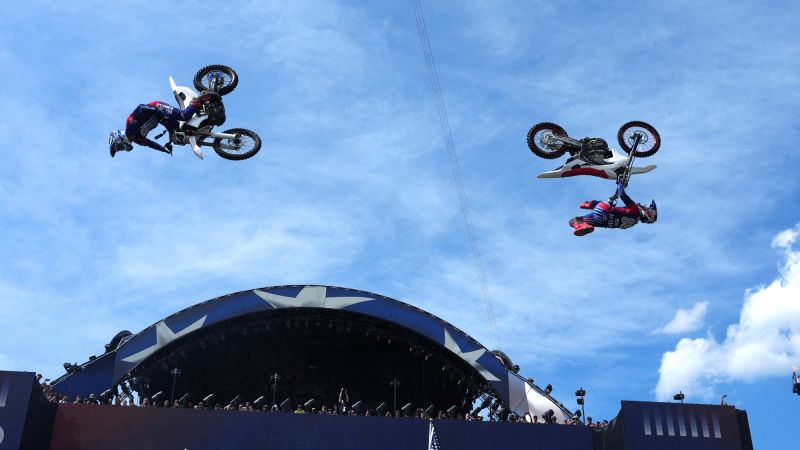
Crowds Gather at White House Ellipse for UFC Fan Event Ahead of Sunday’s Fight
Crowds flock to White House Ellipse – Thousands of fans converged on the White House Ellipse on Saturday, drawn by a rare fusion of history and high-octane entertainment. The event, dubbed UFC Fan Fest 250, offered a preview of the mixed martial arts bouts scheduled for Sunday evening on the South Lawn, where President Donald Trump will host the main fight as part of celebrations marking America’s 250th anniversary—and coinciding with his 80th birthday. Amid the buzz of excitement, a surprising sight greeted attendees: the US Army Old Guard Fife and Drum Corps, known for their Revolutionary War-era performances, delivered their usual display just moments after a motocross jumping exhibition, creating an unexpected blend of military tradition and modern sports culture.
Reviving the Ellipse as a Sports Hub
The White House Ellipse, typically reserved for presidential events and official ceremonies, transformed into a lively gathering spot for combat sports enthusiasts. While the corps’ performance is a familiar fixture on the grounds, the timing of their show following a motocross stunt added a novel twist to the setting. Fans flocked to the area despite the sweltering temperatures in the 90s, braving the heat for meet-and-greet opportunities with UFC fighters. Among the highlights was a replica of the iconic UFC “Octagon,” where attendees could pose for photos, immersing themselves in the arena’s atmosphere before the main event.
Travis Pastrana, a renowned motocross champion, captivated the crowd with daring acrobatics, leaping over obstacles and executing high-flying stunts that mirrored the intensity of the upcoming fights. The display, while short-lived, underscored the event’s goal of merging adrenaline-pumping spectacles with the UFC’s global appeal. Organizers anticipated a surge in attendance, allocating 85,000 general admission tickets for the Ellipse, in addition to 4,300 spots reserved for the South Lawn. This expansion of the event’s reach reflected its significance as a platform to showcase the sport’s reach beyond typical venues.
Political and Cultural Significance
President Trump’s involvement in the event has drawn both praise and scrutiny. While his supporters view the UFC fight as a celebration of American strength and tradition, critics have raised concerns about the cost and the symbolic use of the Ellipse for a commercial spectacle. The event coincides with the nation’s 250th anniversary, a milestone often linked to historical reenactments and patriotic displays, yet the presence of a for-profit cage fight has sparked debate about its appropriateness. Trump’s birthday adds another layer of personal significance to the affair, positioning the event as a dual celebration of national heritage and his own legacy.
Despite the controversies, the UFC Fan Fest 250 appears to have captured the imagination of many. Tyler Wood, a 27-year-old construction worker from Toronto, described his experience as “a dream come true.” He arrived in Washington after a long flight, emphasizing the rare chance to witness the event on free tickets. “The atmosphere here is electric,” Wood said, highlighting the unique fusion of national landmarks and combat sports. Similarly, Jacob Lyon, a 17-year-old high school graduate from upstate New York, drove eight hours with a friend to be part of the festivities, securing lodging over an hour away in Leonardtown, Maryland. “It’s going to be the best UFC watch party of all time,” Lyon asserted, underscoring the event’s perceived historical value.
Legal Challenges and Public Opinion
As the event gained momentum, legal challenges emerged. Two Virginia residents filed a lawsuit last week to block the UFC fight, arguing that the Lincoln Memorial—a symbol of national sacrifice—was being misused as a backdrop for a commercial spectacle. In a statement, one plaintiff, Vietnam War veteran Paul Romano, called the arrangement a “desecration.” “Using sacred ground for a for-profit cage fight so the President and his allies can make money is disrespectful,” Romano said in a news release. However, fans like Logan Marshall, a 20-year-old college student from St. Louis, dismissed the criticism. “It’s part of history,” Marshall remarked, noting that the fighters’ procession down the Lincoln Memorial was a moment “we’ll never see again.” He added that the event’s blend of tradition and sport was “insane to witness.”
Marshall’s perspective highlights the growing cultural relevance of the UFC, which has evolved from a niche sport into a global phenomenon. The Lincoln Memorial’s role in the event—hosting the Friday press conference featuring fighters—has become a point of contention, with some viewing it as a bold move to intertwine politics and entertainment. Meanwhile, others see it as a natural extension of the nation’s public spaces being used for diverse events. The debate underscores the broader tension between celebrating national achievements and the commercialization of iconic locations.
Weather Concerns and Event Flexibility
Adding another layer of uncertainty, weather forecasts hinted at thunderstorms sweeping through the DC area on Sunday afternoon. Lightning and high wind gusts were predicted, prompting concerns about the event’s execution. Dana White, CEO of the UFC, reassured fans that the fight would proceed regardless of the conditions. “If it rains, we’re going,” he stated. “The only thing that kills us is lightning. So, we could move the event two hours earlier or later.” This adaptability reflects the UFC’s commitment to ensuring the fight remains a priority, even amid unpredictable weather.
Jim Power, a dedicated UFC fan from Austin, Texas, was unfazed by the forecast. “We’re hoping for rain
