
A rare collection of Chinese cheongsams tells a story of personal style and cultural connection in 20th-century America
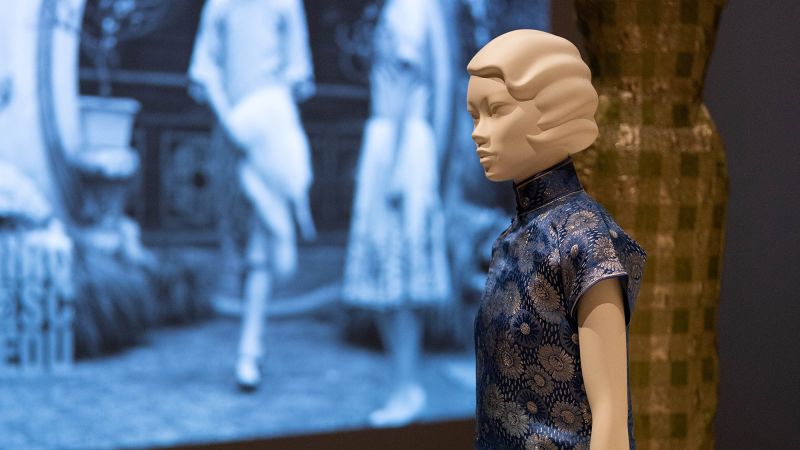
A rare collection of Chinese cheongsams tells a story of personal style and cultural connection in 20th-century America
Blending Tradition and Innovation in a Californian Wardrobe
A rare collection of Chinese cheongsams – In the heart of 20th-century America, a unique collection of cheongsams—traditional Chinese garments—unfolds at the Los Angeles County Museum of Art (LACMA). This exhibition, titled “Fashioning Chinese Women: Empire to Modernity,” showcases over 70 stunning examples of Chinese women’s clothing, offering a glimpse into their evolving styles and cultural identities. Among these pieces is a standout: a cheongsam designed by Susan Mah, a first-generation Chinese American, that marries her heritage with bold American influences.
Susan Mah, who lived in Fresno, California, had a clear vision for her “little black dress” in the late 1940s. Her background as a tailor in Shanghai and Hong Kong, honed over years of commissioning skilled artisans, gave her the expertise to craft her own garments. Yet, her most unexpected creation was a cheongsam cut from lime-green fabric adorned with Mayan-inspired symbols, a stark departure from the traditional Chinese motifs typically used. This hybrid design reflects her ability to blend cultural roots with modern aesthetics, a theme central to the collection.
“I think, had she stayed in China… she would have had to dress very conservatively,” speculates Chere Lai Mah, Susan’s daughter-in-law and curator of the collection, who has spent decades studying the garments. “But in Fresno, California, she wanted to be interestingly dressed, inspired by Irene Dunne and Barbara Stanwyck, so she started to design these hybrid Chinese American cheongsams.”
Lai Mah, now 78, has meticulously pieced together Susan’s life story through the garments she left behind. These items, preserved with remarkable care, are not just clothing but artifacts of a woman’s journey. Susan, a mother of 12 children and a bookkeeper at her family’s record business, found creative outlet in sewing. Her collection includes dozens of cheongsams, each a vivid testament to her playful experimentation with fabric and design.
A Legacy of Artistry and Cultural Hybridity
The exhibition’s centerpiece is Susan’s cheongsam collection, which Lai Mah donated to LACMA in 2022. Alongside these pieces are items from Lai Mah’s own mother, Li Zhang Huifang, who shared a close bond with Susan. The garments tell a story of transformation, capturing the shift from traditional Chinese attire to a style uniquely shaped by life in America.
Susan’s early cheongsams were often made with classic elements like Mandarin collars and knee-length fits, but her materials and motifs reflected her American context. One example, featuring French aristocrats, clowns, and roses, stands out for its whimsical charm. Lai Mah recalls the piece as “charming and cozy,” though it was never worn by her. Instead, it inspired a series of sculptures she created during her studies at UC Berkeley, demonstrating how Susan’s designs transcended fashion to influence art.
The collection also reveals Susan’s progression from a young girl in Guangdong province to a confident matriarch in the United States. Born into poverty, she later amassed wealth, allowing her to bring her entire wardrobe with her when she fled Hong Kong in 1938 amid the Japanese invasion. Her ability to preserve and adapt her clothing highlights the resilience of immigrant women in a new cultural landscape.
The Significance of a Woman’s Wardrobe in Fashion History
Curator Michaela Hansen emphasizes the rarity and value of the collection, which documents a pivotal era of social change for Chinese women. The exhibition includes pieces from Susan’s personal wardrobe as well as her mother’s, providing a dual perspective on evolving fashion and identity. “The collection documents this period of incredible change that women are experiencing,” Hansen explains, noting the impact of social liberation and mobility following the Qing dynasty’s collapse in 1912.
Unlike many museums that focus on Qing dynasty court dress or Western interpretations of Chinese design, this exhibition centers on the everyday wardrobes of Chinese women. Hansen highlights the importance of Lai Mah’s contribution, saying, “She had provenance, and she had the stories, she knew who wore what, where they wore it, and that’s very unusual in fashion history, and very unusual for an American institution to have access to Chinese fashion with that story.”
Lai Mah’s deep understanding of textiles and her book on her family’s history further enrich the exhibition. Her curation bridges personal narrative and cultural history, offering visitors a rare opportunity to see how Chinese women navigated identity in the U.S. through their clothing. “Cheongsams are custom-made—uniquely reflecting the tastes of their wearer and collaboration with tailors,” Lai Mah notes. “The collection reveals how Susan’s style evolved from a young girl’s to that of an older, confident, established matriarch.”
Preservation and the Art of Storytelling
The exceptional preservation of the garments is a testament to Lai Mah’s efforts. Despite the absence of a fancy air-conditioned storage area, the Bay Area’s climate has helped maintain the integrity of Susan’s creations. This care ensures that the details of each dress—whether a vibrant print of polka dots or a timeless black silk piece—remain intact, preserving the stories behind them.
Susan’s cheongsams, often made with a mix of traditional and modern elements, symbolize her adaptability and creativity. Lai Mah describes one of Susan’s early designs as “humorous and dashing,” capturing the playful spirit that defined her approach. These garments, though functional, carried emotional weight, reflecting Susan’s personal journey and her desire to express herself in a new world.
The exhibition invites viewers to consider the intersection of tradition and innovation in Chinese women’s fashion. Each cheongsam tells a story of cultural connection, individuality, and resilience. For Lai Mah, the collection is more than a display of clothing—it’s a legacy of her mother’s vision and a celebration of the stories embedded in every stitch. “This fills the gap of something that’s hard to collect—and important to collect,” Hansen adds, underscoring the exhibition’s role in preserving a forgotten chapter of Chinese American history.
As the exhibition opens, it serves as a reminder of the often-overlooked contributions of immigrant women to global fashion. Susan Mah’s cheongsams, once worn in Fresno, now grace the halls of LACMA, offering a bridge between past and present. Through these garments, the exhibition explores how cultural identity can be reimagined, preserved, and shared across generations and borders.
