
Consumer sentiment rises for the first time in three months
Consumer Sentiment Rises for the First Time in Three Months
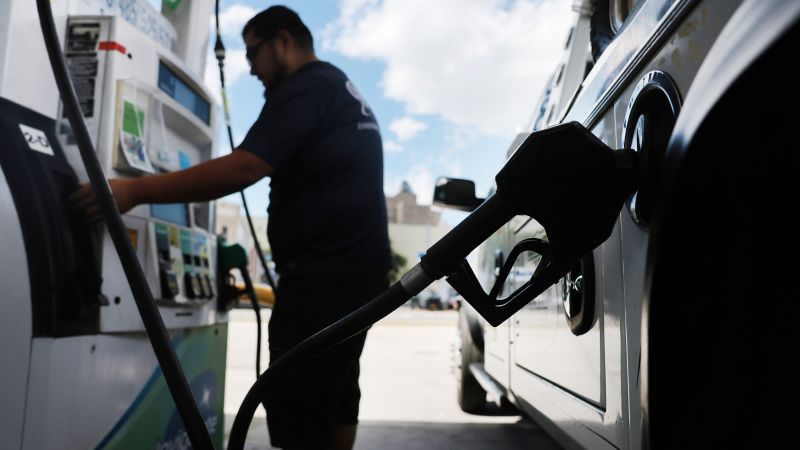
Consumer sentiment rises for the first – After months of declining confidence, U.S. consumer sentiment has seen a notable uptick, according to the latest survey by the University of Michigan. The preliminary reading for June, released on Friday, marked a 9% increase to 48.9, the first positive movement since February. This shift comes amid a backdrop of global economic instability, including the ongoing conflict between the U.S., Israel, and Iran, which has driven energy prices to unprecedented heights. However, recent declines in gas prices have provided a reprieve, helping to stabilize consumer outlook.
Joanne Hsu, the director of the surveys, highlighted the role of easing gasoline prices in this recovery. “Consumers are starting to feel some relief as gas prices have softened early this month,” she stated in a release. This trend is especially significant for lower-income households, who spend a larger proportion of their income on fuel. The survey suggests that these groups have shown the most pronounced improvement in sentiment, reflecting a growing adaptation to persistent inflationary pressures.
The U.S. consumer confidence index has been under strain for years, influenced by a series of economic shocks. From the pandemic-induced recession to post-pandemic inflation, and the subsequent rate hikes by the Federal Reserve, consumers have faced a challenging environment. The war with Iran added another layer of uncertainty, pushing sentiment to record lows twice. Yet, the latest data indicates that the tide may be turning.
Historically, consumer sentiment has struggled to recover from major crises. The pandemic era saw the longest economic expansion in U.S. history, followed by a sharp downturn as supply chains faltered and prices surged. By June 2022, inflation had reached its peak, with the index climbing to 9.1%, marking the highest level in four decades. This period of extreme price volatility left many consumers unprepared, exacerbating economic anxiety.
Compounding these issues was the 2023 standoff over the debt ceiling and the Federal Reserve’s aggressive interest rate hikes to curb inflation. While there was a tentative rebound in 2024, the year 2025 brought renewed uncertainty with President Donald Trump’s announcement of sweeping tariffs. These measures unsettled markets, causing a decline in consumer confidence once again. Now, the war in Iran is acting as another catalyst, though its impact appears to be waning as energy prices stabilize.
Inflation Remains a Top Concern
Despite the recent uptick in sentiment, inflation continues to dominate consumer worries. A separate quarterly survey by TransUnion revealed that 50% of Americans still list inflation as their primary financial concern, up from 47% in the previous quarter. This figure underscores the persistent challenges of affordability, even as confidence improves in isolated pockets.
Charlie Wise, TransUnion’s head of global research and consulting, noted that optimism hasn’t fully rebounded but has held steady. “Consumers are showing resilience, having grown more accustomed to volatile economic conditions,” he explained in an interview with CNN. “While there’s still a lot of price uncertainty, the data suggests they’re beginning to adapt.”
The current inflation rate is the worst in three years, with energy prices playing a central role. Gasoline costs, which have historically been a key indicator of economic sentiment, have declined in recent weeks, contributing to the positive trend. However, unless these prices continue to fall significantly, the recovery may remain fragile. Kevin Warsh, an economic analyst, emphasized that sustained price stability is crucial for long-term improvement. “A cynic might say people are getting numb to inflation, but realistically, they’re adjusting to its new normal,” he said.
Warsh pointed out that the 2022 inflation spike was particularly jarring because it came after decades of relative price stability. “Consumers didn’t expect such a rapid increase, and that disrupted their expectations,” he added. The recent war in Iran, while adding to the turmoil, may not have the same long-term impact as the pandemic or previous inflationary episodes. “Gas prices have risen, but now they’re stabilizing. That gives consumers a sense of reassurance,” he said.
Looking back, the U.S. has endured a sequence of economic disruptions since 2020. The pandemic recession, followed by inflationary pressures, then the debt ceiling crisis, and now tariffs and geopolitical conflicts, have created a perfect storm of uncertainty. Each event has compounded the previous one, making it harder for consumers to regain a stable sense of financial security. However, the gradual normalization of these conditions may signal a turning point.
“The fact that sentiment is rising now, even with inflation still high, is a sign that people are starting to accept the new economic reality,” Hsu observed. While the overall trend is cautiously optimistic, the survey also highlights the uneven recovery. Lower-income households, which are more vulnerable to price fluctuations, have shown stronger resilience, suggesting that the broader population may still be adjusting to the long-term effects of inflation and energy costs.
As the economy navigates this complex landscape, the key to sustained consumer confidence will depend on continued stability in energy prices and broader economic indicators. The University of Michigan’s survey offers a glimmer of hope, but it remains to be seen whether this rebound will hold in the face of ongoing challenges. For now, the data suggests that consumers are beginning to adapt, even if the road to full recovery is still long.
