
Trump nominates Jay Clayton to top intelligence post amid uproar over prior, interim pick
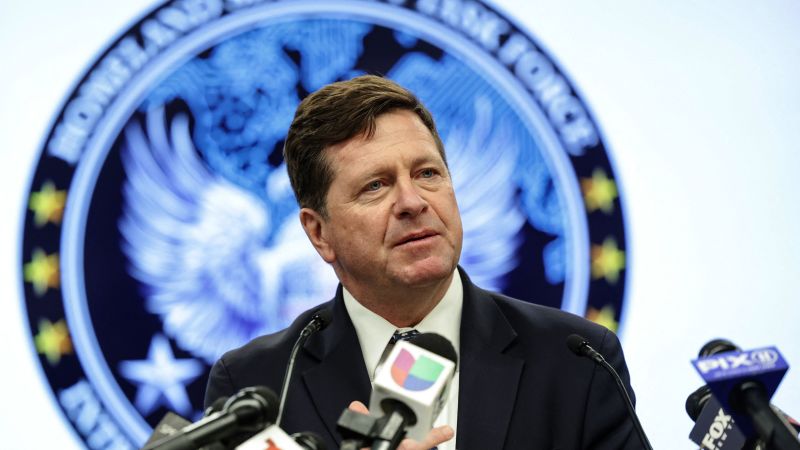
Trump Nominates Jay Clayton for Top Intelligence Post Amid Uproar
Trump nominates Jay Clayton to top intelligence – President Donald Trump has officially nominated Jay Clayton, the United States attorney for the Southern District of New York, to serve as the next director of national intelligence. This decision comes as a response to the controversial interim appointment of Bill Pulte, the Federal Housing Finance Agency chief, who was named to the role after the previous director, Tulsi Gabbard, stepped down. The choice to name Pulte has drawn sharp criticism from lawmakers, who argue that his lack of experience in intelligence matters threatens the continuity of critical surveillance programs. Trump, in a post on Truth Social, praised Clayton’s legal credentials, asserting, “Few people anywhere in the legal community are respected as Jay Clayton.” He urged Congress to swiftly confirm the nominee, emphasizing his belief in Clayton’s ability to steer the intelligence community in line with his administration’s priorities.
Acting Director Controversy and Congressional Pushback
The interim appointment of Bill Pulte ignited a political firestorm, with critics questioning his suitability for the role. Pulte, a businessman with no formal background in intelligence or national security, was chosen despite bipartisan concerns over his qualifications. Lawmakers have highlighted the urgency of resolving the FISA (Foreign Intelligence Surveillance Act) extension, which is set to expire on Friday. Democrats, in particular, have insisted that Pulte’s removal is essential for approving the renewal, citing his potential to undermine the program’s authority. “Why wait until after the House is out of session? Pulte has to go,” said Senate Minority Leader Chuck Schumer, expressing frustration over the delayed process.
“The president’s delay in confirming a permanent director has left the intelligence community in a precarious position,” remarked Senator Mark Warner, the Democratic leader on the Senate Intelligence Committee. “Clayton’s nomination offers a chance to stabilize the agency before the FISA clock runs out.”
Clayton’s Background and Strategic Implications
Jay Clayton’s nomination represents a shift toward legal and corporate expertise within the intelligence leadership. A veteran of the Southern District of New York, he has handled high-profile cases involving financial crimes and corporate misconduct, aligning with Trump’s focus on accountability and economic policy. His appointment is also seen as a move to counter the influence of the “deep state,” a term often used to describe career intelligence officials who are perceived as loyal to the previous administration. Critics, however, argue that Clayton’s ties to the Trump legal team may raise questions about his impartiality. “Clayton’s background is strong, but his political alignment could impact the intelligence community’s independence,” noted a Republican analyst in a recent report.
Despite these concerns, Trump has framed Clayton’s nomination as a pragmatic solution to an urgent problem. The White House submitted the nomination to the Senate around 5 p.m. on Thursday, a timing choice that has sparked debate. Some Republicans have questioned whether the administration rushed the process to avoid a potential crisis. “Clayton’s confirmation could serve as a political victory for Trump, even if it’s not the most ideal choice,” said a senior advisor. The Senate’s response will be crucial in determining whether the nomination proceeds smoothly or faces further scrutiny.
“Trump’s selection of Clayton reflects a broader strategy to consolidate control over intelligence operations while aligning with his legal team’s influence,” observed a political strategist. “This move could reshape the agency’s focus in the coming months.”
FISA Extension Crisis and the Path Forward
The FISA extension debate has become a central issue in the Senate, with Democrats linking the program’s renewal to the removal of Pulte. Even with Clayton’s nomination, the acting director’s fate remains unresolved. “The key to restoring FISA authority is replacing Pulte with someone who understands the intelligence community’s needs,” stated a Democratic senator. Meanwhile, Republicans have criticized the Senate’s insistence on a partisan vote, arguing that it risks shortchanging national security. The House’s adjournment has added pressure, as lawmakers struggle to pass a short-term extension before the deadline.
As the Senate prepares to take up the FISA renewal, the outcome will depend on whether Clayton’s confirmation can bridge the political divide. Trump’s administration has framed the nomination as a critical step to ensure the intelligence community remains aligned with its goals. However, the broader implications of this choice—both for national security and the balance of power within the federal government—will be closely watched by analysts and lawmakers alike. The final decision will not only determine Clayton’s tenure but also shape the future of intelligence operations under the new administration.
