
‘Residual algae’ coats part of newly opened Reflecting Pool
Algae Concerns Emerge After Trump’s Reflecting Pool Renovations
Residual algae coats part of newly – Just days after the Lincoln Memorial Reflecting Pool underwent a major overhaul, controversy has arisen over the appearance of algae in the water. The Trump administration had spent weeks highlighting the project, touting it as a significant improvement to Washington, D.C. and crediting the president with revamping the iconic landmark. However, the new issue has cast a shadow over the public relations campaign, as algae became visible near the pool’s surface shortly after it was filled.
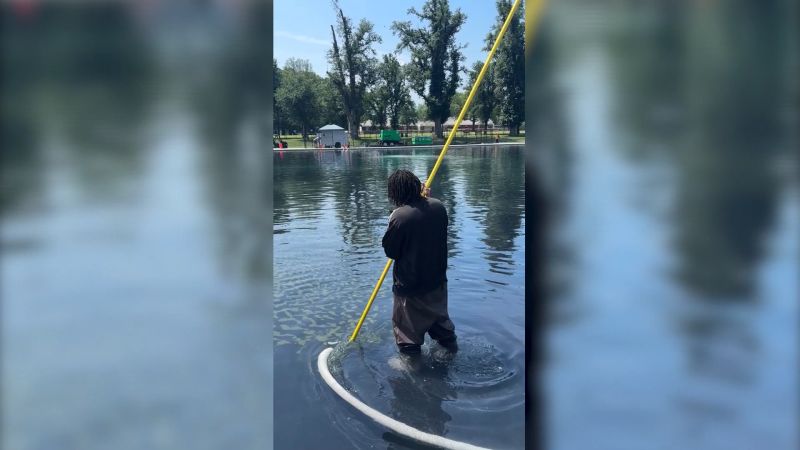
CNN captured footage of a worker manually removing algae from the pool’s bottom on Wednesday, revealing the problem during a routine maintenance check. The Interior Department, which oversaw the project, acknowledged the algae but described it as a “residual” issue stemming from the supply lines that remained inactive for eight weeks during construction. According to a spokesperson, this is a common phase in restarting operations, and the pool’s new systems are expected to address the problem soon.
Administration’s Response and Technical Solutions
In a statement, communications director Kate Martin emphasized that the algae is a temporary byproduct of the renovation process. “What you are seeing is residual algae from the supply lines, which have been sitting dormant during construction,” she explained. “This is part of the normal startup process, and we are actively removing it. The nanobubbler system will ensure the pool remains algae-free moving forward,” Martin added.
“President Donald J. Trump is an expert builder who has fixed the Reflecting Pool for good unlike the failed and extremely costly attempt by Obama and Biden,” Martin said in a statement.
The department also highlighted its investment in a “state-of-the-art ozone nanobubbler filtration system,” which is designed to prevent future algae growth. Despite these assurances, the algae’s presence has sparked questions about the efficiency of the new technology and the timeline for full completion.
The Cost of Renovation
The renovation project, initially projected to cost $1.8 million, has seen its budget steadily rise. The final figure of $14.2 million has drawn attention, especially when compared to the $35.3 million allocated under the Obama administration for similar work. Trump, during a recent Oval Office meeting, acknowledged the increased cost, stating, “I originally thought I’d do it for $2 or $3 million. Just do a base. But now we are fixing up the exterior of it so we will probably be in it for less than $20 million.”
While the administration frames the expansion as a necessary upgrade, critics argue the expenditure may not align with the pool’s current condition. The White House’s social media account, X, had previously claimed, “The water is ON, the Reflecting Pool is reflecting, and D.C. is looking better than ever,” before the pool had fully filled with water. This statement, though optimistic, has been met with skepticism as the algae issue persists.
Mixed Public Reactions to the Overhaul
Residents and visitors near the pool offered varied opinions on the renovations. Lara Harvey, a New Zealand native who has resided in Bethesda for the past decade, noted the “American flag blue” paint on the pool’s bottom. “I needed to come down to see if it was actually reflecting, and it wasn’t bright blue. And I’m impressed, to be honest. It reflects beautifully,” she remarked.
“I was expecting a swimming pool. I was expecting swimming pool blue, but I’m really surprised,” Harvey added.
Meanwhile, Marcus Tate, a local from Alexandria, expressed frustration over the allocation of funds. “DC is already a beautiful place,” he said, while criticizing the administration for prioritizing aesthetic updates over addressing broader issues like homelessness. Kyra Brown, another D.C. resident, was equally skeptical, noting that the pool’s appearance hadn’t changed significantly. “It doesn’t look that much different, honestly, to me,” she observed.
The algae’s visibility has become a focal point for some, with Tate suggesting the cleanup efforts may be more about image than necessity. “They spent millions on this, but the pool still looks the same,” he said, highlighting the disconnect between the project’s scale and its tangible results.
Uncertainty About the Timeline
Interior Department officials remain cautious about the algae’s removal schedule, citing weather conditions as a factor. A spokesperson noted that they would provide a clearer timeline for resolution the following day, adding that the rain could delay the process. “We didn’t want to speculate on timing because of the unpredictable weather,” the official said.
Despite these challenges, the administration continues to promote the renovations as a success. The White House has emphasized the pool’s functional improvements, including enhanced water circulation and a modernized appearance. However, the algae’s presence underscores the complexities of maintaining such a large public space after an extended period of inactivity.
The issue also brings attention to the historical context of the pool’s maintenance. Under the Obama administration, the project had previously cost $35.3 million, raising questions about the efficiency of current spending. While the Trump team claims the new system is more advanced, the algae’s reappearance suggests that the process is not without its hurdles.
Public Perception and Political Messaging
The algae issue has become a talking point for critics who question the administration’s focus on aesthetics over practicality. “It’s a pet project, and the cost is higher than before,” one observer noted, comparing the current expenditure to the previous administration’s approach. The contrast between the high-profile renovation and its immediate challenges has fueled discussions about the priorities of the Trump team.
Yet, supporters of the project argue that the upgrades are essential for preserving the pool’s legacy. “It’s not just about looking good—it’s about ensuring the pool operates efficiently for years to come,” said a local advocate. This sentiment aligns with the administration’s emphasis on long-term benefits, even as the algae problem highlights the need for ongoing maintenance.
As the pool continues to be filled and the nanobubbler system is tested, the public’s mixed reactions will likely shape the narrative around the project. While some see it as a triumph, others remain unconvinced, waiting to see if the algae issue is truly resolved or if it’s just a temporary setback. Regardless of the outcome, the renovation has become a symbol of the administration’s efforts to enhance Washington’s landmarks, even in the face of unexpected challenges.
CNN’s Abigail Roedersheimer contributed to this report, providing insights into the ongoing debates and the administration’s response to the algae concern. The story underscores the delicate balance between political messaging and the practical realities of public infrastructure projects.
