
Several states are bowing out of Trump’s ‘Great American State Fair’
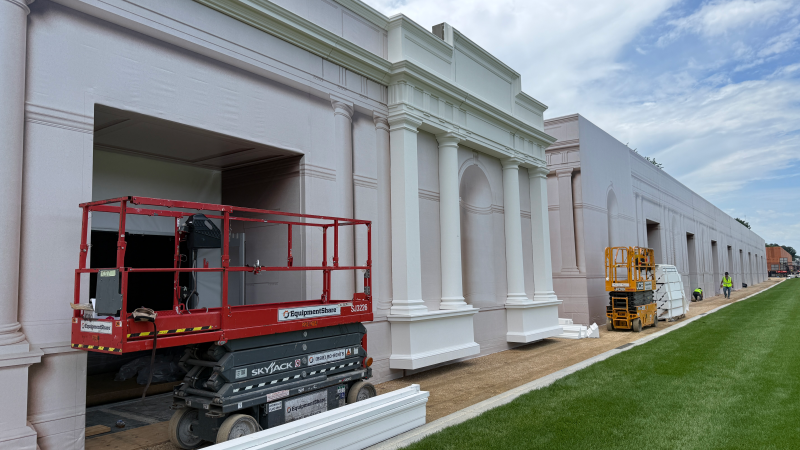
Several States Withdraw from Trump’s 250th Anniversary State Fair
Several states are bowing out of Trump – President Donald Trump has positioned the “Great American State Fair” as a grand celebration of national unity, featuring elaborate pavilions from every U.S. state and territory. However, the event has faced unexpected resistance, with officials from Oregon, Washington, and North Carolina recently informing CNN that they have opted out of participation. Meanwhile, Pennsylvania remains undecided, adding to the growing list of states questioning their involvement in the Trump-aligned festivities marking America’s semiquincentennial. The fair, set to open June 25 and run for approximately two weeks, is being organized by the nonprofit Freedom 250, which has been promoting the event as a showcase of the nation’s diverse heritage. Yet, concerns about costs and the political leanings of the fair have led some states to withdraw, raising questions about the event’s ability to maintain its patriotic image.
Partisan Concerns and Financial Hurdles
While the administration emphasized that the fair’s goal is to honor the country’s history, officials from Oregon, Washington, and North Carolina cited financial and ideological reasons for their decision. A representative for Oregon Governor Tina Kotek, a Democrat, noted that the state’s absence stems from both the expense of participation and growing apprehension about the event’s partisan nature. “The State of Oregon will not be participating in the Great American State Fair due to both the cost of participating in the Fair and growing concerns that the event in Washington D.C. is shaping up to be a more partisan affair than originally presented,” said spokesperson Luke Harkin. Similar sentiments were echoed by representatives from Washington and North Carolina, though the specific reasons for each state’s withdrawal were not fully disclosed. The organizers, however, remain confident that all 50 states and territories will be represented, even if some states choose not to actively contribute.
“Every state’s story will be told in a way that’s authentic to its people, history, and culture,” said a Freedom 250 spokesperson, adding that the event will still celebrate every community, regardless of the entity providing input.
Despite the pullbacks, the Trump-backed group Freedom 250 has emphasized that the fair will remain a unifying celebration. The group has shared early designs for pavilions from 21 states, highlighting a range of cultural and historical attractions. For instance, South Carolina’s booth will feature a mini-golf course, Texas will showcase a replica of the Alamo, and Montana’s pavilion will include a fossil digging station. Other plans include interactive experiences, such as a rodeo simulation in Wyoming using augmented reality headsets, and Michigan’s booth will display a mechanical milking cow. Minnesota’s entry promises visitors the chance to win prizes by selecting from a pond filled with miniature versions of the state’s official bird, the Common Loon. These creative representations aim to reflect the unique identities of each state, according to the organizers.
Controversies Surrounding the Event
The “Great American State Fair” has not been immune to criticism, with some highlighting its political undertones. Earlier this month, the fair was forced to cancel an opening concert after artists withdrew from the event, citing disagreements with its political alignment. This incident has sparked debates about the balance between celebration and partisanship. Additionally, the administration’s Ultimate Fighting Championship event at the White House has drawn scrutiny from Democrats, who argue that the government should prioritize cost reduction over extravagant celebrations. These controversies underscore the challenges of hosting an event that blends national commemoration with political messaging, potentially influencing public perception of its true purpose.
Freedom 250, the organization spearheading the fair, has maintained that the event will remain inclusive and representative. The group has released renderings of the pavilions, which are meant to reflect the states’ individual histories and traditions. Arizona’s booth, for example, will feature an immersive reproduction of the iconic wave-like sandstone walls of Antelope Canyon, while visitors to Michigan will encounter a mechanical milking cow. Minnesota’s pavilion will allow attendees to engage in a game involving miniature Common Loons, and Wyoming’s exhibit will let guests participate in a virtual rodeo. These details illustrate the creative efforts to celebrate regional diversity, even as some states distance themselves from the event.
Freedom 250 has also detailed other attractions planned for the fair, including a scaled-down replica of Trump’s proposed 250-foot “triumphal arch” and an 110-foot Ferris wheel. Movie screenings, musical performances, and military flyovers are expected to draw crowds during the event’s run from June 25 to July 10. The organization has taken steps to ensure that the fair’s programming aligns with its vision of American heritage, though the decision to exclude certain states has raised eyebrows. A person familiar with the planning process revealed that Freedom 250 covers the construction of booths and pavilions, but participating states are responsible for decorating their own tents. This division of costs may have contributed to the reluctance of some states to commit, as seen in the cases of Oregon, Washington, and North Carolina.
A Celebration of Diversity or a Political Statement?
As the fair approaches, the question remains whether it will succeed in presenting a cohesive narrative of national unity or if it will be overshadowed by the political divisions of the Trump administration. The event is designed to coincide with the nation’s 250th anniversary, but its partisan leanings have already sparked debate. Trump’s influence on the celebrations has been significant, with the administration directing programs, funding, and thematic elements to reflect his vision of the country. This has led to some states viewing the fair as more of a political platform than a cultural showcase.
Despite these concerns, organizers remain optimistic. Courtny Hinds, general manager of the Wyoming State Fair and lead for the state’s pavilion, described the event as a once-in-a-lifetime opportunity. “Every single state kind of has their own pieces of their identity, so whoever our neighbors will be, we’re excited to make friends with them and the rest of the states and territories too,” she said. This sentiment highlights the collaborative spirit the fair aims to embody, even as some states choose to step back. With the final details still being “actively finalized,” the event’s success will depend on its ability to balance patriotic symbolism with the diverse perspectives of its participants.
As the countdown to the fair begins, the impact of its exclusions continues to be discussed. While the Trump administration has framed the event as a celebration of American pride, the withdrawal of several states has introduced an element of uncertainty. The fair’s organizers, however, have pledged to ensure that all states are represented, regardless of their participation level. This commitment, paired with the creative and cultural elements planned, may help the event achieve its goal of uniting the nation in commemoration of its 250th anniversary. Whether the fair will ultimately be seen as a symbol of unity or a reflection of partisan divides remains to be seen, as it prepares to welcome visitors to the National Mall under its giant white tents and neo-classical columns.
