
Trump family promotes coins commemorating White House UFC fight
Trump Family Promotes Coins Commemorating White House UFC Fight
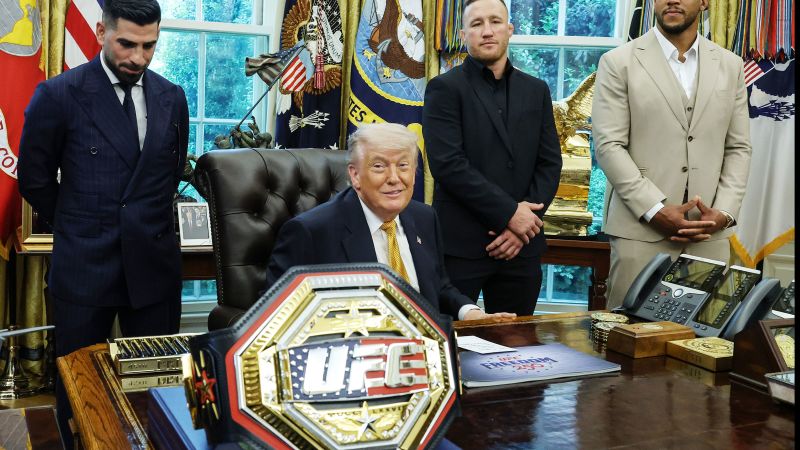
Trump family promotes coins commemorating White – As the White House prepares to host a high-profile UFC event this week, the Trump Organization has launched a new initiative to capitalize on the occasion by selling exclusive gold and silver coins. Priced as high as $11,999.99, these coins feature the likeness of former President Donald Trump and are marketed as a collaboration between the UFC and the Trump family’s business empire. The initiative, branded as “Freedom 250,” is being led by the president’s sons, Eric Trump and Donald Trump Jr., who oversee the Trump Organization’s operations. The coins are being sold in anticipation of the event, which is scheduled for Sunday and coincides with Trump’s 80th birthday.
Exclusive Merchandise and Brand Licensing
The coins, described as numismatic collectibles, come in four denominations, with the silver version priced at nearly $250. The most expensive gold medallion includes a portrait of Trump alongside UFC president Dana White, according to the marketing materials. While the Trump Organization is not manufacturing or distributing the coins directly, it claims to have exclusive rights to the president’s image for this project. The website for the venture asserts that these are the “only officially licensed Donald J. Trump medallions on the market,” positioning them as the definitive product tied to the president’s brand.
Although the Trump Organization is the primary entity behind the coin’s distribution, the collaboration is framed as a joint effort with the UFC. The campaign emphasizes the president’s direct involvement, with the site stating that the coins were “designed by President Trump.” This branding strategy has drawn attention to the family’s continued efforts to monetize the former president’s public presence, even as he returns to the political spotlight. Critics argue that the initiative exemplifies the Trump family’s pattern of leveraging his name for profit across diverse industries, from real estate to cryptocurrency.
Legal Challenges and Public Perception
Despite the Trump Organization’s claims of exclusivity, a lawsuit has been filed by two Virginia residents to block the UFC event. The plaintiffs allege that the fight is not a genuine celebration of the United States’ 250th anniversary but rather a strategic move to promote the UFC brand and honor Trump’s personal milestone. They cite a spring report revealing that Trump had invested $50,000 in stock of UFC’s parent company, suggesting a financial stake in the event. The lawsuit contends that this dual purpose could create a conflict of interest, as the White House event might benefit Trump and his family beyond its public-facing narrative.
A federal judge has mandated the administration to respond to the lawsuit by Tuesday evening, highlighting the legal scrutiny surrounding the event. Meanwhile, the Trump Organization has taken steps to solidify its claim of exclusivity, with its website stating that “other Trump-themed bullion or numismatic products might be unlawful” and emphasizing that none are as directly connected to the president as their offerings. This rhetoric aims to undercut potential competitors while reinforcing the family’s control over the president’s brand.
“The Fake News’ continued attempts to fabricate conflicts of interest are irresponsible and reinforce the public’s distrust in what they read,” said Davis Ingle, a White House spokesman. “Trump only acts in the best interests of the American public.”
Ingle’s statement underscores the administration’s defense of the event, framing it as a legitimate celebration of national heritage. However, the timing of the fight—on June 9, 2026, which marks both the 250th anniversary of American independence and Trump’s 80th birthday—has fueled debates about its true intent. Supporters argue that the UFC event aligns with the spirit of the anniversary, while opponents see it as a calculated opportunity to enhance Trump’s public image and financial gains.
Trump’s Endorsement and Business Legacy
Trump has been actively promoting the UFC event for weeks, even overseeing the construction of a large staging area on the White House South Lawn known as “The Claw.” This structure, which has become a focal point of the event, symbolizes the scale of the family’s ambitions to integrate their brand into major national moments. The initiative is part of a broader trend of Trump’s post-presidential ventures, where his name is consistently used to endorse products and projects that span multiple sectors.
The Trump family’s branding efforts have been scrutinized for their profitability and perceived lack of oversight. From smartphones to golf courses, the family has secured licenses to use Trump’s name in various ventures, often generating substantial revenue. The coins are another example of this strategy, as they capitalize on the former president’s popularity and the public’s fascination with his personal brand. Critics question whether these initiatives, while legal, blur the line between political leadership and commercial exploitation.
As the UFC fight draws closer, the Trump Organization remains focused on its marketing campaign, with the coins serving as a tangible symbol of the family’s influence. The website’s assertive tone, which declares the coins as the sole approved products, reflects an effort to dominate the market for Trump-themed merchandise. This approach has sparked discussions about the broader implications of presidential branding, with some arguing that the former president’s legacy is being commodified for mass appeal.
The event’s dual significance—marking the nation’s 250th anniversary and Trump’s 80th birthday—has made it a focal point for both celebration and critique. While the White House emphasizes its role in national festivities, the lawsuit highlights concerns about the event’s commercial motives. Regardless of the legal challenges, the Trump family’s ability to leverage major moments for profit underscores their ongoing strategy to maintain a presence in the public eye, even after leaving the White House.
Historical Context and Public Reaction
Trump’s collaboration with the UFC is not his first foray into monetizing his public persona. Over the years, his family has successfully branded a wide array of products and events, from luxury real estate to political campaigns. This latest venture, however, adds a new layer to the discussion by tying the president’s image to a high-profile athletic spectacle. The coins, priced at a premium, are positioned as collectibles that blend politics and pop culture, appealing to both supporters and skeptics.
Public reaction to the initiative has been mixed. Some view the coins as a creative way to honor Trump’s legacy, while others accuse the family of profiting from his presidency. The UFC event itself has been a subject of debate, with critics noting that its timing and scale seem to prioritize Trump’s personal milestones over the anniversary celebration it was initially framed as. Nonetheless, the Trump Organization continues to promote the coins as a symbol of the president’s enduring influence, even as legal and political challenges persist.
The collaboration between the Trump family and the UFC also raises questions about the boundaries of presidential involvement in private business. While the former president has maintained a hands-on role in the event’s planning, the Trump Organization’s official stance suggests that the family is acting as a licensing entity rather than a direct participant. This distinction is crucial in addressing concerns about conflicts of interest, yet the coins’ design and marketing have reignited debates about the extent of the president’s influence on both the event and the associated products.
As the coins go on sale and the UFC fight approaches, the Trump family’s strategy continues to reflect a blend of nostalgia, branding, and profit. Whether seen as a patriotic celebration or a calculated move, the initiative highlights the ongoing intersection of politics and commerce in the public sphere. The federal judge’s deadline for the administration’s response adds a layer of urgency to the legal scrutiny, ensuring that the debate over the event’s legitimacy will remain in the spotlight until the final days of the spectacle.
