
Protests over a US Ebola facility in Kenya highlight Africa’s growing resistance to Trump-era deals
Protests Over US Ebola Facility in Kenya Show Africa’s Resistance to Trump Deals
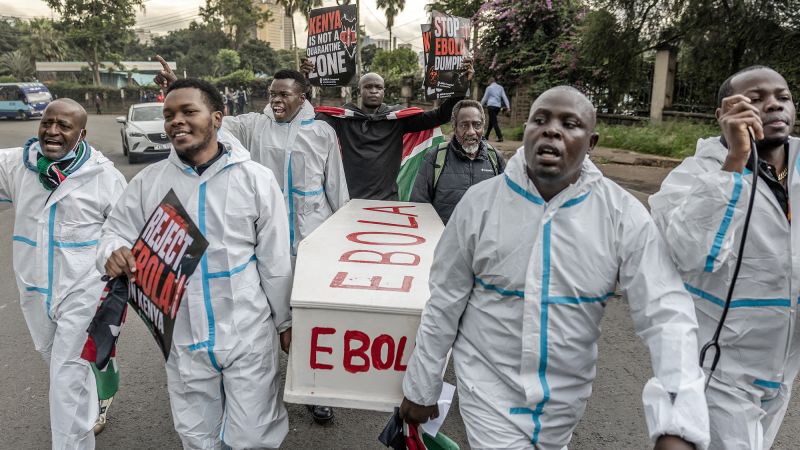
Protests over a US Ebola facility in Kenya have intensified, reflecting growing African discontent with Trump-era agreements that prioritize American interests over local concerns. Demonstrators in Nairobi and other cities have rallied against the construction of a US-funded quarantine center, arguing that the United States is imposing conditions on African nations under a transactional model. The facility, designed to isolate Americans infected with Ebola during travel, has sparked fears that Kenya, which has never recorded a case of the disease, could become a regional hub for its spread due to its proximity to outbreaks in the Democratic Republic of Congo (DRC) and Uganda. This backlash highlights a broader shift in Africa’s relationship with U.S. partnerships.
Kenyan Government Defends Project Amid Public Outcry
Despite public protests, Kenya’s government has remained steadfast in its support for the facility, citing the benefits of U.S. funding for healthcare infrastructure. The decision comes after a court temporarily halted construction, yet officials argue the project remains essential for public health preparedness. President William Ruto emphasized that the facility would enhance Kenya’s ability to manage medical emergencies, while critics question whether the country is being used as a testing ground for American health policies. The controversy underscores tensions between national sovereignty and foreign influence in African health initiatives.
“The US is treating Kenya like a buffer zone for its own health risks, not a partner in our own development,” said Rigathi Gachagua, a former deputy to Ruto.
Gachagua, who was impeached in 2024, accused Washington of double standards, pointing to the facility as an example of how American deals often sideline African priorities. He argued that Kenya should have the right to negotiate terms that align with its own interests, rather than being forced into agreements that prioritize U.S. needs. This sentiment echoes concerns raised by other African leaders about the Trump administration’s approach to international health collaborations.
Africa’s Shift from U.S. Partnerships to Sovereign Priorities
The protests in Kenya are part of a wider pattern of African nations reevaluating their relationships with U.S. health partnerships. With the Trump administration’s “America First” policies, many African countries have grown skeptical of deals that appear to favor U.S. corporate interests and data-sharing requirements. This shift has led to debates about whether African nations are being treated as equals or as dependent entities in global health strategies. Critics argue that the focus on bilateral agreements has created a power imbalance, with African countries often bearing the brunt of risks without commensurate benefits.
When Trump returned to power in 2024, he scaled back foreign aid and pushed for direct deals with individual nations, signaling a departure from the multilateral frameworks of previous administrations. This approach has led to the dismantling of the U.S. Agency for International Development (USAID), which once played a key role in supporting African health programs. The change has raised alarms about the future of aid initiatives targeting diseases like HIV/AIDS, malaria, and tuberculosis, as well as the potential for similar issues to arise with new projects like the Ebola facility.
Protests over a US Ebola facility in Kenya have also sparked discussions about transparency and accountability in U.S.-funded projects. Some argue that the facility’s location reflects a lack of consultation with local communities, while others see it as a necessary step to strengthen regional health security. The debate highlights the complex balance between global health collaboration and national autonomy, as African countries navigate the legacy of Trump-era policies in their own development agendas.
Zambia Objects to US Health Pact Terms
Similar concerns have emerged in Zambia, where officials have criticized a proposed $2 billion health agreement for its preferential terms toward U.S. companies. The deal includes clauses that require data sharing and favor American firms, prompting Zambia’s foreign minister, Mulambo Haimbe, to voice objections. “Zambia is a leading copper producer, a key material for renewable energy and electric vehicles,” Haimbe stated. “Yet the agreement seems to prioritize American corporate gains over our national priorities.” This reflects a growing sentiment across Africa that U.S. health partnerships may be more about economic leverage than mutual benefit.
“We cannot accept a model where we’re responsible for managing health crises while the U.S. takes the risk-free option,” Haimbe added.
The controversy in Zambia follows accusations from outgoing U.S. ambassador Michael Gonzales that African leaders have relied on American aid without sufficient investment. While Gonzales acknowledged the need for mutual collaboration, the deal has fueled resentment among African nations that feel their autonomy is being compromised. As protests over a US Ebola facility in Kenya gain momentum, they serve as a rallying point for broader resistance to U.S. influence in African health and economic policies.
