
NASA directs its ISS crew members to board spacecraft amid leak repair attempt
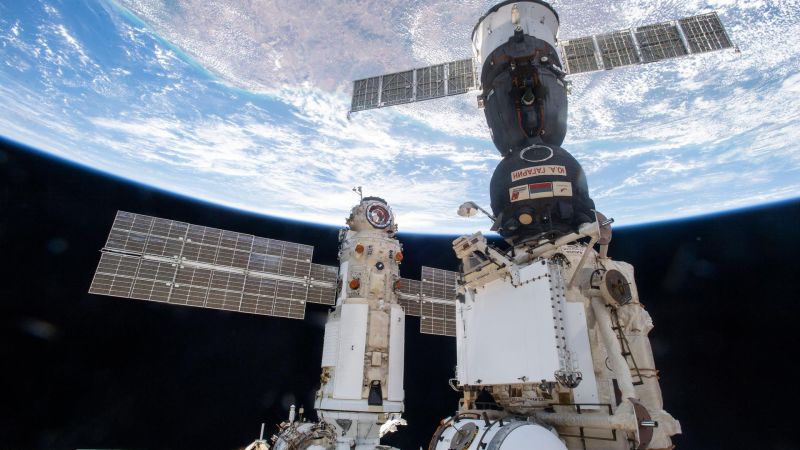
NASA Directs ISS Crew to Board Spacecraft Amid Russian Module Leak Repair
NASA directs its ISS crew members – In a proactive safety measure, NASA ordered five astronauts to take refuge inside the SpaceX Crew Dragon spacecraft while Roscosmos conducted repairs on a suspected air leak in the Russian section of the International Space Station. The directive came as part of a larger effort to address a persistent issue in the Zvezda module’s transfer tunnel, which has been under scrutiny since 2019. The astronauts, including four members of the SpaceX Crew-12 mission and NASA’s Chris Williams, remained inside the Dragon capsule for several hours on Friday, June 5, 2026, to ensure their safety during the maintenance operation.
Leak Concerns in the Zvezda Module
The leak in question originates from the transfer tunnel connecting the Russian-controlled Zvezda module to a docking hatch. This area has long been a focal point for concerns, as cracks and air loss were first identified in 2019 and have since been a recurring problem. The issue escalated significantly in 2024 when the rate of air escape increased, leading to heightened tensions between NASA and Roscosmos over the urgency of the repairs. NASA had previously warned that the leaks could lead to a “catastrophic failure” if left unaddressed.
“Following new leaks, Roscosmos has elected to proceed with a more extensive repair operation on Friday, June 5,” stated NASA Press Secretary Bethany Stevens in a post. “Out of an abundance of caution, NASA has directed all four of the agency’s SpaceX Crew-12 members and astronaut Chris Williams to assume an elevated safety posture in the Dragon spacecraft during the repair.”
The decision to shelter the crew was based on the potential risk posed by the leak, even though Roscosmos initially claimed the situation did not threaten the safety of the astronauts. According to Russian state media, specialists from the ISS Russian Segment’s main operations team detected a leak in the Zvezda module’s transfer chamber while pressurizing it to match the rest of the space station. The leak was identified during routine checks, prompting immediate action to mitigate the risk.
Repair Operations and Crew Response
Roscosmos temporarily suspended Friday’s repair efforts, citing the need for additional measurements and data analysis. This pause allowed the team to reassess the integrity of the Zvezda module and determine whether the leaks were isolated or part of a broader structural issue. The decision to halt operations reflected a cautious approach to ensuring that all potential hazards were addressed before resuming work. As of now, it remains unclear when the repair efforts will continue, though NASA and Roscosmos are coordinating closely to resolve the issue.
The astronauts who sought shelter were all part of the Crew-12 mission, which arrived at the ISS aboard the Dragon spacecraft in February. The four crew members — NASA’s Jessica Meir and Jack Hathaway, European Space Agency’s Sophie Adenot, and Roscosmos’ Andrey Fedyaev — spent the day in the same capsule that brought them to the station. This move was intended to prepare them for an emergency escape in case of a more severe problem. NASA’s Chris Williams, who traveled to the ISS via a Russian Soyuz spacecraft, joined them in the Dragon as a precautionary measure.
Roscosmos reported that two potential air leaks were discovered during an inspection. While the first leak was quickly sealed, the second required further investigation. The Russian space agency emphasized that the current situation does not endanger the crew, but the incident has underscored the fragility of the station’s systems. The Zvezda module has been largely isolated since the leak was first detected, with efforts focused on containing the problem within its compartment.
Historical Challenges and Future Implications
The leak issue has persisted for years, with NASA highlighting the difficulty of diagnosing and fixing microscopic cracks in the Zvezda module. In 2024, the agency noted that the suspected cracks were “very small, not visible with the naked eye and have brackets and pipelines near them, making it challenging to deploy diagnostic tools.” Despite these challenges, the module has remained functional, though the recurring leaks have raised questions about its long-term viability. The recent incident marks a significant moment in the station’s operational history, as it brings renewed attention to the aging infrastructure.
As the ISS nears its 25th anniversary of continuous human presence, the leak has added pressure to NASA’s end-of-life planning for the station. While NASA has pledged to keep the ISS operational until 2030, Russia has not committed to extending its involvement beyond 2028. This discrepancy has raised concerns about the future of the station’s operations, particularly if the Russian segment is decommissioned earlier than expected. The leak, though localized, could serve as a catalyst for reevaluating the station’s maintenance priorities and potential reliance on alternative modules.
The incident also highlights the collaborative and sometimes tense relationship between NASA and Roscosmos. Though both agencies have worked together on the ISS for decades, the leak has sparked debates over the extent of the problem and the necessary responses. For example, while Roscosmos prioritized structural repairs, NASA focused on ensuring the safety of its astronauts, even if that meant temporarily isolating them from the Russian module. The decision to shelter the crew reflects the dual approach of maintaining operations while minimizing risks.
Historically, astronauts have taken shelter on the ISS in similar scenarios, such as when the station passes near space debris or faces other catastrophic threats. The current situation is no different, with the crew’s actions serving as a standard protocol to safeguard their lives. However, the scale of the leak and the complexity of the repairs have made this event more noteworthy. The temporary evacuation of four astronauts and the presence of NASA’s Chris Williams in the Dragon capsule demonstrate the agency’s commitment to crew safety, even as it navigates the challenges of maintaining a shared space station with Russia.
With the end of the ISS’s operational life approaching, the leak repair effort has become a test of both agencies’ ability to work together. The incident underscores the importance of the station as a symbol of international cooperation in space exploration. If the Russian segment is withdrawn before 2028, the United States may need to assume greater responsibility for maintaining the station’s systems, potentially altering the balance of resources and expertise required for its continued operation. For now, the astronauts remain in the Dragon, watching as the repairs progress and hoping for a resolution that will keep the ISS functional for years to come.
