
Lebanese president accuses Iran of using his country as a bargaining chip in peace talks with the US
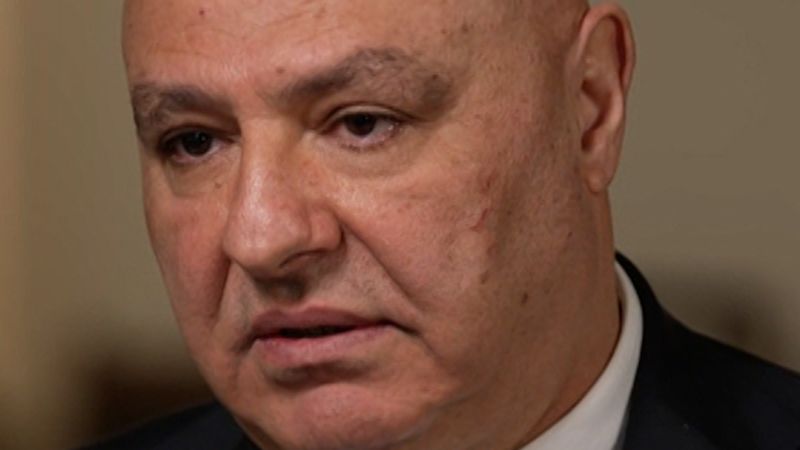
Lebanese President Condemns Iran’s Role in Peace Talks with the U.S.
Lebanese president accuses Iran of using – Lebanese President Joseph Aoun has accused Iran of leveraging his nation as a bargaining chip during ongoing peace negotiations with the United States. In a recent exclusive interview with CNN’s Christiane Amanpour, Aoun expressed frustration over how Iran’s strategic interests are overshadowing Lebanon’s national priorities. He emphasized that Iran’s influence, particularly through its alliance with Hezbollah, is compromising Lebanon’s sovereignty. “It’s not your country, it’s our country,” Aoun stated, addressing Iran’s Islamic Revolutionary Guard Corps (IRGC), which has long provided Hezbollah with financial and military backing. This declaration comes as tensions between Lebanon and Israel escalate, with Aoun highlighting the suffering of ordinary citizens due to the conflict.
Aoun’s Call for Hezbollah Disarmament
Aoun, a former military leader, has consistently advocated for peace and criticized the cycle of violence involving Hezbollah and Israel. He argued that the Lebanese people are increasingly tired of the hostilities, which have disrupted daily life and caused significant humanitarian crises. “We are fed up and we want to live in peace,” he said, stressing the need for a resolution that prioritizes Lebanon’s stability. Aoun also pointed out that Iran’s geopolitical ambitions are being funded at the expense of Lebanon’s security. “They deserve not seeing their homes destroyed every five to 10 years,” he added, reflecting on the toll of repeated attacks on civilian areas.
“Our interests do not coincide with your interests,” Aoun said, addressing Iran’s influence in the region. “The people of Lebanon are paying the price for the sake of your own interest.”
Escalation of Conflict and Human Impact
The recent escalation in hostilities between Hezbollah and Israel has intensified pressure on Lebanon’s government to find a solution. Aoun highlighted how Iran has tied its support for Hezbollah to the condition of Israel’s withdrawal from Lebanese territory, effectively using the country as leverage in negotiations with Washington. He noted that Lebanon’s commitment to disarming Hezbollah has been challenged by foreign interventions and internal divisions. “The Lebanese state had pledged to tackle the challenge of disarming Hezbollah,” Aoun remarked, underscoring the government’s struggle to maintain control over the militia’s operations.
“They can invade the whole country, they can flatten the whole country, but they will never be able to achieve their objective,” Aoun said of Israel. “Hezbollah is not an objective you can see… it’s an idea.”
Aoun’s push for direct peace talks with Israel represents a bold shift in Lebanese foreign policy. He framed the initiative as a critical opportunity to break the cycle of violence, urging both sides to prioritize diplomacy over confrontation. “We are ready, we are willing, we are committed to negotiations to end the war,” he declared, addressing the Israeli public. This approach, however, has sparked debate, with some citizens questioning whether it undermines Hezbollah’s role in the country’s political landscape.
Legacy of Conflict and Aoun’s Leadership
Aoun’s background as a military commander has shaped his perspective on the ongoing crisis. Having served eight years as head of the Lebanese Armed Forces, he witnessed firsthand the devastation caused by repeated conflicts. His experiences in battle left him with physical and auditory scars, yet he remains steadfast in his commitment to peace. “I prefer negotiations over wars,” Aoun said, underscoring his belief that dialogue is the key to long-term stability. His leadership has positioned him as a central figure in Lebanon’s efforts to navigate the complex geopolitical situation.
“This is a huge opportunity,” Aoun said. “They both have to choose: war or diplomacy.”
As the situation in Lebanon continues to evolve, the international community watches closely. The U.S. and Iran’s ceasefire agreement, signed in April, has not yet resolved the deeper issues fueling the conflict. Aoun’s call for a new approach reflects Lebanon’s desire to assert its independence in peace talks. With over 3,500 Lebanese lives lost and nearly a fifth of the population displaced, the pressure on Aoun to deliver a lasting solution has never been greater. The success of his strategy will determine whether Lebanon can reclaim its role as a mediator or remain a pawn in a larger geopolitical game.
