
Fact check: The many lies Trump told the New York Post
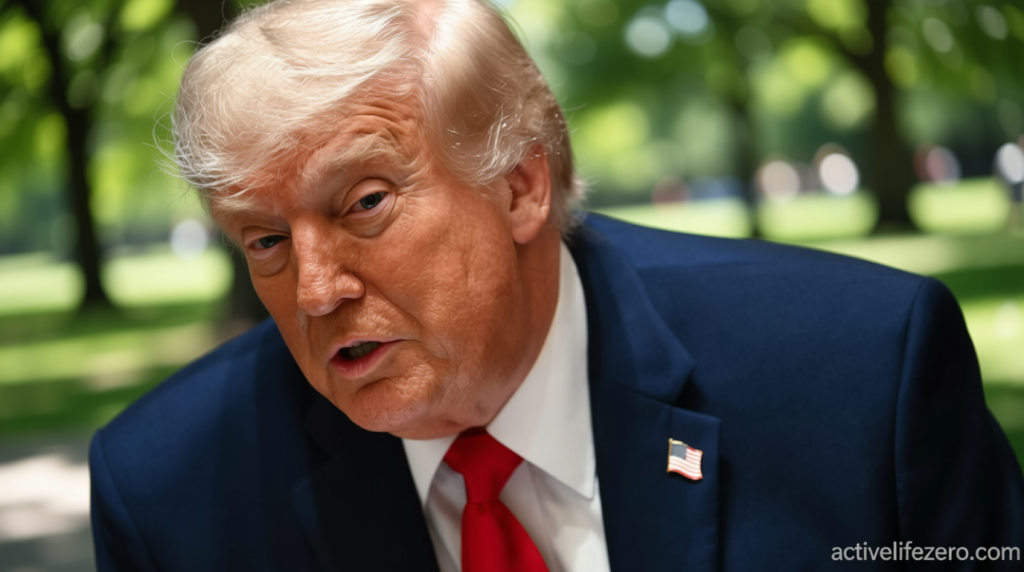
Fact Check: The Many Lies Trump Told the New York Post
Mail-In Ballots: A Global Practice
Fact check – During a recent conversation with conservative New York Post columnist Miranda Devine, President Donald Trump made a familiar claim about mail-based voting systems. He asserted,
“We’re the only country in the world that has mail-in ballots. No other country does it anymore.”
This statement, while echoing past remarks, ignores the reality that numerous nations, including Canada, the United Kingdom, Australia, Germany, and Switzerland, have long utilized postal voting as part of their electoral processes. While the specifics of each country’s system differ, the common thread is that mail-in ballots are a well-established method, not a uniquely American invention.
The 2020 Election: Rigged or Not?
Trump repeatedly accused the 2020 election of being “rigged,” stating in the interview,
“it’s been proven to be rigged.”
Despite this insistence, the election was certified as legitimate by multiple state officials and legal entities. Joe Biden secured a decisive victory, winning 306 electoral votes to Trump’s 232. Additionally, Biden received over 7 million more votes in the popular count. Five-and-a-half years after the election, no conclusive evidence has emerged to support Trump’s assertion that the results were manipulated. His claim of a “landslide” loss also fails to hold up, as Biden’s victory margin was significant but not unprecedented in U.S. history.
Trump’s Election Performance: A Misleading Narrative
When asked about his political achievements, Trump claimed,
“I won it three times.”
This statement is misleading. While he secured victories in the 2016 and 2024 presidential elections, he lost the 2020 race to Joe Biden. Trump’s description of the 2024 election as “a great election” contrasts with his later claim that “they had a lot of rigging going on there too.” He insisted that “there were areas that were just rigged. I could see it. In other words, rigged against me.” However, these allegations lack substantiation. The 2024 election was conducted with standard procedures, and Trump’s win was not contested by credible evidence.
California Ballots: Excess Claims Unfounded
Trump rekindled a previously debunked claim during the interview, stating,
“You know, in California, they mail out 38 — I think 38 million ballots.”
He further suggested that some voters received multiple ballots, while Republicans often got none. This narrative is baseless. As of two weeks before the last presidential election, California had approximately 22.6 million registered voters. By the time of the primaries, that number had slightly increased to around 23.2 million. There is no evidence to support the idea that 15 million excess ballots were distributed in any California election. Every registered voter, regardless of political affiliation, receives a mail-in ballot, though occasional administrative errors do occur.
Democrats and Electoral Integrity
Trump accused Democrats of relying on “cheating” to secure victories, saying,
“If they didn’t cheat, they could not win because their policies are so bad.”
He also claimed,
“If they didn’t cheat you wouldn’t have them in.”
These remarks downplay the legitimacy of Democratic wins, such as the 2020 election, where Biden’s victory was confirmed through widespread vote counting and legal processes. Democrats, like Republicans, have historically won elections without resorting to fraud. The notion that their policies alone are responsible for electoral success is a simplification that ignores the role of voter turnout, campaign strategies, and democratic institutions.
Talarico and the Mask Claim
Trump’s criticism of James Talarico, the Democratic Senate candidate in Texas, was another point of focus. He claimed,
“A couple of months ago, he’s wearing a mask.”
This statement was later clarified to suggest Talarico was wearing a mask “six months ago,” a discrepancy that highlights Trump’s tendency to exaggerate timelines. CNN could not find evidence supporting the claim that Talarico was masked in the timeframe Trump cited. The video referenced by Trump, which showed Talarico wearing a mask in 2022, was used by Republicans to mock him, but it does not justify the broader accusation of electoral fraud.
Mitch McConnell’s 2020 Reelection: A Victory in Context
Trump also credited his influence for the reelection of Republican Senator Mitch McConnell of Kentucky, stating,
“Without me, he wouldn’t have been elected. It was my endorsement that got him elected. He was losing by a lot, I endorsed him, and he won the election quite easily along with everyone else.”
However, McConnell’s race was not as close as Trump implied. The Senate majority leader had been re-elected with near-unanimous support in a state that has consistently voted Republican since 1984. In 2020, he won by nearly 20 percentage points, securing a victory that was not in doubt. Trump’s attempt to link his endorsement to McConnell’s success overlooks the senator’s strong base of support and the electoral system’s established norms.
Patterns of Deception and Their Impact
Trump’s interview with Devine revealed recurring patterns of misinformation. His reliance on unverified claims about mail-in ballots, election integrity, and voter behavior underscores a broader strategy of sowing doubt about democratic processes. While these remarks may resonate with his base, they fail to hold up under scrutiny. The lack of challenge during the interview further reinforces the idea that Trump’s narratives often go uncorrected, even when facts are clear. As the 2024 election draws closer, such claims could influence public perception, particularly among voters who are skeptical of electoral systems.
Each of these statements, though seemingly isolated, contributes to a larger narrative of distrust in the electoral process. By reiterating claims that have been debunked, Trump reinforces his image as a leader who challenges the status quo, even when the evidence does not support his assertions. The interview serves as a microcosm of his communication style, where accuracy is often secondary to the power of repetition and emotional appeal. As the media continues to scrutinize his statements, the public is left to navigate a landscape of fact-checked claims and unverified allegations, with the stakes of democratic legitimacy hanging in the balance.
