
Former NY Rep. George Santos under investigation for alleged insider trading on Kalshi
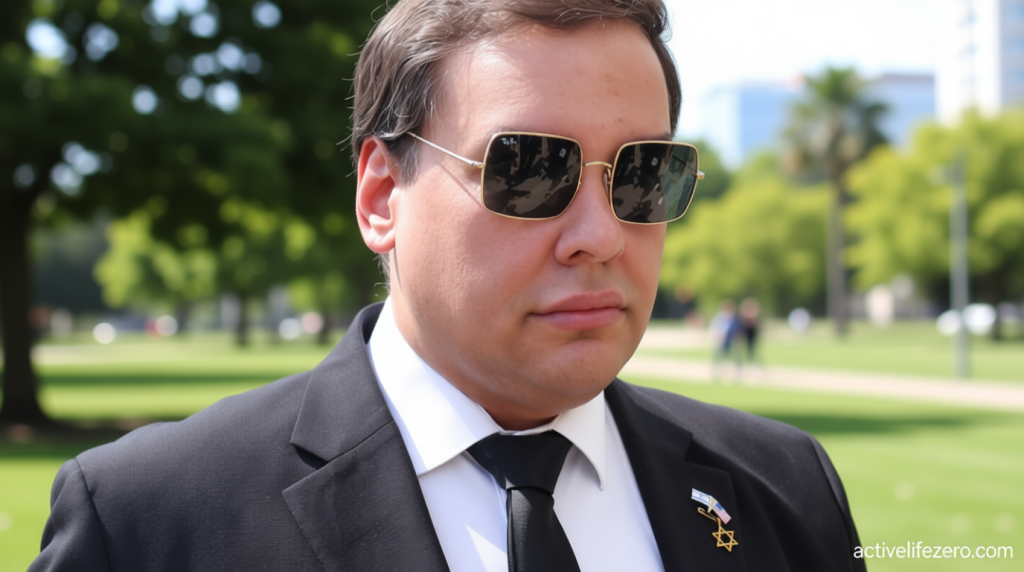
Former NY Rep. George Santos Under Scrutiny for Alleged Insider Trading on Kalshi
Former NY Rep George Santos under – George Santos, the former U.S. Representative from New York, has been placed under federal investigation for alleged insider trading activities on the prediction market platform Kalshi, according to two confidential sources. The scrutiny comes just months after Santos was ousted from Congress and served time in prison for fraud charges related to his 2022 midterm campaign. His current predicament adds another layer to the controversy surrounding his political career, which has already been marked by allegations of deception and financial misconduct.
Kalshi Detects Unusual Trading Patterns
Kalshi, a prominent prediction market site, flagged unusual trading patterns linked to a market predicting attendance at this year’s State of the Union address, sources confirmed. The platform identified suspicious activity involving bets on whether Santos would attend the event, which was placed before the speech. Traders wagered millions of dollars on the outcome, including bets on Santos, President Donald Trump’s son Barron Trump, USA Hockey star Jack Hughes, and Nick Shirley, the MAGA journalist whose Minnesota fraud story gained widespread attention online.
Santos had publicly stated prior to the speech that he intended to attend, but he ultimately did not appear. This discrepancy raised questions about the timing of his trades, which were conducted on Kalshi. The source revealed that Kalshi determined the account in question belonged to Santos, froze the associated trading activity, and forwarded the case to both the Justice Department and the Commodity Futures Trading Commission (CFTC) for further review. A separate source corroborated that the CFTC, the federal agency responsible for regulating prediction markets, is actively examining the matter.
While the Justice Department is not currently investigating Santos’ trades, the case has drawn attention to the potential for misuse in prediction markets. These platforms, which allow users to bet on a wide range of outcomes—from sports events to political elections—have become increasingly popular in recent years. Their rise has coincided with growing public interest in leveraging data and analytics to predict future events, but it has also sparked concerns about transparency and accountability in the financial sector.
Background on Santos’ Legal History
Santos’ legal troubles began with his ousting from Congress in 2022, following a wave of allegations that led to his indictment for wire fraud and aggravated identity theft. He was sentenced to seven years in federal prison for these charges, though the sentence was later reduced by former President Donald Trump through a presidential commutation. As a result, Santos served less than three months behind bars before being released. His return to public life has since been accompanied by ongoing legal challenges, including this new inquiry into his trading practices.
Despite his release, the scrutiny over Santos’ financial dealings continues. The insider trading allegations now focus on his participation in prediction markets, where he reportedly placed bets on the outcome of the State of the Union address. This has raised questions about whether he used non-public information to gain an advantage in his trades. The CFTC’s involvement suggests that federal regulators are taking the matter seriously, even as the Justice Department has not yet launched a formal probe.
Rise of Prediction Markets and Regulatory Concerns
Prediction markets have seen explosive growth in popularity over the past year, offering users the ability to bet on a vast array of topics, from sports and elections to seemingly absurd scenarios like who will win season 50 of “Survivor.” Kalshi and Polymarket are among the leading platforms in this space, but their rapid expansion has also highlighted gaps in regulatory oversight. Although these markets are treated like commodity futures and monitored by federal agencies, many lawmakers and state officials argue that existing rules have not kept pace with the industry’s evolution.
Kalshi, which has a partnership with CNN, provides data to support coverage of major events, including the State of the Union address. However, the platform maintains strict policies to prevent its editorial staff from engaging in trading activities. This distinction is crucial, as it separates the role of information providers from that of traders. The recent investigation into Santos’ account underscores how even individuals with no direct ties to the platform can be implicated in market irregularities.
Santos’ case has also brought attention to the broader implications of prediction markets in politics. With the ability to forecast outcomes based on real-time data and public sentiment, these platforms have become a powerful tool for shaping narratives. However, the potential for insider trading—where traders use non-public information to profit—raises ethical and legal concerns. The CFTC’s involvement signals a push to address these risks, particularly as prediction markets grow in influence and reach.
Details of the Allegations and Kalshi’s Response
The specific trades in question involved a market that tracked the likelihood of Santos attending the State of the Union address. Kalshi’s algorithm detected patterns suggesting the account had access to information not available to the general public. This led to the freezing of the account, a standard procedure when suspicious activity is identified. The platform then referred the case to federal authorities, including the Justice Department and CFTC, for deeper analysis.
Kalshi has not yet provided public comment on the matter, leaving the details of Santos’ trades to be pieced together through sources. The platform’s decision to freeze the account and report the activity reflects its commitment to maintaining integrity within its markets. However, the case also highlights the challenges of detecting insider trading in a system where participants can act quickly and anonymously.
While Santos has not publicly commented on the allegations, he told NPR that he was unaware of any ongoing investigations. “I’ve never been informed that my trading activity was under scrutiny,” he said in a recent interview. This statement, though made to NPR, has been scrutinized by analysts who note that the timing of the trades aligns with his previous legal troubles. The investigation into Santos’ account is part of a larger trend of federal agencies examining the role of prediction markets in political and financial decision-making.
Implications for the Industry and Political Landscape
The case against Santos has sparked discussions about the need for stronger regulations in prediction markets. Critics argue that the current framework, which allows for anonymous trading and fast transaction speeds, creates opportunities for abuse. Meanwhile, supporters of the markets emphasize their role in democratizing financial insights, enabling individuals to participate in forecasting outcomes that impact their daily lives.
As the CFTC delves deeper into Santos’ trades, the case may serve as a catalyst for reforms in the industry. The Justice Department’s decision to not immediately investigate suggests that the matter might be handled by the CFTC, which has more specialized expertise in market regulations. However, the potential for cross-agency collaboration remains, especially given the high-profile nature of the case.
For Santos, the allegations represent another challenge in his post-congressional life. His previous fraud charges have already tarnished his reputation, and this new scrutiny could further complicate his efforts to rebuild credibility. The case also highlights how political figures can become entangled in the complexities of financial markets, even as they remain in the public eye.
As the investigation unfolds, it remains to be seen whether Santos’ actions constitute insider trading or if they fall under a different category of market irregularity. Kalshi’s partnership with CNN adds an interesting dimension, as the network has access to the same data used by traders. Yet, CNN’s editorial staff are prohibited from using the platform for personal trading, reinforcing the distinction between media coverage and market participation.
With the public’s appetite for predictive analytics increasing, the role of prediction markets in shaping political narratives and financial outcomes is likely to expand. Santos’ case, therefore, is not just about his personal conduct but also about the broader implications of these markets in modern governance. The outcome of the investigation could influence how regulators approach similar cases in the future, ensuring that prediction markets remain a transparent and fair space for all participants.
