
A populist will win the Texas Senate race. The question is, which one?
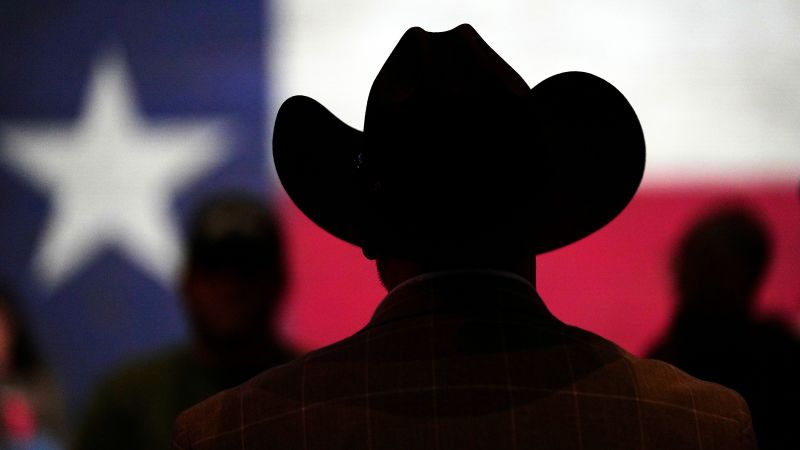
A populist will win the Texas – With Republican Ken Paxton and Democrat James Talarico already sparring, the Texas Senate race will offer this year’s most direct collision between the competing theories of populism that now dominate American politics. Paxton is assailing Talarico with the cultural populism that the GOP has increasingly relied upon to cement its electoral coalition, especially since the rise of Donald Trump as the party’s national leader. Just as quickly, Talarico is lashing Paxton with arguments that reflect the economic populism that has ascended among Democrats during the Trump years.
Each of these messages has proved successful in recent campaigns around the country. But there’s no question that in red-leaning states such as Texas, Republican cultural arguments on issues such as immigration, crime, and transgender rights have consistently trumped Democratic claims that the GOP has favored billionaires and big corporations over average families. Republicans insist that history will prove decisive again in Texas this year.
“Texas will never elect someone who thinks God is nonbinary,” Republican Senator Ted Cruz declared in a social media post last week, referring to comments Talarico made as a state representative during a 2021 debate over transgender rights. But Democrats are cautiously optimistic that with so many families now financially struggling, those GOP arguments may not prove as relevant this year. “There’s no doubt they are going to run the same culture war … and we’re going to run on the cost of living,” said Chuck Rocha, a longtime Democratic operative and adviser to Talarico.
“And when gas is $4 a gallon, and folks can’t pay for daycare, that stuff just don’t resonate like it used to. They are going to talk about pronouns; we are going to talk about prices. They are going to talk about who is eating meat; we are going to talk about the price of meat.” The combination of Paxton’s personal vulnerabilities and this year’s national headwinds for Republicans has almost all Texas observers expecting the most competitive major statewide race since Democrat Beto O’Rourke mounted an unexpectedly strong Senate challenge to Cruz in 2018.
But the combination of the local headwinds for Democrats and Talarico’s personal vulnerabilities, causes many of those same analysts to conclude that Paxton remains the favorite. In Texas, “the Democratic brand is not in great shape,” said James Henson, director of the Texas Politics Project at the University of Texas. “And Republicans have a lot of practice here running against Democrats.” Once the general election was set after Paxton’s primary victory over Republican Sen.
John Cornyn last week, each side wasted no time constructing the alternative frame they want Texas voters to view the choice through. In his victory speech, Paxton auditioned a Trump-like succession of derisive nicknames for his opponent — including “Tofu Talarico” “low-T Talarico” and “Tala-freako” — all meant to portray the former seminarian as culturally alien. “My opponent is the most extreme radical the Democrats have ever nominated,” Paxton insisted, before describing Talarico as a supporter of “open borders,” “boys in girls’ sports,” “gender mutilation surgery performed on kids”; as hostile to oil and gas; and perhaps most insulting of all in Texas, “a vegan.” (“I have been eating barbecue since before Ken Paxton’s first indictment,” Talarico fired back.) Talarico responded with a video in which he disparaged Paxton, who has a long record of financial and personal scandals, as “the most corrupt politician in America.” “It’s why we can’t afford anything; it’s why we can’t get ahead no matter how hard we work,” Talarico insisted.
“For 50 years, mega donors and their puppet politicians like Ken Paxton have stolen from us, with their bribes, their bailouts and their billionaire tax breaks.” From the start, a major part of Talarico’s appeal to Democrats has been the belief that as a seminarian who talks expansively about his Christian faith, he can neutralize the cultural battles that have often hurt his party and focus voters instead on a message of economic populism. One of the initial events that sparked the national interest in Talarico was his appearance last year on the Joe Rogan podcast, when he insisted that the wealthy and powerful use cultural issues to “keep (everyone) distracted.” “I think of politics now less as left versus right and much more as top versus bottom,” Talarico said, as Rogan interjected sympathetically. Yet Texas Republicans believe that far from providing him a shield against GOP cultural arguments, the progressive version of Christianity that Talarico espouses (for example, his past remark that “God is nonbinary”) may leave him even more vulnerable than a typical Democrat to such attacks.
Like other Texas analysts, Henson says that risk is real. “There’s always been a contradiction at the heart of the case for Talarico that probably underestimates the degree to which a lot of voters, but especially Republican voters, are used to making distinctions among different brands of Christianity,” he says. But rarely have Democrats had an environment of economic discontent more conducive to Talarico’s populist case — or an opponent whose financial scandals make him as vulnerable to the argument that the wealthy, with the help of pliant and self-interested politicians, have rigged the economic system against working families.
Each side has plenty to work with in making the case against the other to the voters they want to reach. For Democrats, the starting point for any plan to flip Texas blue is the 2018 Senate race. O’Rourke was a charismatic and energetic candidate, and Cruz was a polarizing figure, even for many Republicans, coming off a loss to Trump in the 2016 GOP presidential primaries.
In a state where no Democrat has won any statewide office since 1994, O’Rourke made significant inroads in the four largest Texas metro areas: Houston, Dallas, Austin and San Antonio. That spurred hopes that metropolitan voters in Texas were following the trajectory that has seen Democrats advance in other Sunbelt suburbs from North Carolina to Georgia to Arizona. But, in a very good year for Democrats nationally, O’Rourke still lost to Cruz by 2.6 percentage points, or 215,000 votes.
Since 2018, the state has continued to grow rapidly: Richard Murray, a University of Houston political scientist, calculates that the number of registered voters as of March 2026 was about 3.4 million higher than in March 2018. The vast majority of that growth has been among people of color. In 2018, Whites comprised about 51% of eligible voters in Texas, according to an analysis of Census data by William Frey of Brookings Metro, a center-left thinktank.
As of January 2026, Whites had fallen to 46.5% of eligible voters. And while college-educated White voters slipped only slightly over that period (from 20.3% in 2018 to 19.9% this year), the White voters without a four-year college degree who make up the heart of the modern GOP coalition fell much more — from 30.5% then to 26.6% now, Frey found. Offsetting the decline among Whites in the eligible electorate since 2018 has been a rise among Asian, Latino and, to a lesser extent, Black adults.
In Texas, as in many states, Whites compose a larger share of actual than eligible voters — but even among actual voters, people of color increased from about 39% of total voters in 2018 to 44% in the 2024 presidential race, according to Frey’s analysis. Those seemingly small shifts are critical in a state where Democrats have not won more than about one-third of all White voters in the 2020 and 2024 presidential races or O’Rourke’s 2018 Senate contest and his losing 2022 race against Republican Gov. Greg Abbott, according to the exit polls.
Democrats won about two-thirds of nonwhite voters in all those contests until 2024, when Trump’s gains among Latinos pushed Vice President Kamala Harris down to 55% combined among voters of color. National, not local, factors represent Talarico’s best chance of improving on those numbers with White and nonwhite voters alike. In Texas, as elsewhere, voters today are much more negative on Trump and the economy than they were in 2018.
In the exit poll conducted for the Cruz/O’Rourke race, 70% of Texas voters described the economy as excellent or good, and voters split exactly evenly on Trump’s job performance, with 49% approving and 49% disapproving. (Cruz won because he captured a slightly higher percentage of the voters who approved of Trump than O’Rourke did of the disapprovers.) In the latest University of Texas/Texas Politics Project survey from April, twice as many registered voters said the economy was worse, rather than better, compared with a year ago. Only 45% of Texas voters in the survey approved of Trump’s job performance, with 50% disapproving.
Rocha, the Talarico adviser, said the impact of higher gas prices is especially acute in a state where so many voters drive trucks or SUVs. “I’m from Texas, I still drive a big ass truck,” Rocha said. “We love our big ass trucks and (voters) are reminded every day when they fill up those trucks that Republicans have failed them.” That alone might not be enough to tip the state blue, Rocha said, but “there is a different environment when gas is $2.10 vs.
$4.10.” Offsetting these Republican vulnerabilities has been a further decline in the Democrats’ image in Texas after a widespread backlash to Biden’s record, especially on inflation and immigration. In Texas, the “Democratic Party is less popular now than it was in 2018,” said Ross Hunt, a Republican pollster and data analyst. Over the Biden presidency, as Murray has catalogued, Democrats lost ground in the major metro areas where they had gained during the 2010s.
But their biggest decline came among Latino voters, particularly in the Rio Grande Valley counties along the Mexican border. The most plausible path to victory for Talarico would rely on him reversing both trends. Murray calculates that if Talarico can reach 56% of the vote in the state’s four large metro areas — known locally as the Texas triangle — and restore O’Rourke’s 2:1 margin in south Texas, that would likely be enough to overcome the overwhelming advantage Paxton is certain to post in the state’s vast archipelago of culturally conservative rural and small-town communities.
“If the border swings back Democratic, Paxton cannot win statewide with that big a deficit in the Texas Triangle,” Murray said. But all that is much easier said than done for Democrats. The offsetting appeal of Paxton’s cultural, and Talarico’s economic, populism may play out more visibly among Latino voters than any other major Texas group.
In a report on Texas Latinos released last week, the Welcome Democracy Institute, a centrist Democratic group, found that the GOP gains among Texas Latinos during the Biden presidency were driven predominantly by alienation from the Democratic party on cultural issues and immigration — the same themes Paxton is stressing. In all four of the south Texas congressional districts that the group studied, more voters viewed the Democratic Party unfavorably than favorably. But while Trump carried all four of these districts in 2024, the group’s research found that more voters also view him unfavorably than favorably in each of them now.
The principal reason voters who had moved away from Trump and GOP cited in the study was frustration over costs and the economy. “Cultural issues really got Republicans in the door in south Texas over the past 8-10 years, but affordability is really coming to the forefront,” said Dan Conway, Welcome Democracy’s political director. “That’s what could drive people away from Republicans.” White voters without a college degree are also feeling economically squeezed in Texas, as elsewhere.
But in a state where many of those blue-collar Whites are also evangelical Christians, they are also an especially attentive audience for Paxton’s cultural arguments. Against that barrage, Talarico will likely find it difficult to expand much if at all on the meager one-fourth of the vote Texas Democrats usually win among Whites without a college degree. (The silver lining for Talarico is that those voters are very likely to be a smaller share of the vote this year than in 2018 because they represent such a smaller share of the state’s eligible voter pool.) That leaves college-educated White voters as Talarico’s principal remaining opportunity for improving enough over O’Rourke to tip the state blue.
There is room for Talarico to grow: In the exit poll, O’Rourke in 2018 carried 44% of those well-educated Whites, the exact same share of them who said then that they disapproved of Trump’s job performance. In the April University of Texas survey, 53% of college-educated Whites disapproved. Local analysts say these college-educated White voters include many of the traditional business-oriented “country club” Republicans or Republican-leaning independents who are least likely to identify as MAGA supporters and were most likely to back Cornyn over Paxton in their bitter primary.
Hunt, the GOP pollster, said that most of these voters don’t prioritize cultural issues as much as their blue-collar counterparts do. But even so, he argued, Talarico’s most controversial comments will cause them to question whether he is someone “they want representing them in Washington.” Hunt believes Talarico faces an economic barrier as well among the kind of white-collar suburban voters who have tilted toward Democrats elsewhere: “The reason Texas is becoming more Republican year over year is that a lot of Republicans are moving here because it is more affordable,” he sa id. The cultural and ideological distance between Talarico and these conservative independents or Cornyn Republicans may be too great for Democrats to anticipate that many of them will vote for him.
It may be more realistic for Democrats to hope that a combination of economic discontent and distaste for Paxton will cause some of them not to vote — or to skip voting in the Senate race if they do. “That’s the key question here — are those guys sufficiently appalled, sufficiently depressed (over Paxton’s primary win), that they don’t vote, or they actually vote for Talarico?” said Daron Shaw, a University of Texas political scientist and Republican pollster. “I’m very dubious of the latter.
But the former? You start shrinking the electorate … and you’ve got some problems (for Republicans).” No one has lost money betting against Republicans in Texas for decades. And the Democrats’ wager that Talarico would defuse the GOP’s most powerful cultural arguments probably won’t pay out, either.
But the general discontent with Trump and the economy, compounded by Paxton’s unique vulnerabilities, will likely keep Talarico at the table through November — even if he still will need an inside straight to come out ahead.
