
Teenager stuns Novak Djokovic at Roland Garros in another major upset
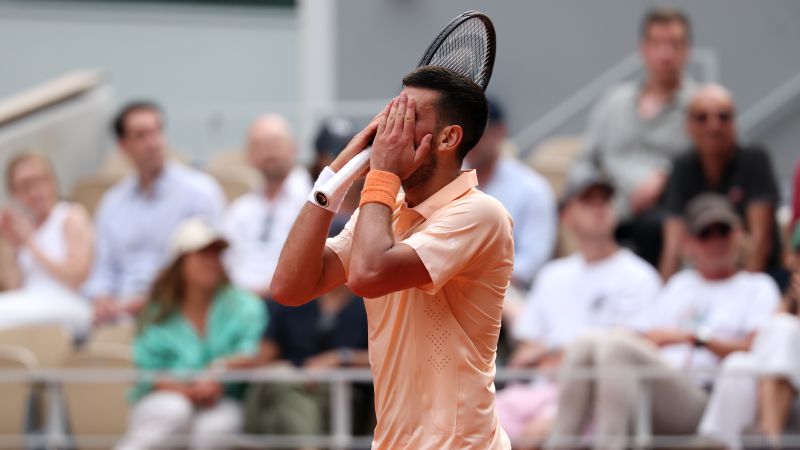
João Fonseca Defeats Novak Djokovic at Roland Garros in Shocking Upset
Teenager stuns Novak Djokovic at Roland – On May 29, 2026, the world of tennis was turned upside down as 19-year-old João Fonseca stunned Novak Djokovic in a thrilling third-round clash at Roland Garros. The Serbian tennis legend, who had long been a dominant force in the sport, saw his hopes of securing a historic 25th Grand Slam title crumble under the pressure of a young Brazilian prodigy. The match, which stretched over four hours and 53 minutes, ended with Fonseca triumphing in five sets, 4-6, 4-6, 6-3, 7-5, 7-5, marking a rare defeat for Djokovic in the tournament.
The underdog narrative took center stage as Fonseca, ranked No. 28 in the world, overcame a 2-0 set deficit to stage a remarkable comeback. Djokovic, who had previously maintained an impressive 289-1 record in Grand Slam matches when leading two sets to none, appeared to have the upper hand early. However, Fonseca’s resilience and tactical adaptability shifted the momentum, ultimately leading to an unexpected victory. The match became a defining moment for the 2026 Roland Garros tournament, setting the stage for a new chapter in men’s singles history.
A Historic Defeat for the GOAT
Novak Djokovic, the 24-time Grand Slam champion, had entered the match as a near-unbeatable force. His career had been defined by consistency, longevity, and an unparalleled ability to perform under pressure. Yet, against Fonseca, the 19-year-old’s ability to capitalize on key moments proved decisive. Despite Djokovic’s experience and skill, Fonseca’s aggressive style and booming serve challenged the Serbian’s dominance, creating a narrative of a potential generational shift in the sport.
Djokovic’s fatigue under the intense Parisian sun became a factor as the match progressed. While the veteran displayed his trademark composure, Fonseca’s energy seemed to grow with each point. The Brazilian’s serve, a weapon he had previously used sparingly, became increasingly dominant in the latter stages, dictating the pace of play and keeping Djokovic on the defensive. This was not just a physical battle but a psychological one, as Fonseca’s belief in his abilities contrasted with Djokovic’s moments of doubt.
“I felt like John Isner,” Fonseca joked after the match, referencing the American’s famed first-serve power. “It’s crazy how the game can change in an instant.”
Fonseca’s ability to blend power with patience was on full display. Early in the match, he showed his potential with a flurry of aggressive returns, but it was his strategic use of the serve that proved critical. As the fifth set unfolded, the Brazilian’s serves transformed from a tool for points to a weapon for momentum. The crowd, initially skeptical of Fonseca’s chances, began to rally behind him, recognizing the enormity of his achievement. “This is what dreams are made of,” one spectator exclaimed, encapsulating the atmosphere of the Court Philippe-Chatrier.
Djokovic’s defeat marked a significant milestone. It was the first Grand Slam loss to a teenager in his storied career, a fact highlighted by TNT commentators during the broadcast. The Serbian, known for his ability to navigate high-pressure situations, found himself in an unfamiliar position. His match-winning ace in the final set, which sealed the victory for Fonseca, was met with a mix of disbelief and admiration. “I told him he deserved to win,” Djokovic said in a post-match press conference, acknowledging Fonseca’s brilliance. “He played an unbelievable match and should be proud of himself.”
The Road to Glory
João Fonseca’s rise to prominence has been meteoric. The Brazilian, who had yet to make a major breakthrough, now stands on the cusp of history. His victory over Djokovic, a player who had previously won three Roland Garros titles, not only elevated his profile but also disrupted the tournament’s traditional power dynamics. With Carlos Alcaraz absent and Jannik Sinner struggling under the heat, Fonseca’s win opened the door for a new era of competition in men’s tennis.
Throughout the match, Fonseca’s adaptability was evident. He adjusted his strategy as the game evolved, leveraging his serve to control rallies while staying composed during Djokovic’s surges. A pivotal moment came in the fifth set when Fonseca capitalized on a Djokovic drop shot with a perfectly timed backhand return, leaving the Serbian veteran stunned. This exchange of points symbolized the shift in momentum, as Fonseca’s confidence grew with every successful return.
After the final point, Fonseca paid tribute to his opponent, expressing gratitude for the opportunity. “What an idol we have,” he said, highlighting Djokovic’s stature in the sport. “It’s a pleasure just stepping on the court against him.” The Brazilian also took a moment to honor his family, joking about his mother’s presence in the crowd as he celebrated a birthday wish. “We’ve had a Parisian night to remember,” Fonseca added, reflecting on the significance of the moment.
Djokovic’s loss, while disappointing, was met with grace. The Serbian, known for his sportsmanship, embraced Fonseca at the net after the match, acknowledging the teenager’s performance. “He played an unbelievable match,” Djokovic reiterated, emphasizing the level of play Fonseca had delivered. The veteran’s remarks underscored the respect between the players, even as the tournament landscape changed.
A New Dawn for Men’s Tennis
The implications of Fonseca’s victory are far-reaching. For the first time since the 2024 Australian Open, the men’s singles tournament at Roland Garros is guaranteed to have a new champion. Djokovic’s opportunity to claim the sole top spot in the all-time Grand Slam titles list has been dashed, but the Brazilian’s success has sparked excitement for the remainder of the event. With Fonseca now set to face Casper Ruud in the next round, the stage is primed for more upsets and thrilling encounters.
Fonseca’s triumph also serves as a reminder of the unpredictable nature of tennis. While Djokovic’s record had been a testament to his consistency, the Brazilian’s ability to overcome the odds highlights the growing influence of younger players. The match, described as an “all-time match” by TNT, will be remembered for its drama and the way Fonseca’s serve became the defining element of his victory. His performance, a blend of raw power and calculated patience, has positioned him as a rising star in the sport.
As the tournament continues, Fonseca’s win has reinvigorated the competition. The absence of Alcaraz and Sinner’s struggles created a vacuum that the Brazilian filled with his tenacity. Djokovic, despite the setback, remains a formidable presence on the court, but the possibility of a new champion has made the event more exciting. The crowd’s support for Fonseca, who had initially been seen as an outsider, now feels like a validation of his talent.
With the final set ending in a dramatic fashion, Fonseca’s aces in the closing moments solidified his place in history. The teenager’s celebration, which included a heartfelt thank you to his fans, reflected the emotional weight of the victory. As the match concluded, the question lingered: Could this be the start of a new era for men’s tennis, or merely a fleeting moment of chaos in the grand slam narrative? Either way,
