
Louisiana lawmakers pass new congressional map to give GOP additional House seat
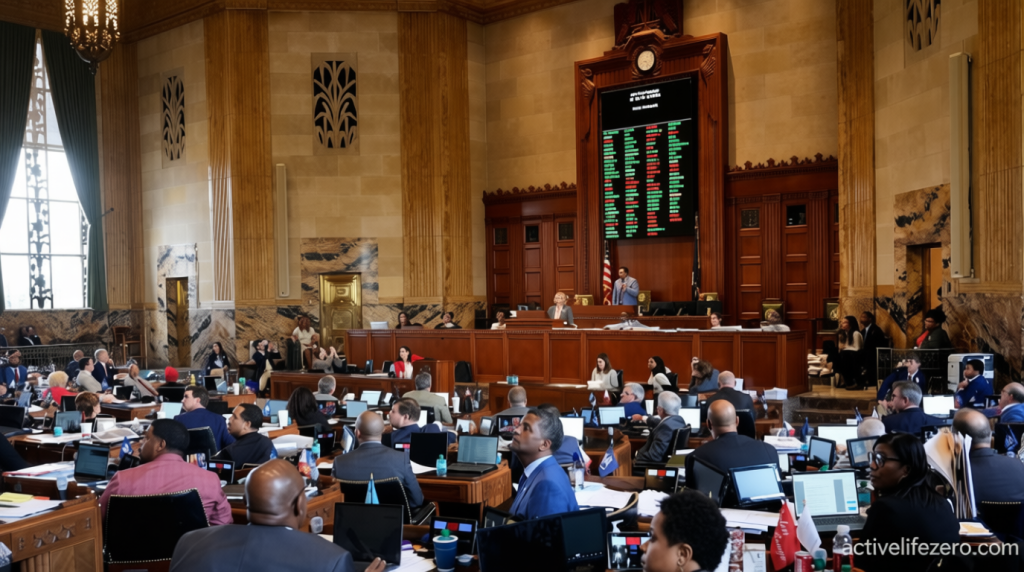
Louisiana lawmakers pass new congressional map to give GOP additional House seat
Louisiana lawmakers pass new congressional map – On Friday, Louisiana’s legislature finalized a revised congressional district plan that aims to secure an extra seat for the Republican Party while dismantling one of the state’s two majority-Black districts. The new map, which passed the state Senate with a 28-10 vote divided along party lines, was signed into law by Republican Governor Jeff Landry shortly after its adoption. This decision comes a month after the U.S. Supreme Court invalidated Louisiana’s existing map, which had included two districts with significant Black populations, citing it as an unlawful racial gerrymander. The ruling has reignited national debates over redistricting, particularly as it undermines key provisions of the 1965 Voting Rights Act.
Supreme Court decision fuels redistricting strategy
The Supreme Court’s April 30 ruling marked a pivotal moment in the ongoing struggle over voting rights. By striking down Louisiana’s previous map, the court weakened the landmark federal legislation that has long protected minority communities from discriminatory electoral practices. This decision intensified efforts by Republican lawmakers to reshape district boundaries in a way that favors their party, particularly in the lead-up to the midterm elections. Louisiana is among several Southern states leveraging this weakened framework to redraw their congressional districts, aiming to consolidate power for Republicans.
Under the old map, Louisiana’s two majority-Black districts were represented by Democratic lawmakers, including Rep. Cleo Fields and Rep. Troy Carter. The new plan eliminates one of these districts, consolidating Black voters into a single, more vulnerable district. Critics argue this dilutes the voting strength of Black communities, effectively shifting their influence to a district where Republicans are more likely to prevail. Meanwhile, the GOP hopes to capitalize on the change by securing additional seats, with current projections suggesting they could gain up to 15 positions through such redistricting tactics.
Partisan and racial considerations in the map
Republicans have long maintained that district lines should be drawn based on political affiliation rather than race. The newly approved map reflects this philosophy, with lawmakers emphasizing that the goal was to create safer districts for their party. However, Democrats accuse the plan of being a racial gerrymander, pointing to the strategic placement of Black voters into a single district that is now positioned to challenge GOP dominance. “This map is a racial gerrymander hiding behind the thin veneer of partisanship,” stated a representative from the ACLU of Louisiana, warning that the plan could face legal scrutiny in the coming weeks.
During the debate, Democratic state Senator Royce Duplessis criticized the map as part of a “vicious race to the bottom” in Southern states. He highlighted that other states, such as South Carolina, had opted to maintain their existing maps even as the election approached, suggesting Louisiana’s rapid action was driven by partisan interests. “They’re not just adjusting for politics—they’re stacking the deck against minority voters,” Duplessis argued, echoing broader concerns about the erosion of voting rights protections.
Republican state Senator Jay Morris, the bill’s sponsor, defended the map’s design. “I intentionally concentrated more Democrats into District 2 to ensure the remaining districts are more favorable for Republicans,” he explained. Morris insisted that race was not the primary factor in drawing boundaries, asserting that the plan was a calculated move to strengthen the GOP’s position in the House. “We’re not targeting any group—we’re just making the most of our opportunities,” he said, countering Democratic claims of racial bias.
Despite Morris’s assurances, Democratic Senator Sam Jenkins questioned the map’s fairness, stating, “I think it’s a racially gerrymandered district that’s going to get us into a lot of trouble here.” The two senators exchanged sharp words during the debate, with Morris responding, “Agree to disagree,” to Jenkins’s critique. The tension underscores the deepening divide over how to balance political strategy with racial equity in electoral redistricting.
Shift in primary timing to aid GOP redistricting
To accommodate the new map, Governor Landry delayed Louisiana’s closed U.S. House primary, originally scheduled for May 16, and moved it to November 3. This change allows Republican lawmakers to finalize and pass the revised plan before the election, ensuring it is in place for the November ballot. Under the new rules, all candidates will appear on the same ballot, regardless of party affiliation, which means voters will see both Republican and Democratic contenders in their districts.
The new map significantly alters the districts of several Democratic representatives. Cleo Fields’ district, which previously spanned a diverse area around Baton Rouge, is now redrawn to focus more on predominantly white neighborhoods. This shift reduces the concentration of Black voters, potentially lowering the chances of Democratic candidates winning. Conversely, a portion of Baton Rouge has been added to Troy Carter’s district in New Orleans, which remains a heavily Democratic and majority-Black area. The change is intended to weaken Carter’s position while strengthening the GOP’s foothold in the Baton Rouge region.
While the new map has been praised by Republicans for its partisan advantages, it has also sparked anticipation for legal challenges. Democrats argue that the plan violates the Voting Rights Act by systematically reducing the influence of Black voters. The ACLU of Louisiana, which has already announced its intent to sue, warned that the battle over this map is only beginning. “This fight is just beginning,” the group said, emphasizing the potential for prolonged litigation as the election approaches.
Broader implications for national redistricting
Louisiana’s actions are part of a larger trend among Southern states, where Republican lawmakers are seizing on the weakened Voting Rights Act to reshape electoral maps. The Supreme Court’s decision to allow racial gerrymandering in certain cases has emboldened these efforts, with states like Texas and Georgia also adjusting their districts to favor the GOP. However, the impact of these changes on the overall political balance remains uncertain.
Though Republicans are currently gaining ground in redistricting, Democrats believe they can still reclaim some of their lost ground. For example, new districts in California and Utah are expected to boost Democratic prospects, potentially adding six seats to their tally. “This map is just one piece of a bigger puzzle,” said a Democratic strategist, noting that the race for the House will depend on a combination of factors, including voter turnout and candidate performance.
As the November election approaches, the stakes for Louisiana and other states are clear. The new map is designed to maximize GOP advantages, but it also risks alienating minority voters and drawing legal backlash. With lawsuits already in the pipeline and the Supreme Court’s decision fueling controversy, the battle over redistricting will likely shape the outcome of the midterm elections and redefine the political landscape for years to come.
The race to redraw districts has become a defining feature of the 2026 midterms, with states across the country navigating the delicate balance between partisanship and representation. Louisiana’s example highlights the ongoing tension between preserving minority voting power and securing political dominance, a challenge that will continue to test lawmakers and activists alike as the election day nears.
In the weeks following the Supreme Court’s ruling, several other Southern states have adopted similar strategies, redrawing their maps to favor Republicans. This coordinated effort suggests a broader movement to reshape electoral outcomes, even as Democrats push back against the changes. With the new map now in place, Louisiana’s voters will have their say in November, but the legal and political ramifications of this decision are far-reaching.
As the election season unfolds, the focus on redistricting will remain a critical element of the campaign. The GOP’s ability to maintain control of the House hinges on their success in these efforts, while Democrats will rely on their own redistricting initiatives in key states to counterbalance the GOP’s gains. The outcome of this contest could determine the balance of power in Congress and set the stage for the next legislative battle.
