
Scientists accidentally discover sea cucumber with ‘tissue immortality’
Scientists accidentally discover sea cucumber with ‘tissue immortality’
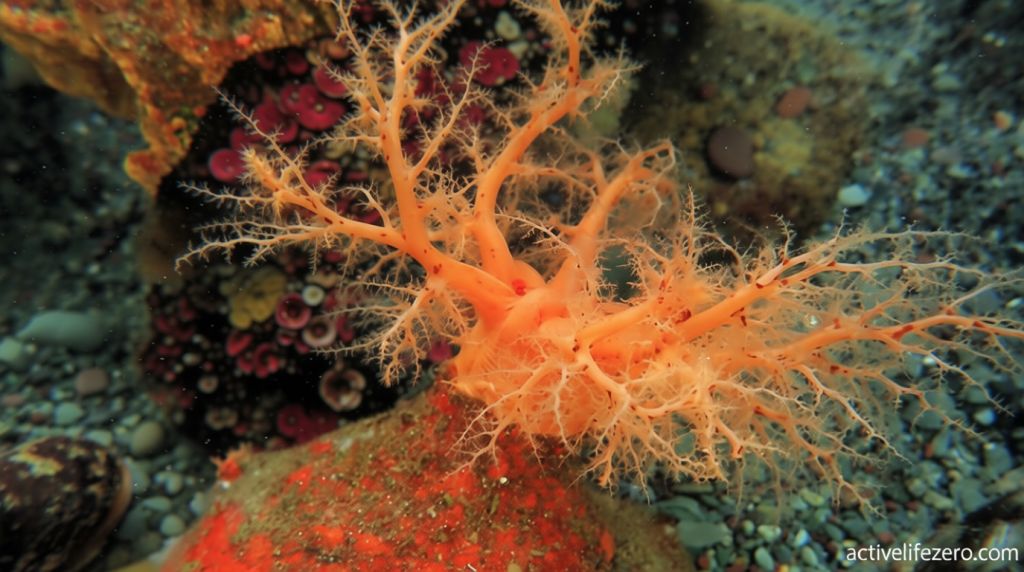
Scientists accidentally discover sea cucumber – What defines life? A groundbreaking study involving an unusual sea creature challenges conventional understanding. Researchers stumbled upon a phenomenon in *Psolus fabricii*, a North Atlantic sea cucumber species, that hints at a deeper complexity in the concept of vitality. When certain body parts were severed, they didn’t merely decay or perish but exhibited a surprising ability to sustain themselves, raising questions about the boundaries of biological survival.
Unexpected resilience in severed tissue
The breakthrough came during routine experiments. Scientists removed fragments from the sea cucumber’s feet, main body, and tentacles, placing them in untreated seawater. To their astonishment, these pieces didn’t die. Instead, they began healing, growing, and even absorbing nutrients—despite lacking a mouth. “This is the first case of tissue immortality in natural settings,” explained Sara Jobson, the lead author of the research published in *Science Advances*. “Sea cucumbers are known for their robust regenerative abilities, so losing a tentacle or foot is no big deal. But no one has examined what happens to the detached tissues themselves, because we always assumed they would simply wither and disappear.”
The fragments, however, did not transform into new organisms—a process seen in some sea cucumber species under specific conditions. Instead, they remained as distinct entities, maintaining cellular activity without reproducing. “We call these tissue explants ‘our zombies’ because they seem to hover between death and life,” said Jobson, a doctoral student in ocean sciences at Memorial University in Newfoundland and Labrador. “They’re not growing into full-blown animals, but they’re still functioning as independent units, surviving and repairing themselves even after months of separation.”
Accidental observation sparks curiosity
The discovery was serendipitous. Jobson described how the team often works along the coast, keeping live specimens in their lab. When a sea cucumber was needed for an experiment, it was typically removed from its tank. But some individuals strongly adhere to their rocky habitats or aquarium walls, making it difficult to extract them cleanly. In one instance, a researcher pulled a sea cucumber from its enclosure, leaving behind a few tube feet attached to the glass. Initially dismissed as a minor detail, the fragments remained attached for days, then weeks, and eventually months. “We noticed they were still clinging on after a few weeks, and they hadn’t just faded away,” Jobson said. “They were healing, even expanding a little. It was like watching pieces of the animal keep living on their own.”
Further observations revealed that these detached tissues thrived in their natural environment, far from sterile lab conditions. Natural seawater, teeming with bacteria and microorganisms, provided the necessary nutrients. The fragments absorbed amino acids, which are naturally present in the habitat, without needing a mouth or digestive system. “They’re not just surviving—they’re actively functioning,” Jobson added. “Even after being separated, they show movement, response to stimuli, and a robust immune system. It’s as if they’re maintaining their own ecosystems.”
Evolutionary implications and philosophical questions
The findings prompt intriguing evolutionary queries. While many animals, like lizards, can shed parts voluntarily and regrow them, those lost sections typically serve no further purpose. For example, a lizard’s tail regenerates, but it doesn’t live independently. In contrast, the sea cucumber’s severed tissues appear to defy this pattern. “It’s like a lizard tail that not only heals but starts exploring the forest on its own,” Jobson remarked. “That’s the kind of metaphor we use to explain what’s happening here.”
The study’s significance lies in its challenge to traditional views of life. “This work questions assumptions about what it means to be alive,” said Veronica Hinman, director of the Whitney Laboratory for Marine Bioscience at the University of Florida, in an email. “We usually think of survival as dependent on the whole organism, but these tissues are behaving as if they have their own autonomy. It’s a paradigm shift.” Hinman, who wasn’t involved in the research, emphasized that the discovery could reshape understanding of regeneration, wound healing, and cellular longevity.
What makes this even more remarkable is the longevity of the tissue fragments. “The severed pieces have remained active for over three years,” Jobson noted. “There’s no sign of decay, cell death, or deterioration. They seem to have an almost infinite capacity to persist.” This raises questions about the mechanisms behind such resilience. Are these tissues somehow tapping into a hidden reservoir of energy? Do they communicate with the original organism to sustain themselves? Or is this a unique trait of *Psolus fabricii* that evolved for a specific reason?
Researchers are now exploring the possibility that the sea cucumber’s tissues might be able to reattach or coordinate with the main body in the future. “We don’t know yet if they can reunite,” Jobson said. “But the fact that they’ve survived this long without any support is incredible. It’s like they’ve found a way to live independently, even in a hostile environment.” The study also highlights the adaptability of marine life, suggesting that some species may have developed extraordinary survival strategies to thrive in their ecosystems.
Revisiting the concept of life and regeneration
The implications extend beyond marine biology. If these tissues can maintain cellular function without a reproductive goal, it opens new avenues for understanding regeneration in other organisms. “This could help us uncover how cells retain their ability to heal and maintain themselves over time,” Hinman said. “It might also shed light on aging processes and why some tissues remain functional longer than others.”
Jobson and her team are now working to determine whether the tissues can be revived or if they’re truly independent. “We had to stop the study at some point, but we’re still learning,” she admitted. “It’s not just about whether they’re alive—it’s about how life can exist in fragmented forms. If we can decode this, it might lead to breakthroughs in tissue engineering or medical treatments for chronic wounds.”
The accidental discovery underscores the value of curiosity-driven research. “We didn’t set out to find tissue immortality,” Jobson said. “It was a byproduct of observing something so strange. Nature often surprises us with its complexity, and this is one of those moments.” As scientists continue to study these enigmatic fragments, they may uncover secrets that redefine our understanding of life itself.
From a philosophical standpoint, the findings challenge the idea that an organism’s survival is tied solely to its integrity. If a piece of a sea cucumber can live independently for years, does that mean it’s still part of the original life? Or is it a separate entity with its own purpose? These questions linger as researchers delve deeper into the mysteries of *Psolus fabricii* and its extraordinary ability to defy the natural order of decay and death.
