
Why did T. rex have tiny arms? A new study may finally have the answer
Why did T. rex have tiny arms? A new study may finally have the answer
The mystery of T. rex’s diminutive forelimbs
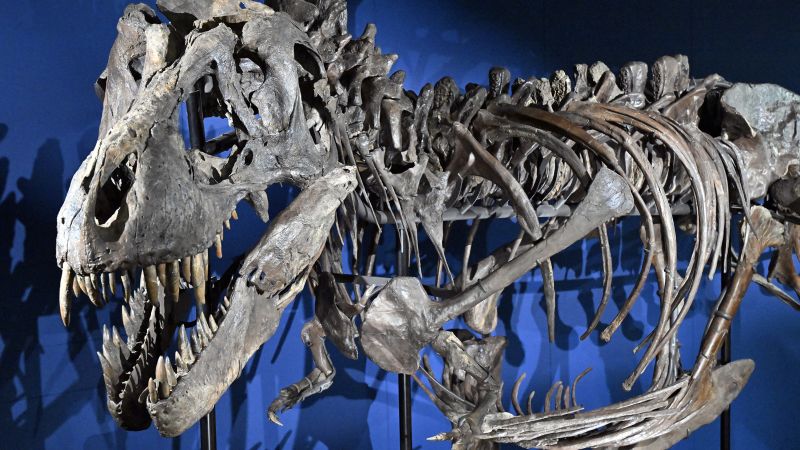
Why did T rex have tiny – For decades, the short arms of Tyrannosaurus rex have baffled paleontologists and sparked endless speculation. These appendages, measuring just over 3 feet in length, appear remarkably out of proportion compared to the dinosaur’s massive body, which could reach lengths of more than 40 feet in adulthood. While the creature’s colossal size and formidable jaws have long been celebrated, its underdeveloped forelimbs have remained a point of confusion. Even among its carnivorous relatives, such as Baryonyx and Allosaurus, the arms of T. rex stand out as unusually small, prompting theories ranging from evolutionary remnants to functional adaptations for hunting or mating.
A breakthrough in evolutionary biology
A recent study published in the journal *Proceedings of the Royal Society B* on May 20, 2026, offers a compelling explanation for this anatomical peculiarity. Researchers analyzed data from 85 dinosaur species, revealing a consistent pattern linking the reduction of forelimbs to the expansion of the skull. According to the lead author, Charlie Roger Scherer, a doctoral student in Earth sciences at University College London, the arms of T. rex were not a random trait but a deliberate trade-off. “If you’re a dinosaur with a very strongly built skull, chances are you’re going to have very small forelimbs,” Scherer explained. This suggests that the arms evolved as a secondary feature, secondary to the development of a powerful, large skull.
Previous hypotheses and their limitations
Before this study, several theories attempted to explain the purpose of T. rex’s arms. Some speculated they were used to grasp prey or hold it in place during a hunt, while others argued they played a role in courtship displays, similar to the frills of Triceratops or the tail fans of Velociraptor. More recent ideas proposed that the arms shrank to minimize the risk of injury during feeding, as a predator’s jaws might accidentally bite through its own limbs while devouring prey. Yet, these theories lacked conclusive evidence, leaving the question unresolved for over a century.
“If you want to focus on using your head to bring down large prey, you don’t really want to be putting much effort into keeping your arms long and with claws,” Scherer noted. “You’re probably not going to need that, so evolution kind of says, ‘We don’t need the arms anymore, so let’s shrink them down and put more energy into keeping the skull strong and using that as the primary weapon.’”
The statistical framework behind the discovery
To uncover the evolutionary pattern, the team employed a novel approach. They measured both the forelimbs and skull bones of the 85 species, combining fossil records with data from existing scientific literature. This allowed them to quantify the strength of each skull and correlate it with the relative size of the forelimbs. The analysis revealed a clear trend: as skulls grew larger and more robust, arms consistently became smaller. This was not limited to T. rex but extended to multiple unrelated dinosaur groups, suggesting a universal principle in their evolution.
A global pattern across time
The study’s findings spanned a vast temporal range, from the Triassic to the Cretaceous periods—roughly 180 million years. Researchers identified the correlation in five distinct groups: tyrannosaurids (which include T. rex), ceratosaurids, megalosaurids, abelisaurids, and carcharodontosaurids. These groups encompassed large, bipedal carnivores that thrived in diverse environments, from the jungles of South America to the forests of Asia and Europe. The presence of this pattern across such a broad spectrum of species implies that the trade-off between skull development and arm size was a widespread adaptation, not an isolated quirk.
Among the species analyzed, T. rex scored the highest in skull strength, followed by Tyrannotitan, a massive predator that lived in present-day Argentina during the Early Cretaceous. This indicates that the trend persisted even in distant relatives, highlighting its evolutionary significance. The study’s statistical methods provided the first definitive evidence of this relationship, reinforcing the idea that the arms were not merely vestigial but a result of natural selection prioritizing skull development over limb growth.
Resource allocation and functional priorities
The research underscores how evolution often sacrifices one feature to enhance another. As the skulls of these dinosaurs expanded, they required more energy and structural support, diverting resources from the arms. Scherer emphasized that this process was not arbitrary. “Everything was approached headfirst, so the head just became what came into contact with the prey,” he said. “That was the easiest way to adapt.” This shift in focus meant that arms, while still useful, became less critical for survival, allowing them to shrink over time.
Some groups, like the tyrannosaurids, reduced their forelimb size by minimizing the length of their fingers, while others focused on shortening the forearm itself. This variation in the evolutionary path suggests that while the overall trend was consistent, the specific mechanisms of adaptation differed. However, the common thread remained: the skulls of these predators grew larger to handle the demands of hunting increasingly formidable prey, requiring greater force and precision.
Implications for understanding dinosaur evolution
This study marks a significant step in resolving the long-standing debate about T. rex’s arms. By demonstrating a universal trend across multiple groups, it provides a framework for understanding how evolutionary pressures shape anatomy. The findings also challenge earlier notions that the arms were purely vestigial, instead positioning them as a product of resource allocation and functional specialization. “Shrinking limbs were not a fluke but an evolutionary trait that occurred independently in different species,” Scherer said, underscoring the adaptability of natural selection.
The research further highlights the interconnectedness of dinosaur evolution. As prey animals grew larger, predators had to innovate, developing stronger skulls to subdue them. This dynamic suggests that the arms were not an afterthought but a consequence of the dinosaurs’ hunting strategies. The study’s implications extend beyond T. rex, offering insights into how other prehistoric creatures adapted to their ecological roles. By linking skull size and limb reduction, it paints a more cohesive picture of the evolutionary arms race that shaped the Cretaceous world.
Ultimately, the study provides a plausible explanation for the tiny arms of T. rex, framing them as an evolutionary compromise. While the creature’s jaws were its primary weapon, the arms served a secondary, perhaps less critical, function. This insight not only answers a long-standing question but also deepens our understanding of how dinosaurs evolved to dominate their environments. As Scherer’s work shows, evolution is a process of trade-offs, where the development of one feature often comes at the expense of another—but the result is a more efficient and formidable predator.
