
Cave diving is fraught with danger, but the reward is sights like nothing else on Earth
Cave diving is fraught with danger, but the reward is sights like nothing else on Earth
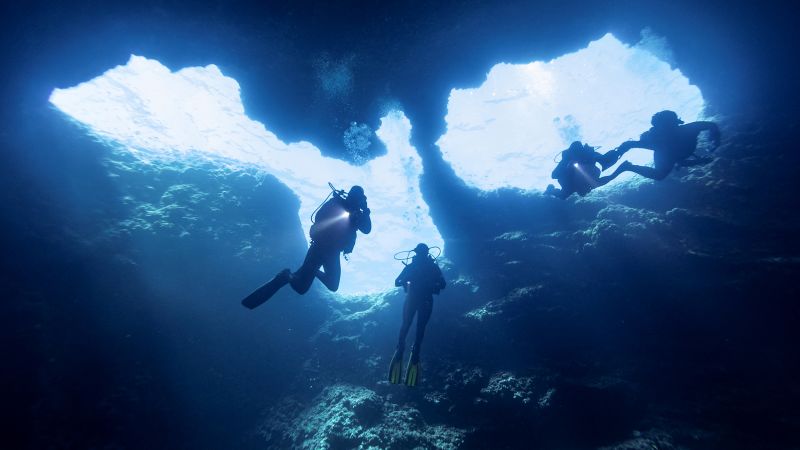
Cave diving is fraught with danger – Deep within the Maldivian archipelago, where the ocean meets the earth in a hidden embrace, lies a world few have ever glimpsed. These underwater caves, carved by millennia of tides and time, offer a glimpse into an alien realm. Yet, for those who venture inside, the journey is as perilous as it is mesmerizing. Divers rely on minimal tools—a flashlight and a guideline—to navigate the labyrinthine tunnels, where darkness reigns and the only light comes from their own beams. It is in this stark environment that creatures unknown to surface dwellers may be discovered, and the silence of the deep becomes a sanctuary for the extraordinary.
The Risks of an Unseen World
Cave diving is a discipline that demands unwavering focus and meticulous preparation. Unlike open-water dives, where divers can easily ascend to safety, cave divers face a unique challenge: the entire system is an enclosed space, and the exit is often obscured by layers of silt and shadow. This month, the dangers of the sport became tragically apparent when five Italian divers perished in the Vaavu Atoll caves, located in the Indian Ocean. The incident, which occurred on May 14, marked the fifth such loss in the Maldives this year, with Maldivian military diver Sgt. Mohamed Mahudhee also succumbing to the depths while retrieving the bodies. The victims included Gianluca Benedetti, a diving instructor, and four others—Monica Montefalcone, an ecology professor; her daughter Giorgia Sommacal; Federico Gualtieri, a marine biologist; and Muriel Oddenino, a researcher—whose bodies were discovered at the farthest reaches of the cave.
Such incidents underscore the precarious nature of cave diving. While the sport attracts adventurers eager to explore the unknown, it is not for the faint-hearted. The Maldives, known for its pristine beaches and vibrant marine life, has become a hotspot for this extreme activity. However, the caves there are rare and intricate, requiring specialized knowledge and equipment to traverse. For every successful dive, there are stories of those who did not return, a reality that remains fresh in the minds of professionals like Jill Heinerth, a veteran Canadian diver with over 8,000 dives to her name.
“Swimming Through the Veins of Mother Earth”
Heinerth, who has chronicled the beauty and terror of cave diving in a 2024 documentary titled “Diving Into the Darkness,” describes the experience as both humbling and transformative. “It’s like swimming through the veins of Mother Earth,” she says, capturing the essence of a dive that feels as if you are submerged in the planet’s very lifeblood. The documentary also includes her vivid recollection of navigating through the “graves of my friends,” a phrase that reflects the haunting memories of those lost to the depths. Over a hundred divers have met their fate in these submerged corridors, a testament to the sport’s high stakes.
“I guess I’m having a similar effect from being inside the planet … I’m literally within the sustenance of the planet that’s supplying the water for humanity, wildlife and even all of the industries we require for our modern life.”
This sentiment echoes the profound connection cave divers feel to the environment. While astronauts describe the “overview effect” of seeing Earth from space, Heinerth finds a parallel in the intimate, almost sacred, experience of being immersed in the planet’s hidden systems. The caves, she explains, are not just geological formations—they are ecosystems, ancient and uncharted, teeming with life that thrives in perpetual darkness. Stalagmites and stalactites, bioluminescent organisms, and the eerie stillness of the deep create a setting that feels both foreign and familiar.
The Toughest Test of Skill and Resolve
Cave diving is as much about mental fortitude as it is about physical prowess. Divers must navigate tight, twisting passages where space is limited and oxygen is a precious commodity. Heinerth recalls moments where “my shoulders are scraping the ceiling and my belly is on the floor,” forcing her to push through physical strain while maintaining a clear mind. Visibility can be reduced to mere inches, with sand and silt swirling around them like a storm. In such conditions, the ability to remain calm and rely on one’s partner becomes paramount.
Before each dive, Heinerth conducts a thorough mental check. She visualizes the worst-case scenarios: a hose rupturing, a valve failing, or a sudden loss of air. “I rehearse all of those things that could go wrong, all of the things that could kill me in this environment,” she says. The questions she asks herself are not just about equipment but also about readiness. “Am I ready for self-rescue today with the gear I have in this setting?” and “Am I willing and able to conduct a buddy rescue in the same situation?” These reflections highlight the psychological weight of the sport, where every decision can mean the difference between survival and tragedy.
Despite the risks, cave divers are drawn to the challenge. It is a pursuit that demands precision, patience, and an almost spiritual dedication to the unknown. The caves of the Maldives, with their mysterious allure and ecological significance, represent a frontier where science and adventure collide. For those who enter, the reward is not just the discovery of new species or the thrill of exploration, but the opportunity to witness a world that exists beyond the reach of most humans.
Investigating the Depths of the Tragedy
While the cause of the recent incident remains under investigation, the circumstances raise critical questions about the limits of human endurance in these extreme conditions. The Italian group had permission to dive beyond the typical 30-meter (98-foot) recreational depth, a privilege that allowed them to explore deeper, more complex sections of the caves. However, it is still unclear whether they exceeded their planned depth or if their equipment was fully equipped for such a venture. Technical diving instructor Vladimir Tochilov, who has explored the Vaavu Atoll system, notes that these caves are uncommon and require advanced training to navigate safely.
As the search for answers continues, the incident serves as a stark reminder of the fragility of life in these submerged realms. For cave divers, the journey is not just a physical endeavor but a mental and emotional one, where the line between discovery and danger is often blurred. The caves, with their silent corridors and hidden wonders, continue to captivate the imagination, even as they remind us of the risks that come with reaching into the Earth’s secrets.
Ultimately, cave diving is a testament to human curiosity and resilience. It is a world where the boundaries of the known dissolve, and the faint glow of a flashlight becomes the only guide through the abyss. For those who dare to explore, the rewards are as profound as the risks, offering a glimpse into the planet’s hidden heart and a deep, unshakable connection to the life-giving waters that sustain all of Earth’s ecosystems.
