
Wildfire season is off to a historic start and it could get worse
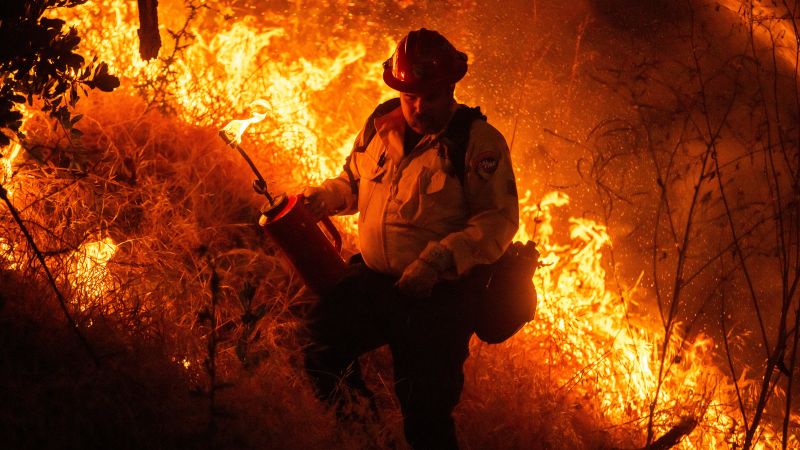
Wildfire season is off to a historic start and it could get worse
Record-breaking blazes reshape the landscape of US fire activity
Wildfire season is off to a historic – The nation’s wildfire season has taken an alarming turn this spring, with extreme fire incidents reported in multiple regions. Southern Georgia saw rapid-fire destruction, surpassing previous records. In Nebraska, the most extensive fire in the state’s history emerged in the Plains, claiming a life and consuming over 600,000 acres of pastureland. Meanwhile, a blaze near Los Angeles prompted widespread evacuations, marking an unusually early fire event. Across the country, the scale of fire activity has reached historic proportions, prompting experts to warn of a potentially worse summer ahead.
Since the beginning of the year, nearly 30,000 fires have ignited, the highest figure in almost two decades. This number has led to the burning of over 2 million acres, a staggering figure that doubles the average for the previous decade. The Southeastern states have seen the most significant impact, with fires occurring closer to urban areas than typical. This trend has raised concerns about the region’s preparedness for the season’s intensifying conditions.
Georgia’s devastation: A fire season unlike any other
Georgia, a state historically prone to fires between March and May, is facing a record-breaking crisis. According to data from the Georgia Forestry Commission, more than 3,000 fires have burned 83,000 acres statewide. That figure is nearly double the average for the past five years, highlighting the severity of this season. Thomas Barrett, a forest protection chief, described the ongoing drought as a critical factor. “The drought has been building since late summer of 2025,” he noted. “It’s taken this long to finally reach its peak.”
Barrett also pointed to weather patterns as a contributing element. “Systems have brought additional dry air and strong winds to the region, creating a fire environment that’s near perfect,” he said. This combination has led to catastrophic outcomes, including the destruction of over 120 homes in April’s Highway 82 Fire. Believed to have been caused by a party balloon landing on a power line, the blaze is the most significant in the state’s history, according to Barrett. Smoke from these fires has even traveled hundreds of miles, affecting communities like Atlanta.
Great Plains and Western regions brace for intense conditions
Meanwhile, the Great Plains are grappling with their own crisis. Strong winds have accelerated fire spread, threatening towns and communities. The largest fire in Nebraska’s history has already caused major damage, underscoring the region’s vulnerability. In the West, early fire events have set the stage for a perilous season. These blazes, often fueled by dry vegetation and high temperatures, have raised alarms about the potential for a devastating summer.
Morgan Varner, a research director from Tall Timbers Research Station & Land Conservancy in Tallahassee, Florida, emphasized the dire situation. “We’re in May, and we’re talking about people losing their homes and lives,” he said. Varner highlighted that the combination of low snowpack, prolonged drought, and a developing “Super” El Niño has created a perfect storm of conditions. “All these factors point to a really bad year,” he added, noting that the warming climate is intensifying the problem.
Climate change and El Niño drive the crisis
Experts attribute the worsening situation to a confluence of climate-related challenges. The Southeast, in particular, has been hit hard by a combination of factors, including vegetation changes and persistent dry spells. “Almost every state in the Southeast is about halfway to where they should be,” Varner stated, pointing to the carryover effect of the current conditions. This effect could lead to prolonged fire activity, with impacts extending into the summer months.
Prescribed fires, a crucial tool for managing vegetation and reducing fire risk, have been affected by the current conditions. Varner noted that many states have struggled to execute these controlled burns, which are essential for preventing larger wildfires. In Florida, the number of prescribed fires executed is at a 25-year low, according to Varner. “We’ve been in an area where wildfires are almost never seen,” he remarked. “Now we’re coughing on smoke while mowing the grass or admiring our azaleas.”
These fires have not only caused physical destruction but also emotional trauma. Pets have been lost, memories burned, and entire neighborhoods displaced. The economic impact is also substantial, with agricultural losses in Nebraska and other regions threatening livelihoods. As the National Interagency Fire Center predicts high fire activity through July, the outlook remains grim. “I keep my fingers crossed we’re peaking about now,” Barrett said, “but relief will come only with summer thunderstorms.”
The combination of factors—drought, wind, vegetation, and climate change—has created a situation where every fire season is more intense than the last. With low snowpack and an expected shift in weather patterns due to the “Super” El Niño, the risk of large-scale fires remains elevated. This has led to a situation where the effects of this year’s blazes could carry over into the next, compounding the challenges for firefighting efforts and communities.
As the fires continue to spread, the need for coordinated response and long-term planning becomes increasingly urgent. The Southeast, already bearing the brunt of this crisis, must adapt to a new reality where fire seasons are no longer predictable. With the potential for more frequent and severe events, the nation as a whole faces the challenge of mitigating the impact of these unprecedented wildfires.
