
A third of National Park island home to rare wildlife has burned in spate of Southern California wildfires
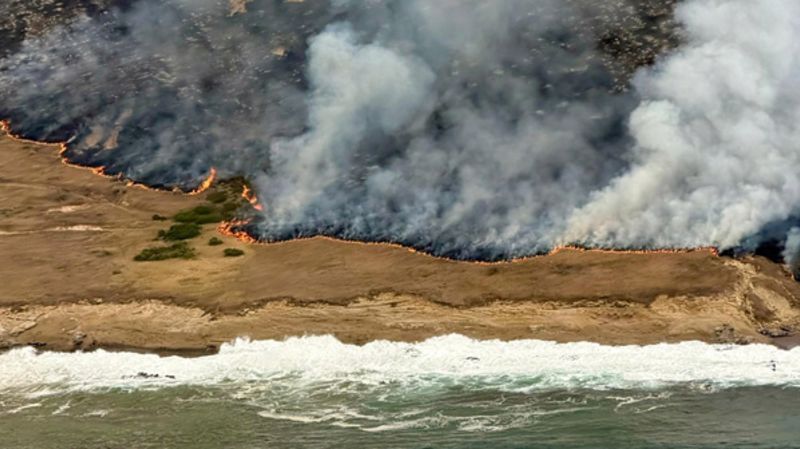
Santa Rosa Island: A Third of National Park Burned in Wildfires
A third of National Park island has been scorched by wildfires sweeping through Southern California. Santa Rosa Island, part of the Channel Islands National Park, has seen its unique ecosystem severely impacted as the blaze, which ignited on Friday, expanded to cover 17,554 acres by Thursday morning. National Park Service spokesperson Ana Cholo confirmed that this fire may rank among the largest recorded on the island, marking a critical moment for its conservation. The event also positions the fire as the most extensive in California this year, according to the California Department of Forestry and Fire Protection.
Unprecedented Fire Scale
Fire events of this magnitude are uncommon on Santa Rosa Island, which is typically not categorized as a fire-adapted region. Unlike many Southern California mainland areas, the Channel Islands have historically experienced less frequent wildfires. Cholo emphasized that the fire’s size and intensity are unusual, with some sections showing extreme conditions that have threatened the island’s delicate habitats. As of Thursday morning, the blaze was 44% contained, but its rapid spread has raised concerns about the area’s ecological resilience.
“This fire is among the most severe we’ve encountered on the island,” Cholo stated. “The Channel Islands are not considered fire-prone in the same way as their mainland counterparts, which makes this event particularly significant for conservation efforts.”
Endangered Species at Risk
The National Park island is a haven for rare flora and fauna, including the critically endangered Torrey pine. These trees, native only to Santa Rosa Island and a small preserve near San Diego, are now facing potential loss due to the blaze. Cholo noted that while initial reports suggest the pines are still present, certain areas of the island have been impacted by intense flames. The fire also threatens the nesting sites of bald eagles and western snowy plovers, which are federally protected species.
Among the most vulnerable wildlife are the Santa Rosa Island foxes, a subspecies found exclusively on the island. These foxes, smaller than house cats, are now at risk during their breeding season, which could disrupt population growth. Additionally, habitats for island spotted skunks are in jeopardy, as per Cholo’s assessment. The fire has disrupted the fragile balance of life that has evolved over centuries on the National Park island.
Geographic Isolation and Vulnerability
Santa Rosa Island’s geographic isolation has contributed to the evolution of distinct species, making it a biodiversity hotspot. The island is home to around 46 endemic or unique plants and animals, underscoring its ecological value. However, this same isolation leaves it particularly vulnerable to disturbances like wildfires, which can rapidly devastate its ecosystems. Cholo highlighted that the fire has not only burned large swaths of land but also disrupted the natural habitats that support these rare species.
Efforts to protect the National Park island’s biodiversity are intensifying as conservationists work to assess the damage. The loss of key habitats, including the Torrey pine groves, has sparked calls for increased monitoring and restoration initiatives. While the National Park Service continues to investigate the fire’s origin, the urgency of the situation has led to the island’s closure to visitors, ensuring safety for both people and wildlife.
Human-Caused Fire and Evacuations
The fire is classified as human-caused by the National Interagency Fire Center, though the exact source remains under investigation. Santa Barbara County Fire Department crews have evacuated 11 National Park employees from the island, highlighting the severity of the crisis. The blaze has also destroyed two historic structures, adding to the cultural and ecological losses. As the fire spreads from the southeastern shore to northern regions, conservationists and officials are working to minimize long-term damage to the National Park island’s rare ecosystems.
While the focus remains on Santa Rosa Island, wildfires continue to threaten other areas in Southern California. The Bain Fire in Riverside County, now at 1,456 acres and 39% contained, has also displaced over 700 people. These events collectively underscore the growing challenges faced by the National Park island and its surrounding regions, as climate factors and human activity contribute to the escalating frequency of such disasters.
