
Feds charge 15 people in Minnesota with defrauding government social service programs
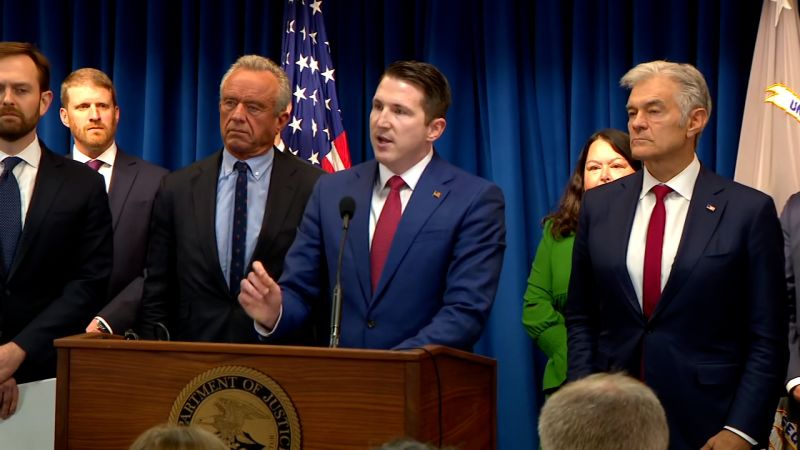
Federal Charges Against 15 Minnesota Residents in Major Social Service Fraud Case
Feds charge 15 people in Minnesota – On Wednesday, federal authorities initiated legal action against 15 individuals in Minnesota, accusing them of misusing government-funded social service programs. Assistant Attorney General Colin McDonald announced the charges on Thursday, emphasizing the scale of the alleged financial misconduct. “This marks a significant step in our ongoing efforts to hold accountable those who exploited Minnesota’s systems,” McDonald stated, highlighting the broader implications of the case.
The Pandemic’s Impact on Fraud
The fraud scheme, which federal investigators describe as one of the nation’s largest linked to the Covid-19 pandemic, leveraged relaxed rules to prevent economic collapse. These measures, intended to streamline access to critical aid, became avenues for abuse. McDonald noted that the charges represent just the start of the Department of Justice’s work in the state, with more cases expected to follow.
Among the accused is Aimee Bock, founder of Feeding Our Future, who recently received a nearly 42-year prison sentence for federal bribery charges. Bock’s trial was a pivotal moment in the investigation, as prosecutors framed the case as a massive fraud operation targeting emergency assistance programs during the crisis. The indictment alleges that the scheme siphoned over $250 million from federal and state coffers, with only about $50 million returned to the system so far.
“This is not the end of our work in Minnesota. It is the beginning of a deeper examination into how these programs were manipulated for personal gain,” McDonald said, underscoring the determination of federal law enforcement.
Exploiting Child Nutrition and Care Programs
Other defendants face accusations of falsifying data to divert funds from key programs. For example, one individual is alleged to have inflated meal counts in the Federal Child Nutrition Program and a state initiative supporting child care providers. By overstating the number of meals served, the accused reportedly siphoned significant resources intended for vulnerable families.
Another case involves a person accused of manipulating staffing records in a state program that subsidizes child care centers. The defendant allegedly created fictitious employee hours and exaggerated staff numbers, leading to unauthorized payments. These tactics exemplify how the fraudsters used bureaucratic loopholes to siphon taxpayer money for personal benefit.
Medicaid Fraud Allegations
The investigation also uncovered Medicaid fraud schemes targeting low-income residents and individuals with disabilities. Two of the charged individuals, responsible for providing housing services, are accused of inflating the hours of care they delivered. This deception allowed them to claim more payments than they actually provided, according to court filings.
Separately, the operators of group homes in rural Minnesota allegedly billed the Medicaid system for more than $1 million in fraudulent claims. These funds were allegedly used for personal expenses, including luxury vehicles such as seven high-end cars. The case highlights how Medicaid, designed to support healthcare access, became a target for financial exploitation.
McDonald described the accused as “fraudsters who treated Minnesota-run programs as their personal piggybank.” The indictment paints a picture of systemic abuse, where rules meant to protect public welfare were circumvented for profit. One particularly alarming aspect of the scheme involved the false diagnosis of autism in children to qualify for additional government benefits. This, McDonald said, represents “the largest autism fraud scheme ever charged by the Department of Justice.”
Government Raids and Legal Proceedings
The charges follow a series of federal raids conducted three weeks prior in Minnesota. At least 22 search warrants were executed as part of the investigation, uncovering evidence of widespread financial misconduct. The operation, which has been ongoing, targeted businesses and organizations suspected of exploiting pandemic-era policies.
During a press conference in Minneapolis on Thursday, federal officials, including Secretary of Health and Human Services Robert F. Kennedy Jr. and Centers for Medicare & Medicaid Services administrator Dr. Mehmet Oz, discussed the findings. McDonald was initially set to attend the event but had to cancel at the last minute. Instead, he met with lawmakers on Capitol Hill to advocate for the preservation of the Justice Department’s “anti-weaponization” fund, which aims to prevent the misuse of public resources.
The anti-weaponization fund, a key component of federal anti-fraud efforts, faced potential cuts as lawmakers debated its future. McDonald’s attendance at the Capitol Hill meeting signaled a strategic shift in the administration’s approach, balancing the need for public accountability with the pressure to secure funding for ongoing investigations.
Continuing the Fight Against Fraud
As the investigation unfolds, authorities are working to recover lost funds and identify additional beneficiaries of the schemes. The $90 million in taxpayer money allegedly stolen in these cases represents a fraction of the total $250 million siphoned through the program. McDonald’s comments reflect the government’s resolve to pursue justice, even as the case expands to include new allegations and defendants.
The Minnesota scandal has drawn national attention, illustrating the challenges of maintaining integrity in social service programs during times of economic strain. With the pandemic still shaping policy and public perception, the case serves as a cautionary tale about the need for robust oversight. As the Justice Department continues its efforts, it remains committed to holding accountable those who prioritized personal gain over public service.
While the charges filed this week represent a major milestone, they are part of a larger pattern of fraud that has persisted in the state. Federal prosecutors argue that the lax rules introduced during the pandemic created an environment ripe for abuse, with individuals and organizations capitalizing on the opportunity. The indictment against Bock, in particular, underscores how leadership roles can be exploited for financial benefit.
As the story develops, further details about the alleged activities, potential penalties, and recovery efforts are expected. The Department of Justice has emphasized its intent to investigate all possible avenues of fraud, ensuring that no stone is left unturned in its pursuit of justice. This case, with its multifaceted allegations and wide-reaching impact, will likely serve as a benchmark for future investigations into public program abuse.
With the number of charges rising and the scope of the fraud growing, the federal government’s actions in Minnesota highlight the importance of transparency in times of crisis. The stolen funds, now being recovered through legal channels, will be used to address the needs of those who were genuinely affected by the pandemic. The ongoing investigation aims to restore public trust and ensure that such abuses are not repeated in the future.
