
WHO chief raises alarm over scale of Ebola outbreak after death toll climbs
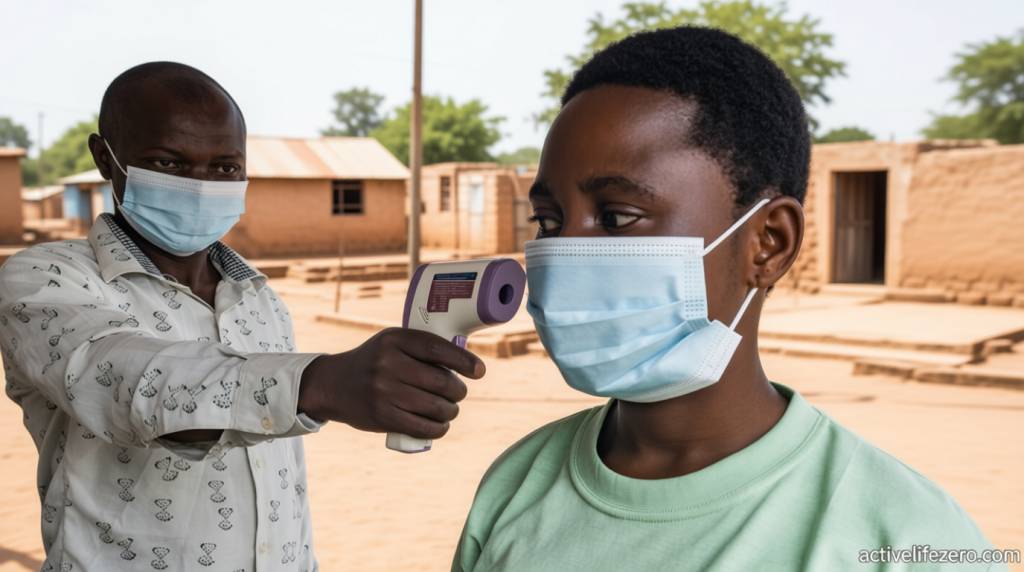
WHO Chief Raises Alarm Over Scale of Ebola Outbreak After Death Toll Climbs
International Health Response Intensifies Amid Escalating Crisis
WHO chief raises alarm over scale – On Tuesday, the head of the World Health Organization (WHO) voiced deep apprehension over the rapid spread of the Ebola outbreak, which has now reached the Democratic Republic of Congo (DRC) and neighboring Uganda. The epidemic, driven by the Bundibugyo virus, has surged in severity, prompting officials to warn of a rising death toll. Dr. Tedros Adhanom Ghebreyesus, the WHO Director-General, emphasized the urgency of the situation, stating that the scale and speed of the outbreak are unlike anything seen before. This comes as local authorities in the DRC report 131 confirmed fatalities, with over 500 cases suspected, according to Dr. Samuel Roger Kamba, the nation’s health minister.
The Bundibugyo virus, part of the Orthoebolaviruses family, is responsible for the current wave of infections. This group includes other Ebola strains, such as the Zaire and Sudan viruses, which have historically caused devastating outbreaks across Africa. While the Bundibugyo strain is known for its relatively lower fatality rate compared to Zaire, its rapid transmission in remote regions like the DRC’s Ituri province has raised alarms. Ghebreyesus highlighted that the outbreak is concentrated in this northeastern area, where access to healthcare remains limited, exacerbating the risk of further spread.
Global Measures and Local Reactions
Amid the growing crisis, the United States took decisive action by invoking a public health law on Monday to restrict entry from the affected region. This measure followed the confirmation of a single US national testing positive for the Bundibugyo strain in the DRC. While the US move aims to curb the risk of importing the virus, the Africa Centres for Disease Control and Prevention (Africa CDC) has criticized the approach, arguing that broad travel bans could disrupt daily life and economic activity. The organization stressed that such restrictions might hinder the movement of essential goods and people, potentially worsening the impact on vulnerable communities.
“Broad travel bans can disrupt lives and economies,” said Africa CDC officials. “We need a balanced strategy that protects public health without stifling regional cooperation.”
Despite the criticism, the WHO has taken a firm stance, declaring the outbreak a “public health emergency of international concern” on Sunday. This designation, a rare and significant step, signals that the epidemic poses a threat beyond national borders. Ghebreyesus underscored that the high positivity rate and the increasing number of cases and deaths suggest the outbreak could grow much larger. “The speed at which this is unfolding is alarming,” he added. “We are seeing a pattern that demands immediate attention.”
As the WHO prepares to convene an emergency committee later Tuesday, Ghebreyesus revealed that this is the first time a director-general has initiated such a declaration before the meeting. “I did not do this lightly,” he noted. “The evidence before us indicates a critical threshold has been crossed.” The committee will assess the outbreak’s trajectory and recommend further interventions, including potential global coordination efforts.
Regional Spread and Global Implications
The outbreak has not only intensified within the DRC but has also extended into Uganda, where two confirmed cases were reported in the capital, Kampala. This cross-border spread has heightened concerns about the virus’s ability to move between regions, especially given the dense populations and interconnected healthcare systems in both countries. The spread to Uganda, a nation with more robust infrastructure, could indicate the virus is becoming more virulent or adapting to new environments.
Health officials in the DRC have expressed frustration over the slow response to the outbreak, which has persisted despite prior warnings. The Ituri province, where the majority of cases are clustered, faces challenges in managing the crisis due to its remote location and limited resources. Local hospitals and clinics are struggling to contain the disease, with many patients lacking access to adequate care. “We are racing against time,” said a regional health worker. “Every day without intervention could mean more lives lost.”
Scientific Challenges and Public Health Preparedness
The lack of approved treatments or vaccines specifically targeting the Bundibugyo virus adds to the complexity of the situation. While the Zaire strain has been the focus of major vaccine development efforts, the Bundibugyo variant remains a wildcard. Scientists are working to understand its genetic differences and how it might respond to existing therapies. Until then, the outbreak continues to evolve, presenting new challenges for health professionals.
Public health experts warn that the virus’s ability to spread through contaminated materials or contact with deceased individuals complicates containment efforts. Unlike airborne transmission, which is more easily managed, the Bundibugyo virus relies on direct contact, making it critical to enforce strict hygiene protocols. However, with the outbreak now spanning multiple regions, the risk of localized outbreaks in urban centers increases, requiring a multi-pronged approach to control its spread.
Meanwhile, international collaboration remains key to addressing the crisis. The WHO has called for increased support from global partners to bolster local response capacities. This includes deploying medical teams, distributing diagnostic kits, and providing financial aid for treatment and prevention initiatives. Countries like Uganda, which have experienced previous Ebola outbreaks, are also stepping up their efforts to strengthen health systems and prepare for potential surges.
Looking Ahead: A Developing Story
As the situation continues to unfold, the WHO and other health organizations are closely monitoring the outbreak for signs of a larger epidemic. With more than 500 suspected cases and 131 deaths, the stakes have never been higher. The declaration of a public health emergency of international concern is a clear indication of the global impact this outbreak may have, especially if it spreads to other regions with interconnected populations.
Dr. Ghebreyesus reiterated that the decision to declare an emergency was based on the alarming rate of new infections and the high mortality rate. “This is not just a local issue; it has the potential to affect entire continents,” he said. The WHO’s emergency committee, set to convene later Tuesday, will evaluate the situation and determine the next steps. For now, the focus remains on containing the spread and ensuring that affected communities receive the necessary support to combat the disease.
As the outbreak progresses, the need for coordinated action becomes more pressing. With no specific treatments or vaccines yet available, public health measures such as quarantine, contact tracing, and community education are crucial. The international community is watching closely, hoping to prevent what could be the largest Ebola epidemic in recent history. This developing story will undoubtedly shape global health policies and preparedness strategies for years to come.
