
New species of giant dinosaur identified from remains found in Thailand
New Species of Giant Dinosaur Identified in Thailand
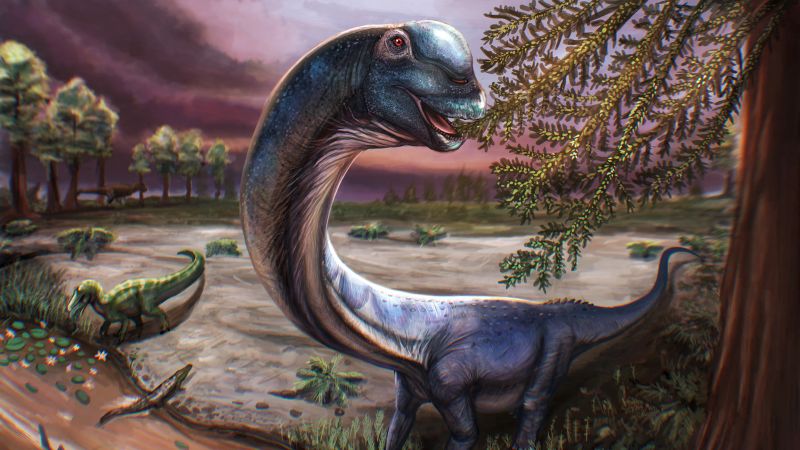
New species of giant dinosaur identified – A decade ago, a set of bones discovered near a pond in Thailand ignited a scientific breakthrough, leading to the identification of a previously unknown dinosaur species. This colossal creature, named *Nagatitan chaiyaphumensis*, is the largest dinosaur ever documented in Southeast Asia. Its massive size, long neck, and tail suggest it was a herbivore, while its thick legs and substantial body structure align with the traits of sauropods, a group of dinosaurs that dominated terrestrial ecosystems during the Mesozoic Era.
The Discovery and Its Significance
The fossils were unearthed in northeastern Thailand, specifically by a local resident along the edge of a communal pond during the dry season when water levels receded. The initial find included a massive leg bone, which later became central to the identification of the species. Further excavations between 2016 and 2019, followed by additional work in 2024, revealed more skeletal remains, including spine, rib, and pelvis fragments. These were meticulously scanned using 3D technology to analyze their structure and confirm the dinosaur’s unique status.
The study, published in *Scientific Reports*, underscores the importance of this discovery. The dinosaur is estimated to have weighed 27 metric tons—approximately 60,000 pounds—and measured around 27 meters in length, or nearly 89 feet. For comparison, a large *Tyrannosaurus rex* typically weighed between 9,000 and 15,000 pounds and reached lengths of over 12 meters. *Nagatitan*’s dimensions place it among the largest terrestrial creatures ever to have existed, rivaling the famed *Diplodocus* and *Brontosaurus* in size.
Etymology and Cultural Context
Researchers from University College London (UCL) and institutions in Thailand, including the Department of Mineral Resources, Mahasarakham University, and Suranaree University of Technology, named the species *Nagatitan chaiyaphumensis*. The name draws on cultural symbolism, with “naga” referencing a mythological serpent from South and Southeast Asian folklore. This choice is fitting, as the dinosaur was found near a pond, a location often linked to water-associated creatures in local traditions.
“The Nagas are frequently connected to water, and since the fossil was discovered beside a communal pond, it felt like a natural fit to honor them with a serpent-like name,” said Thitiwoot Sethapanichsakul, the lead author and a UCL PhD student, in a statement. The term “titan” in the name highlights the animal’s immense size, reflecting the Greek mythological giants. The province-specific suffix “chaiyaphumensis” nods to the location of the discovery, reinforcing the connection between the species and its geographical origin.
“Nagatitan is about double the size of another sauropod species found in Thailand,” Sethapanichsakul noted. When he first examined the humerus—a large front leg bone measuring 1.78 meters (almost six feet) in length—it was taller than him, a detail that surprised him. “This bone alone suggests a creature of extraordinary proportions,” he added.
Historical and Ecological Insights
Scientists believe *Nagatitan* roamed the Earth during the late Early Cretaceous period, roughly 120 to 100 million years ago. This era was marked by a warm and arid climate, with the region likely hosting a diverse range of flora and fauna. The fossil site, a former river system, is thought to have been home to freshwater fish, sharks, crocodiles, and turtles, creating a rich ecosystem that supported both small and large herbivorous dinosaurs.
“This area was a dynamic environment, teeming with life,” Sethapanichsakul explained. He pointed out that the presence of *Nagatitan* alongside smaller dinosaurs, such as *Iguanodons*, and early Ceratopsians—cousins of *Triceratops*—provides valuable clues about the prehistoric biodiversity of the region. The discovery also adds weight to ongoing debates about the evolution of sauropods and their distribution across Asia.
Thailand’s Role in Paleontological Research
Sethapanichsakul emphasized Thailand’s potential as a hotspot for dinosaur fossils. “The country has some of the highest diversity of dinosaur remains in Asia,” he stated. This is attributed to the thick sedimentary layers formed during the Mesozoic Era, which spanned from 252 to 66 million years ago. These layers, shielded from excessive erosion due to their exposure in arid conditions, have preserved a wealth of fossils, offering researchers a window into ancient ecosystems.
The ongoing excavation and analysis at the site have prompted the establishment of a dedicated research center, where scientists continue to study sauropods from Southeast Asia. Sethapanichsakul, who has made the naming of this dinosaur a personal milestone, shared his excitement about contributing to Thailand’s paleontological legacy. “It fulfills a kind of childhood promise,” he said. “I’ve always dreamed of naming a dinosaur, and I wanted it to be from my home country.”
Implications for Dinosaur Evolution
The identification of *Nagatitan* challenges previous assumptions about sauropod distribution and evolution. While the continent of Asia has yielded several large dinosaurs, the presence of such a giant species in Thailand expands the known range of these creatures. The findings suggest that sauropods were not only widespread but also adapted to diverse environments, from wetlands to arid plains.
“This discovery highlights how much we still have to learn about dinosaur life in Asia,” Sethapanichsakul remarked. “The region’s fossil record is vast, yet many species remain unnamed or misunderstood.” The research team’s work, which combines advanced imaging techniques with traditional paleontological methods, represents a new era of exploration in the field. Their efforts have also drawn attention to the importance of preserving such sites for future studies.
The life-sized reconstruction of *Nagatitan chaiyaphumensis* is now on display at the Thainosaur Museum in Bangkok, offering visitors a glimpse into the prehistoric giant that once roamed the region. This exhibit, alongside other recent findings like the “hell heron” species, underscores the growing role of Thailand in global dinosaur research. As scientists continue to uncover more fossils, the country is poised to become a key player in unraveling the mysteries of ancient life on Earth.
With its imposing size and unique traits, *Nagatitan* not only redefines the dinosaur fauna of Southeast Asia but also invites further investigation into the ecological dynamics of the late Cretaceous period. The combination of cultural relevance and scientific innovation in its naming reflects the broader significance of this discovery, bridging the gap between myth and reality in the study of prehistoric creatures.
