
Eurovision finalists to take the stage amid boycott from Spain, Ireland and others over Israel’s presence
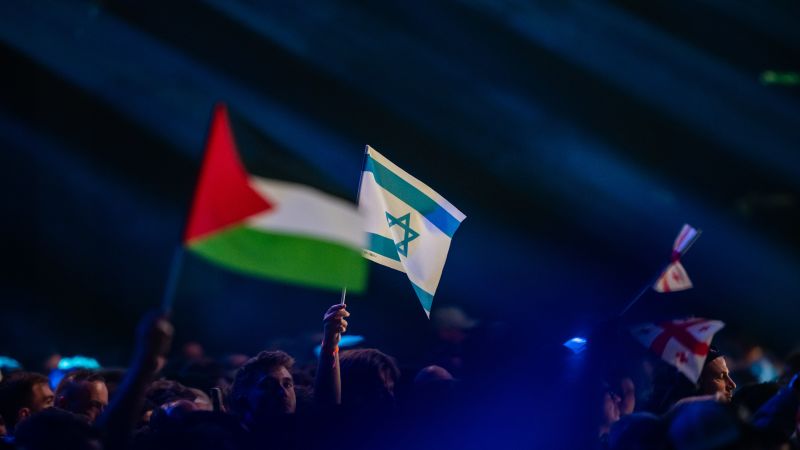
Eurovision Finalists to Take the Stage Amid Boycott from Spain, Ireland and Others over Israel’s Presence
Eurovision finalists to take the stage – Politics has long been a fixture in the continent-wide music contest, often overshadowing the glitzy spectacle of performances and the emotional highs of competition. While Eurovision has always claimed to remain neutral, the presence of Israel in this year’s final has ignited a firestorm, with five nations—Spain, Ireland, the Netherlands, Slovenia, and Iceland—joining the boycott. This marks the most significant crisis in the event’s 70-year history, as the once-celebrated festival now faces scrutiny over its political implications.
The EBU, which oversees the contest, has faced mounting pressure from critics who argue that Israel’s participation has politicized the event. Last year, the contest drew 166 million viewers globally, solidifying its status as a cultural landmark for the LGBTQ+ community. However, this year’s event has seen a stark decline, with only 35 countries participating—fewer than ever since 2004. The absence of several nations has not only reduced the number of competitors but also dampened the usual vibrant energy that characterizes the festival.
Boycott Driven by Political Discontent
The boycott is a direct response to Israel’s continued involvement in the contest, particularly following its military actions in Gaza. Fans from Spain, Ireland, and other countries have expressed frustration, viewing the nation’s participation as a symbol of its policies. “The atmosphere feels different this year,” said Frank Dermody, president of the Irish Eurovision Fanclub, as he observed the event from Vienna. “There’s a palpable tension, and the usual camaraderie has given way to uncertainty.”
“We can see that there are tickets still available for the final on Saturday, which is kind of unheard of,” Dermody added. “Normally, around 800 Irish fans would travel to the host city, but this year, only about 40 have made the journey. The rest are staying away, unsure of how to reconcile their support for the contest with their concerns about Israel’s role.”
Similar patterns have been reported in other boycotting countries. Fans from the Netherlands and Slovenia, who typically travel in large groups, have also seen a drop in attendance. “Many people from other nations are hesitating as well,” Dermody noted. “They just don’t feel comfortable. Some may still come to the city itself, but the crowd at the venue is smaller than expected.”
Historical Context and EBU’s Response
The controversy over Israel’s participation is not new, but its escalation this year has reached a critical point. The European Broadcasting Union (EBU), which organizes the contest, faced internal disputes in December when its member states debated the issue. Although a vote was avoided, the EBU introduced “targeted changes” to the voting rules, aiming to bolster neutrality and transparency. These reforms include reducing the maximum number of votes a single person can cast from 20 to 10, a move that has been framed as a response to accusations of biased influence.
Israel’s government has been accused of orchestrating a mass voting campaign to secure favorable results in previous years. A New York Times investigation published Monday revealed a “well-organized campaign” led by Prime Minister Benjamin Netanyahu’s office, which saw the contest leveraged as a soft power tool. The report also highlighted the EBU’s lack of public response to these claims, leaving room for debate about the event’s impartiality.
“Amichai Chikli, Israel’s Minister of Diaspora Affairs, stated that his ministry has identified a ‘sharp and coordinated surge’ in antisemitic and anti-Israel discourse surrounding Eurovision 2026. He emphasized that Israel’s actions were not to undermine the contest but to maintain its presence as a symbol of resilience.”
Despite these efforts, the EBU has taken steps to distance itself from perceived political bias. In a statement released Saturday, organizers announced that the Israeli delegation, represented by singer-songwriter Noam Bettan, had been instructed to remove videos featuring explicit calls to vote for Israel. “We are satisfied that this video did not form part of such a (wider) campaign,” the EBU said. “However, directing voters to support one artist or song disproportionately is at odds with the contest’s spirit.”
Controversy Spills into the Live Performance
The political tensions have seeped into the very fabric of the event, even during the performances. When Bettan took the stage in his semifinal on Tuesday, audience members in the arena began shouting “Stop, stop the genocide” as he performed. The chants, which were clearly audible, underscored the growing divide among fans and highlighted the emotional weight of the issue.
Though the EBU has sought to balance its role as a neutral platform, the controversy continues to cast a shadow over the competition. The contest, which has historically celebrated unity through music, now finds itself at a crossroads. The reduced voting limits and the removal of targeted promotional videos reflect an attempt to address accusations of unfair influence, but the underlying political rift remains unresolved.
For some, the boycott represents a broader movement against perceived injustices, while others view it as an overreach that risks undermining the contest’s appeal. The EBU’s decision to keep Israel in the competition, despite the protests, suggests a determination to maintain the event’s status as a cultural and musical gathering. Yet, the political fallout has already left an indelible mark on the Eurovision experience, with fans questioning whether the contest can remain apolitical in an increasingly divided world.
The final will take place this Saturday, and the outcome will be watched closely not just for its musical merit, but also for its political implications. As the nations involved navigate their differences, the stage in Vienna will serve as a battleground for competing narratives. Whether the contest can reclaim its former vibrancy or if the boycott will leave a lasting impact remains to be seen, but one thing is clear: Eurovision 2026 is more than just a celebration of song—it is a reflection of the world’s current tensions.
