
Chancellor Merz downplays a state election defeat
Chancellor Merz Downplays a State Election Defeat
The Green Party emerged victorious in the recent Baden-Württemberg state election, marking an unexpected shift in political dynamics. This outcome posed challenges for the CDU and SPD, both of which had anticipated a different result. The election, the first of five regional contests in 2026, saw the Greens secure a narrow lead, defying long-standing expectations.
For years, Chancellor Friedrich Merz’s CDU had viewed Baden-Württemberg as a stronghold to reclaim from the Greens. That strategy faltered, leaving the party in disappointment. A pre-election survey revealed that more than 70% of Baden-Württemberg’s voters expressed discontent with federal policies. Yet, Merz avoided directly linking the loss to national governance, instead emphasizing Özdemir’s individual success.
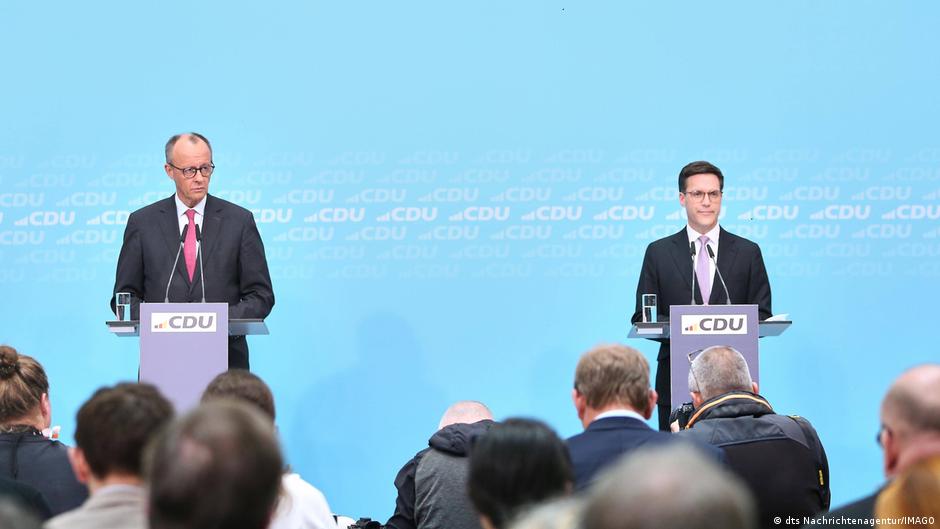
“This is primarily a personal victory for Cem Özdemir,” Merz stated to journalists in Berlin, highlighting the Green politician who narrowly won the race. Özdemir, a 60-year-old native of Turkish descent, will lead the state government, continuing a partnership with the CDU.
Özdemir’s campaign focused on balancing environmental goals with economic pragmatism, distancing himself from more radical leftist stances. He avoided taking strong positions on climate policies like phasing out gasoline vehicles, a move seen as strategic given the region’s reliance on the automotive sector.
Baden-Württemberg, home to industry giants like Porsche and Mercedes, faces a political landscape shaped by its economic diversity. The state also features numerous small family-run businesses, reflecting its multifaceted economy. It borders France to the west and Switzerland to the south, further influencing its political identity.
Meanwhile, the SPD’s performance was dismal, capturing only 5.5% of the vote. The party, which collaborates with Merz’s CDU at the federal level, struggled to convey its appeal to working-class voters. “We will protect industrial jobs and lower energy prices,” said SPD leader Bärbel Bas, despite the setback.
The far-right AfD party doubled its vote share but still fell short of its ambitions, securing 18.8%. Co-leader Tino Chrupalla claimed the party has now established itself as a mainstream force in the region. However, neither the CDU nor the Greens are considering alliances with the AfD.
In Berlin, the neoliberal FDP and the socialist Left party faced a muted response, failing to surpass the 5% threshold for state representation. The FDP, which exited the federal parliament after the 2025 election, hoped to regain relevance in Baden-Württemberg, a former stronghold. The Left party, meanwhile, remained sidelined.
As the political focus shifts to the next regional election in Rhineland-Palatinate, the SPD and CDU are locked in a tight contest. Polls indicate a close race between the two, with both parties vying to capitalize on the changing landscape. This article was originally written in German. While you’re here: Every Tuesday, DW editors round up what is happening in German politics and society. You can sign up here for the weekly email newsletter, Berlin Briefing.
