
The Greens’ Gorton and Denton by-election win was about inclusion — not sectarianism
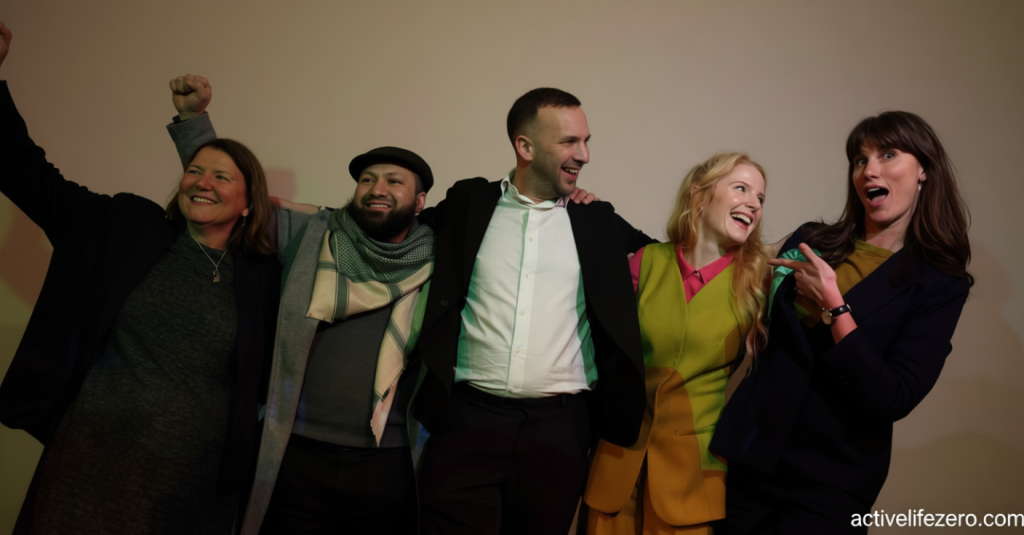
The Greens’ Gorton and Denton by-election win was about inclusion — not sectarianism
What an unforgettable evening that was! Not merely due to the Green Party securing their inaugural parliamentary by-election victory in Gorton and Denton, nor solely because they flipped a Labour majority that had stood for over 13,000 votes.
I never imagined penning this, not just for bringing a Green MP to the North of England for the first time, but because this victory transcends mere political milestones. It signals a new direction in UK politics—one that prioritizes optimism over hostility, and unity over division.
Last night, we demonstrated that a distinct political approach can thrive in this nation. A vision centered on hope, rather than hatred, and on embracing all voices rather than excluding them. People felt a renewed sense of possibility, a sentiment that cannot be measured in numbers alone, even as Labour and Reform’s disappointed supporters sought to dismiss our inclusive message as a hidden agenda.
The success of our campaign was not solely due to the strength of our policies or the charisma of our candidate, Hannah Spencer. However, it was the way we connected with voters on a personal level that made the difference. Traditional politics often speaks to people in a detached, one-sided manner—using a language that feels distant and unrelatable.
Imagine a politics that speaks to you, not at you. In Gorton and Denton, where nearly 40% of residents identify as Muslim and many speak Urdu, Bangla, Arabic, or other languages at home, that old model simply doesn’t cut it. Even the crisp, BBC-style English of our opponents only carried them so far.
That’s why we invested in translating materials into multiple languages, including a widely shared Urdu video. It wasn’t a mere tactic or flashy gimmick—it was a deliberate choice to reflect the reality of those communities, ensuring their perspectives were central to the conversation.
“You belong here. Your voice counts. Your concerns matter.”
In a democracy, language should not be a barrier, but a bridge. Yet some politicians, like Matt Goodwin, have labeled our strategy as divisive, suggesting it leans into sectarianism rather than uniting people. This interpretation misses the mark, failing to grasp the genuine intent behind multilingual outreach.
Examples from abroad show that speaking in familiar tongues fosters connection, not fragmentation. Zohran Mamdani’s campaign in New York, which featured Arabic, Spanish, and Urdu videos, helped bridge gaps in communities often overlooked by mainstream politics. His win, celebrated by Labour allies, underscores how this approach can resonate across borders.
Issues like rent, bills, the NHS, racism, and peace matter to every citizen, regardless of the language they speak at home. Multilingual campaigning acknowledges this truth, affirming that everyone has a stake in the political process. It’s not just about winning seats—it’s about building a system where diverse voices are heard, respected, and empowered.
This marked a pivotal moment in a campaign I’m deeply proud of. A strategy that saw a 26.5% shift toward the Greens, leading to a historic parliamentary gain. The victory in Gorton and Denton isn’t merely about boosting our representation—it’s a testament to the transformative power of genuine inclusion, where communities see their voices acknowledged, their languages respected, and their democratic engagement valued rather than dismissed.
To view this video please enable JavaScript, and consider upgrading to a web browser that supports HTML5 video.
This site is protected by reCAPTCHA and the Google Privacy Policy and Terms of Service apply. Your information will be used in line with our Privacy Policy.
