Why Zelensky insists it’s not personal with Trump — even though it is

Daftar Isi
Zelensky’s Challenge: Defending Ukraine While Managing Washington
Activelifezero.com – Ukraine’s struggle against Russia is increasingly entwined with an uncomfortable political reality in Washington: Volodymyr Zelensky must preserve a working relationship with President Donald Trump even as several US decisions appear to favor Moscow’s position.
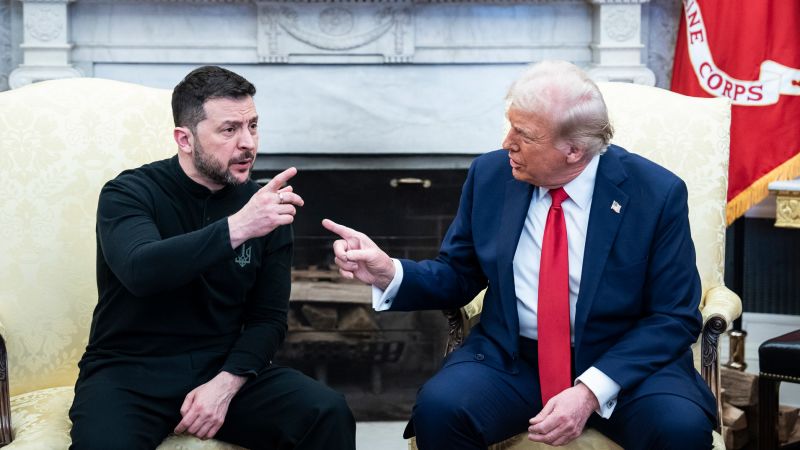
In an interview with Christiane Amanpour on Thursday, Zelensky sought to minimize any personal conflict with Trump. The Ukrainian president said his country’s future cannot be reduced to the relationship between two leaders, particularly when Ukraine remains under sustained military pressure.
“It’s not about personalities,” Zelensky said. “It’s not something personal between me and President Trump.”
Yet the stakes are deeply personal in the political sense. Trump has long shown resentment toward Zelensky, whose 2019 phone call with Trump helped trigger Trump’s first impeachment. Zelensky was not accused of wrongdoing in that episode, but the episode became part of Trump’s political history and has continued to shadow their dealings.
For Ukraine, the larger concern is whether personal preferences and domestic political interests are now shaping US policy toward the war. Zelensky needs American support not simply as a symbol of international solidarity, but because the United States retains the ability to influence the military, diplomatic and economic environment surrounding the conflict.
A shifting American approach
Trump has repeatedly emphasized his preference for dealmaking, displays of strength and direct engagement with powerful leaders. That instinct has raised alarms in Kyiv, where officials fear that diplomatic outreach to Vladimir Putin may be pursued without sufficient pressure on Russia to stop its invasion.
The administration has pressed Ukraine on concessions while showing greater willingness to accommodate Russian demands. Trump has supported Moscow’s call for Ukraine to choose a new president, despite Ukraine’s wartime circumstances and the constitutional complications created by the conflict.
His approach has also included consideration of a meeting involving Putin and China’s Xi Jinping aimed at ending the war without Ukraine present. Trump has invited Putin to the G20 summit and has declined to provide Patriot missiles sought by Ukraine to counter Russian missile and drone attacks.
These moves have reinforced concern that Ukraine could be discussed as an object of diplomacy rather than treated as a sovereign participant whose consent is essential to any durable settlement.
Zelensky’s government is also concerned about a diesel arrangement that could generate billions of dollars for Putin’s war economy. The deal emerged as Trump faced domestic pressure to demonstrate that he could lower fuel costs for American voters ahead of the midterm elections. Kyiv argues that lower fuel prices cannot justify steps that may strengthen Russia’s ability to finance its military campaign.
“It will only give much more money for Putin for this war. And that’s why I’m against it,” Zelensky said.
Trump has also urged Ukraine to curb strikes on Russian oil refineries, an important element of Kyiv’s effort to disrupt fuel supplies and impose costs inside Russia. For Ukraine, those attacks are among the limited tools available to challenge a far larger adversary beyond the front line.
Starlink disruption adds to military concerns
Ukraine says access to a military version of Elon Musk’s Starlink network remains disrupted. That limitation can affect drone operations, forcing some systems to fly at lower speeds and reducing their effectiveness. In a conflict where drones have become central to reconnaissance, targeting and attacks, even technical restrictions can have battlefield consequences.
It remains unclear who within the administration bears responsibility for the disruption. Trump has said he was not personally involved. But uncertainty itself is damaging for Ukrainian forces that depend on reliable communications and technological support while confronting frequent Russian aerial assaults.
The broader pattern has left Kyiv questioning whether Washington is still using its influence primarily to deter Russia or is instead prioritizing a rapid agreement on terms that could reward the invasion.
Putin’s promises and continuing attacks
Trump has argued that engagement with Putin can produce progress, including the release of Americans held in Russia. This week, envoy Steve Witkoff praised Putin as a “humanitarian” during a meeting in St. Petersburg. Trump defended the language as part of efforts to secure the freedom of Stephen Hubbard, a US prisoner in Russia.
But the diplomatic gestures have not brought an end to the war. Russia has continued launching missiles and drones against Ukrainian cities and civilian areas. Recent attacks struck civilian buses and killed a 1-year-old girl in her stroller. Trump did not publicly condemn those attacks.
The gap between promises of peace and the reality of continuing violence is central to Ukraine’s fear. Putin has repeatedly signaled interest in negotiations while maintaining military pressure, suggesting that talks can be used to gain time, weaken international resolve or seek concessions without ending the war.
Zelensky’s appearance reflected the burden of leading a country through that uncertainty. He avoided escalating his disagreement with Trump, but he also made clear that Ukraine cannot sacrifice its principles simply to smooth over relations with the White House.
“We will survive and we will stay strong,” Zelensky said. “We will do everything to bring peace closer. But we will not give (a) chance (to) Putin to win this war.”
Ukraine’s president has little room to sever ties with the United States. Trump remains the one global leader capable of applying major pressure for a serious peace process if he chooses to do so. That dependence explains Zelensky’s careful language, even when he objects to policies that Kyiv believes could help Moscow.
The conflict is becoming more dangerous as fighting intensifies and diplomatic prospects remain uncertain. The unanswered questions are no longer merely about the next negotiation or weapons package. They concern how a war that has grown increasingly brutal can be brought to a just conclusion—and what the consequences will be if it continues without a credible path to peace.
Related Reading
Frequently Asked Questions
What is Why Zelensky insists it s not personal?
Why Zelensky insists it s not personal is the main topic of this guide. The article explains the context, practical details, and next steps readers should understand.
Why does Why Zelensky insists it s not personal matter?
Why Zelensky insists it s not personal matters because readers are looking for a useful answer, not just a short summary. Good content should match search intent and help them decide what to do next.